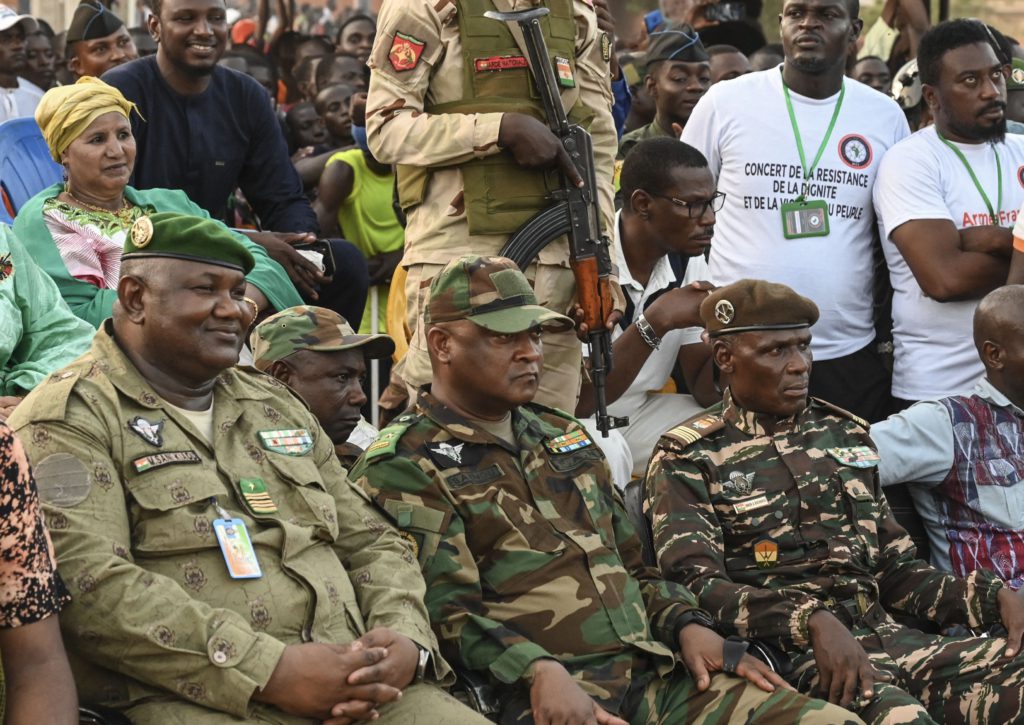
Since the military takeover on July 26, 2023, the leadership in Niger has engaged in the arbitrary detention of numerous former government officials and a systematic crackdown on independent media and peaceful protest. Human Rights Watch and Amnesty International have jointly called for the immediate release of all individuals held for political reasons, urging the authorities to respect the legal guarantees of due process.
General Abdourahmane Tiani, leading the Conseil national pour la sauvegarde de la patrie (CNSP), spearheaded the removal of President Mohamed Bazoum. Following the coup, Bazoum, his wife, and his son have been held at the presidential palace in Niamey, the nation’s capital. The transition has been characterized by the intimidation, harassment, and arrest of journalists, activists, and perceived political rivals.
The current wave of arbitrary arrests and the erosion of free speech are steering Niger toward a perilous human rights situation.
International observers emphasize that the military council must end these unlawful detentions, uphold fundamental human rights, and restore the freedom of the press.
International sanctions and diplomatic tensions
In the wake of the power grab, the Economic Community of West African States (ECOWAS) responded on July 30 by shutting borders with Niger and halting all financial and commercial dealings. The regional body also warned of potential military intervention should the CNSP fail to restore Bazoum to power. By August 10, ECOWAS implemented stricter sanctions, including asset freezes and travel bans. Meanwhile, the African Union suspended Niger from its activities on August 22, though it advocated for a diplomatic resolution to return the country to constitutional order.
Diplomatic relations further soured on October 11, when the military authorities expelled the United Nations Resident Coordinator, Louise Aubin. They accused UN Secretary-General António Guterres of undermining Niger’s representation during the UN General Assembly in September.
Targeting former government officials
The CNSP has detained several high-ranking figures from the previous administration, including Sani Mahamadou Issoufou (former Petroleum Minister), Hamadou Adamou Souley (former Interior Minister), Kalla Moutari (former Defense Minister), and Ahmad Jidoud (former Finance Minister). These individuals were transferred to various detention centers in Filingué, Say, Kollo, and Niamey. Despite their status as civilians, they were brought before a military tribunal on charges of endangering state security. Human rights organizations view these actions as politically motivated and fundamentally arbitrary.
The plight of Mohamed Bazoum and his family
There is significant international concern regarding the safety of Mohamed Bazoum. Although the military announced plans to prosecute the deposed president for “high treason,” he has yet to see a judge. Bazoum has challenged his detention through the ECOWAS Court of Justice in Abuja, Nigeria, citing human rights violations. While a local court in Niamey ordered the release of his son, Salem Mohamed Bazoum, on October 6, the military council has ignored the ruling. His legal team maintains that the family is being held in isolation, refuting military claims of an attempted escape.
Restricting media and silencing dissent
Journalists and media organizations have reported intense pressure and surveillance since the coup. International broadcasters like Radio France Internationale and France 24 were suspended indefinitely by the CNSP in early August. Many local reporters have admitted that self-censorship has become a necessary survival strategy to avoid government retaliation.
A notable case is that of Samira Sabou, a prominent blogger and journalist who was abducted from her mother’s home by men in plain clothes. After being held in an undisclosed location for a week, she was eventually charged with disseminating data likely to disturb public order. This was not her first encounter with judicial pressure, as she had previously faced jail time for her investigative reporting on drug trafficking.
Suppression of academic and civil voices
The military leadership has also targeted the academic community. Six professors and state officials were dismissed after they distanced themselves from a union statement supporting the coup. Additionally, social media users have faced legal consequences; Samira Ibrahim, known online as “Precious Mimi,” received a suspended sentence for a Facebook post regarding Algeria’s diplomatic stance toward the new government.
Political violence and insecurity
The post-coup environment has seen a rise in violence by pro-CNSP groups, often organized as self-defense committees. These groups have targeted the headquarters of the PNDS-Tarayya party, committing acts of arson and physical assault. Furthermore, reports from the Ligue nigérienne des droits de la femme indicate that women have been subjected to sexual violence by youth groups conducting unauthorized street patrols in Niamey.
While the CNSP has suspended the national constitution, it claims to adhere to the Universal Declaration of Human Rights and the African Charter on Human and Peoples’ Rights. However, the ongoing repression of dissent and the frequency of arbitrary arrests suggest a significant departure from these international standards. Experts warn that the protection of free speech and the right to dissent are crucial for the country’s accountability and future stability.