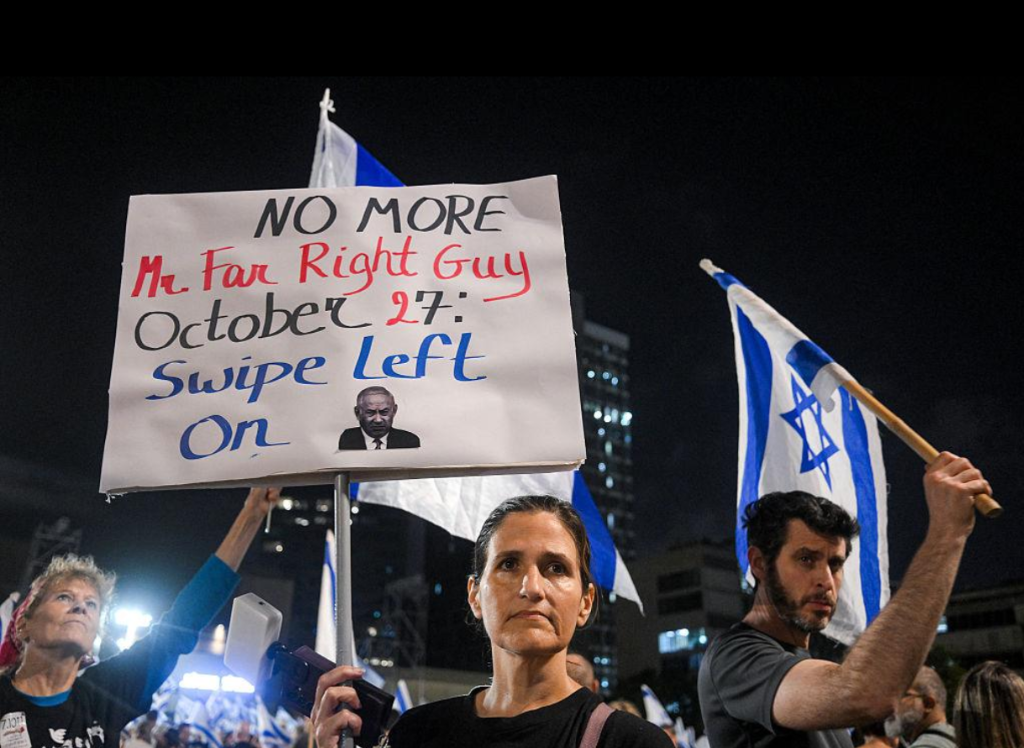
Benyamin Netanyahu’s coalition secured the most seats in Israel’s October 27, 2026 parliamentary elections—but fell short of the 61-seat majority required to form a government. With 53 seats, his bloc now faces an opposition alliance holding 48 seats and an unprecedented 19 seats held by Arab-led parties. The fragmented outcome has thrust Israeli politics into uncharted waters, with ripple effects likely to be felt across the Middle East—from the occupied territories to Iran and Lebanon.
Netanyahu’s lead is not enough to secure the premiership
The election results paint a fractured political landscape. Netanyahu’s Likud party secured 27 seats, making it the largest single faction, but the pro-Netanyahu coalition totals just 53. The opposition bloc, led by former military chief Gadi Eisenkot, captured 48 seats, while the Joint List and Ra’am party combined for 19—the highest representation ever achieved by Palestinian citizens of Israel in the Knesset.
While the Likud remains dominant, it has lost ground from the previous Knesset, where the governing coalition held 68 seats. This shift reflects growing public discontent over years of security crises, economic strain, and deep divisions over government policy. With no bloc reaching the 61-seat threshold, Israel faces a high-stakes negotiation period with three potential paths: a new Netanyahu-led coalition, an opposition-led government, or a return to the polls.
Arab parties hold the balance of power—will they break the stalemate?
The unprecedented rise of Arab representation could be a game-changer. By joining forces with the opposition, they could tip the scales and form a majority. However, ideological and political divides—especially among Zionist factions—complicate cooperation. Gadi Eisenkot’s alliance has ruled out alliances with Arab parties in the past, raising doubts about their willingness to govern together.
Other scenarios include a national unity government, a minority coalition supported by cross-party confidence-and-supply agreements, or continued deadlock leading to a fifth election in as many years. Each option carries different implications for governance, policy continuity, and Israel’s regional standing.
Gaza will demand urgent attention from any new government
The humanitarian and security crisis in Gaza remains one of the most pressing challenges facing Israel’s next administration. Reconstruction needs, Palestinian governance, and long-term security arrangements will dominate the agenda. A Netanyahu-led government would likely maintain a hardline stance on security and settlement expansion. An alternative coalition, however, might explore diplomatic openings or conditional engagement with Palestinian leadership.
Yet, deep divisions persist within both blocs over fundamental issues: the future of Hamas, the viability of a two-state solution, and the extent of territorial concessions. For Palestinians, the election outcome does not signal imminent relief. Instead, it underscores that the path forward hinges on the alliances forged—or blocked—in the Knesset.
Iran, Lebanon, and Syria: security flashpoints loom large
Beyond domestic politics, Israel’s next government will confront complex regional threats. Iran’s advancing nuclear program, ballistic missile capabilities, and support for proxies across the Levant remain top priorities. A weakened or divided government may struggle to present a unified deterrent strategy, even as defense policy typically commands broad consensus.
The fragile truce with Hezbollah in Lebanon hangs in the balance. Any military escalation risks triggering a wider conflict with devastating humanitarian and economic consequences. Along Israel’s northern border, Syria’s evolving conflict dynamics continue to shape strategic calculations, including potential spillover risks and Iranian entrenchment.
Washington will watch closely, balancing military support with calls for de-escalation. Arab states like Egypt, Jordan, Saudi Arabia, and the UAE also have a stake in the outcome. Riyadh’s normalization talks with Israel remain conditional on progress in Palestinian governance and regional stability. A lack of clarity in Jerusalem could stall diplomatic initiatives.
A turning point for Israel—and the region
This election wasn’t just a vote against Netanyahu—it was a vote for change. The outcome reveals a deeply divided society, fractured over security, identity, and national direction. The Arab parties’ gains, the erosion of the governing coalition, and the absence of a clear majority have created a political inflection point.
Three roads lie ahead: a reshaped Netanyahu coalition, a surprise opposition-led government, or another election cycle. What’s certain is that Israel’s next administration—whichever form it takes—will operate in a Middle East where every policy choice reverberates from Gaza to Tehran. Netanyahu may have won the race, but the real challenge is governing in its wake.