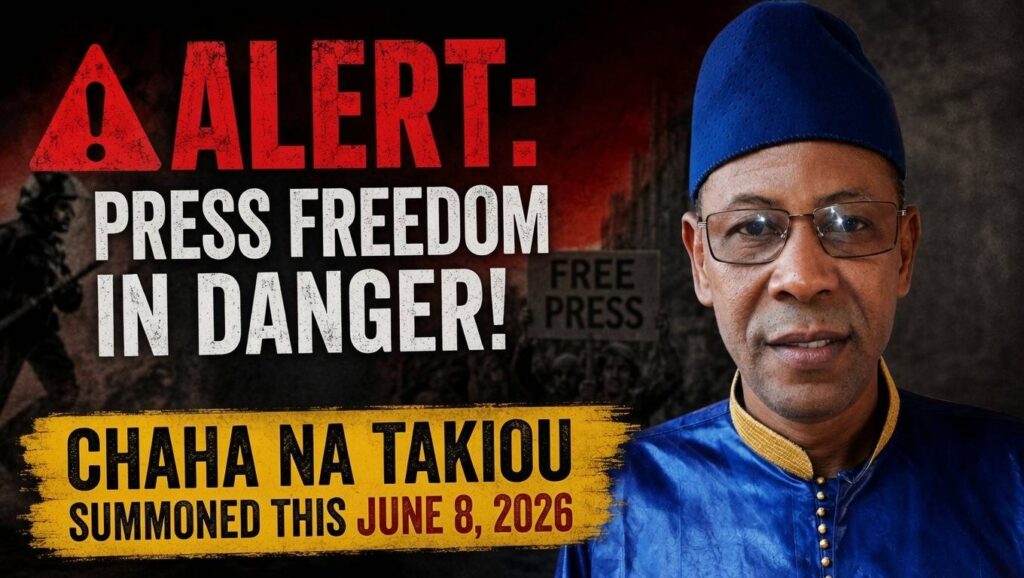
In a fresh escalation of judicial pressure against dissent, Chahana Takiou, editor-in-chief of the weekly newspaper Le 22 Septembre, has been summoned by Mali’s cybercrime prosecutor in Bamako. The hearing, scheduled for June 8, 2026, at 1:00 PM, comes after his public criticisms of the military junta’s handling of political and economic transition.
Targeting the press through cybercrime courts
The Bamako-based cybercrime unit, originally designed to combat online fraud, has increasingly become a tool for silencing critics. Journalists like Takiou now face judicial harassment under the guise of combating cyber threats. His case reflects a broader pattern where investigative reporting and public commentary are criminalized.
The death of press freedom under military rule
Once a symbol of democratic resilience, Mali’s media landscape has collapsed under authoritarian pressure. Independent journalism is now a high-risk profession, with reporters practicing self-censorship to avoid persecution. The junta demands unconditional allegiance to its narrative, punishing outlets that question its policies with suspensions, fines, and administrative shutdowns.
From legal threats to enforced disappearances
The crackdown extends beyond courtrooms. Opposition voices—politicians, activists, and ordinary citizens—have been subjected to enforced disappearances by unidentified armed groups, widely believed to be linked to state intelligence. These tactics aim to crush dissent and instill fear across the nation.
Media solidarity meets state repression
Despite the risks, Mali’s press corps is rallying around Takiou. Journalists’ unions have condemned the summons, emphasizing that constructive criticism is vital for national stability. Yet, their appeals fall on deaf ears in a system where constitutional protections are systematically ignored.
Mali’s democratic decline under military control
Takiou’s case marks a new low in Mali’s authoritarian slide. By targeting a respected editor, the junta signals that no critical voice will escape punishment. This policy of enforced conformity, enforced through intimidation and imprisonment, further isolates the country amid security and humanitarian crises. True progress cannot be achieved by silencing truth—only by protecting the right to report it.