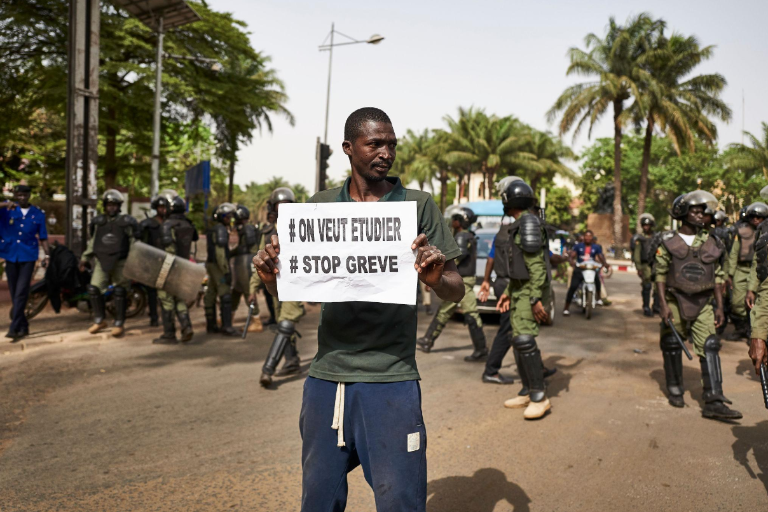
The three-week standoff between Mali’s higher education sector and the transitional authorities has reached a pivotal moment. Teachers and researchers have secured their first direct audience with top government officials, signaling a dramatic shift in a conflict that has paralyzed universities nationwide. But will this breakthrough end the paralysis of campus life?
The weeks-long impasse began on October 26, when the National Union of Higher Education and Scientific Research (SNESUP) launched an indefinite strike. At its core, the dispute centers on the long-overdue implementation of a 2017 presidential decree promising a research stipend—a measure that has yet to materialize nearly a decade later.
From prolonged inaction to reluctant engagement
For three weeks, Mali’s transitional authorities remained conspicuously silent—despite mounting academic disruptions and growing student frustration. Then, on November 15, the SNESUP announced it had been granted an audience with the highest-ranking state officials within 48 hours.
The move marks the first time the government has publicly acknowledged the dispute through direct dialogue. Yet the contents of the discussions remain undisclosed. The union emphasizes that it will first consult its members before commenting on potential outcomes—leaving the strike mandate firmly in place for now.
No concrete commitments have emerged regarding the research bonus, the prime issue driving the strike. The SNESUP continues to insist on:
- Formalization of the stipend’s amount
- Clear payment schedules
- Compensation for missed payments since 2017
Why this decree matters more than political demands
Unlike many protests rooted in institutional grievances, this strike targets a regulatory failure—one that directly affects the working conditions of university staff. The 2017 decree was designed to recognize and support scientific output through financial incentives, including:
- Research publications and projects
- Knowledge dissemination initiatives
- Academic innovation and development
For educators, the non-payment represents a breach of contract with the state. After years of waiting, frustration has boiled over into sustained action.
Academic year at risk as students bear the brunt
With every passing day, the strike’s impact intensifies. Universities remain closed, exams are postponed, and students—already facing an uncertain academic calendar—grow increasingly anxious about their futures. A previous mediation attempt on November 7, involving community leaders and traditional mediators, failed to produce a resolution.
Now, the government’s sudden willingness to engage offers a glimmer of hope. But for striking lecturers, words must translate into action. The SNESUP has made it clear that dialogue alone will not end the strike until tangible progress is demonstrated.
What comes next?
The coming days will determine whether this first step toward negotiation can break the deadlock. The fourth week of the strike has begun under a cloud of cautious optimism—but until binding agreements are reached, Mali’s universities will remain closed, and its students in limbo.
One thing is certain: after nearly a decade of unfulfilled promises, the demand for the research bonus is no longer just a professional request. It has become a turning point for higher education in Mali—and a test of the transitional authorities’ capacity to honor their commitments.