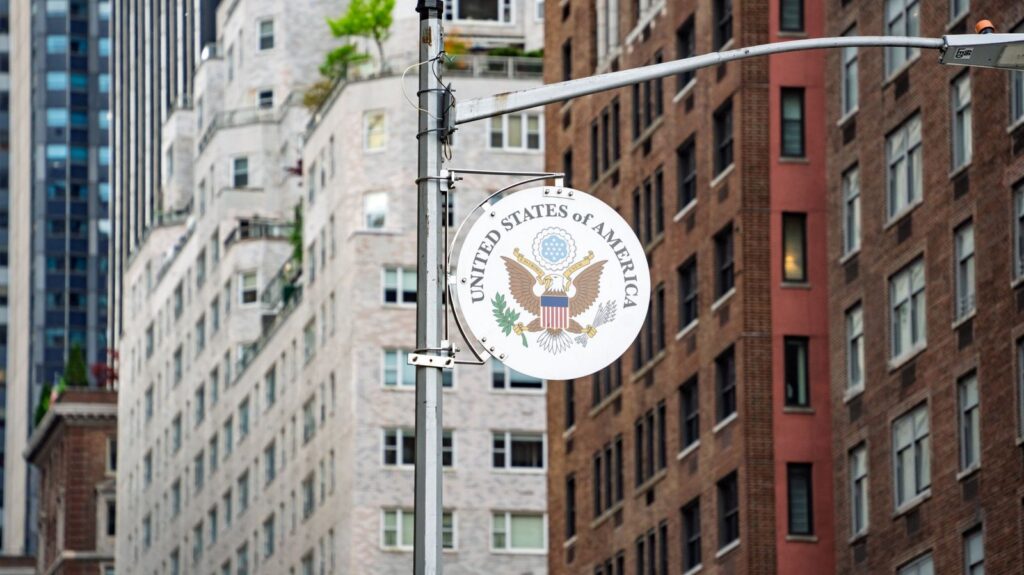
Securing an American visa from Bamako has become a logistical challenge. United States consular authorities have shifted the processing of Malian visa applications to Dakar, making Senegal’s capital the mandatory stop for Malian travelers seeking entry to the US. This move follows months of diplomatic strain between Washington and Mali’s current leadership, reshaping consular flows across West Africa.
Regional consequences of a consular shift
The change forces Malian applicants to travel to Dakar for interviews and biometric data collection. The US consulate in Senegal is now handling an increased caseload, as Malian nationals must navigate new administrative hurdles. This decision is part of a broader recalibration of American diplomatic presence in West Africa, where several embassies have scaled back operations following political upheavals in Bamako, Ouagadougou, and Niamey.
For Malian applicants, the financial burden is substantial. Travel costs to Dakar, accommodation during processing, and standard consular fees now add up, potentially limiting visa access to wealthier or well-connected individuals. Students, academics, and entrepreneurs—key drivers of mobility—face heightened barriers under this new system.
Dakar’s rise as a diplomatic hub
Senegal’s capital was chosen deliberately. Dakar remains one of the few West African diplomatic posts where the US maintains robust consular services, supported by reliable security infrastructure. As a long-standing US partner, Senegal strengthens its role as a regional diplomatic platform. The city already hosts numerous consulates managing cross-border services for European and Asian nations.
This centralization reinforces Senegal’s position as a Western anchor in a shifting West Africa. It coincides with the growing alignment of the Alliance of Sahel States—comprising Mali, Burkina Faso, and Niger—toward Moscow, deepening the diplomatic divide across the region. The policy shift now shapes the routes ordinary citizens must take to access foreign services.
Mobility reshaped by political constraints
US authorities cite security and service efficiency as key reasons for the transfer. Since political instability in Bamako, Western embassies have reduced non-essential staff or suspended select operations. Visa processing is often among the first functions relocated when diplomatic or security conditions deteriorate—a trend increasingly common in the subregion.
The decision complicates family reunification and travel for Malians in the US, whose remittances are vital to the national economy. Reduced mobility could weaken this financial lifeline, while businesses in trade and digital services may see slower exchanges of skilled professionals.
Over the coming months, the true test will be whether Dakar’s consular section can handle the surge in applications without significant delays. For Malians, securing a US visa is now a subtle reflection of the geopolitical realignment unfolding across the Sahel.

More Stories
Behind the violence: how the M23’s control of DRC mines fuels a cycle of abuse
Unpacking the surge: why Nigeria’s farmer-herder clashes are driving 600 refugees into Cameroon’s Northwest
Why Paris Saint-Germain’s midfield dominance sank Marseille in Ligue 1