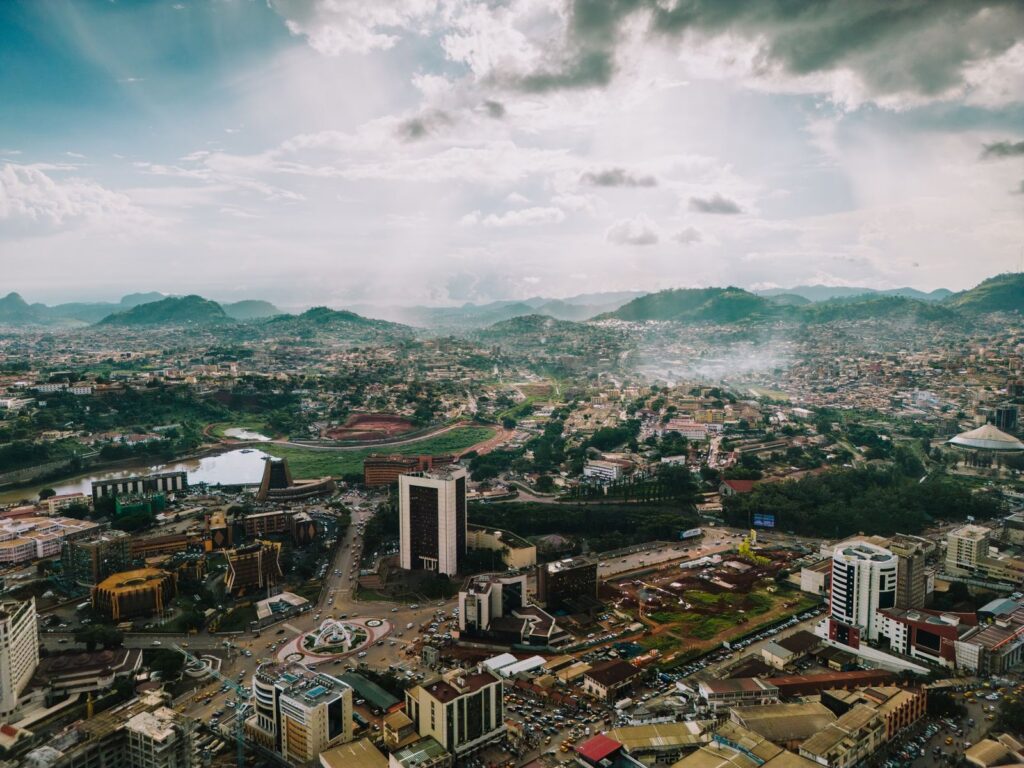
The prolonged absence of Cameroon’s head of state, Paul Biya, who has led the country since 1982, continues to dominate political discussions in Yaoundé. The silence from the Éttoudi Palace regarding the president’s activities, combined with the scarcity of his public appearances, has fueled a climate of uncertainty that now extends beyond political circles. On social media, in newsrooms, and within diplomatic missions, the recurring question remains unanswered: where is the president, and in what condition is he performing his duties?
The impact of an aging leader shrouded in secrecy
At 91 years old, Paul Biya has spent over four decades at the helm of Cameroon’s government. While his supporters praise his longevity as a symbol of stability, the harsh reality of his age becomes harder to ignore. Health rumors, which have circulated for years, gained renewed momentum during his recent extended stays abroad, particularly in Europe. Official statements, often vague, have done little to quell public curiosity.
The infrequency of his official engagements has tangible institutional consequences. Cameroon’s executive branch operates under extreme centralization, with the president playing a pivotal role in administrative, security, and budgetary decisions. Without his signature, key state machinery grinds to a halt. Local observers note that several economic and diplomatic files remain stalled, awaiting presidential approvals that never materialize.
Growing public skepticism over the president’s absence
The unease surrounding Paul Biya’s prolonged absence is no longer confined to opposition voices. Within the ranks of the ruling Cameroon People’s Democratic Movement (CPDM), party members privately express concerns about the lack of structured presidential communication. The government, forced to navigate this uncertainty in silence, has repeatedly dismissed the most alarming rumors, yet struggles to establish credible transparency regarding the president’s daily activities.
This opacity has intensified speculation about a potential transition. Cameroon’s constitution, amended in 2008, stipulates that in the event of a presidential vacancy, power temporarily falls to the Senate president, Marcel Niat Njifenji, himself an octogenarian. While legally sound, the scenario presents political challenges, given the fragile balance of power within the regime. Potential successors, embedded in administrative and military circles, are proceeding with caution.
Regional implications for Central Africa
The uncertainty surrounding Paul Biya’s role extends beyond Cameroon’s borders, drawing the attention of neighboring capitals. As the economic engine of the Central African Economic and Monetary Community (CEMAC), Cameroon plays a crucial role in the subregion’s GDP. Any instability in Yaoundé could have immediate repercussions on the Central African CFA franc, trade routes supplying Chad and the Central African Republic, and security cooperation in the fight against Boko Haram along the Lake Chad basin.
International partners, including France, the United States, and China, are closely monitoring the situation with quiet vigilance. France, long a key ally of Cameroon, views the country as a cornerstone of its residual African policy. Meanwhile, China has invested heavily in the country’s infrastructure, particularly the deep-water port of Kribi. These long-term commitments underscore how the stability of Cameroon’s institutions is intertwined with foreign strategic interests.
Domestically, the unresolved Anglophone crisis in the Northwest and Southwest regions, which began in 2016, continues to strain the nation. The conflict with separatist groups, tensions in the Far North, and economic vulnerabilities demand steady political leadership. The president’s prolonged absence only deepens the perception of a government operating on autopilot, vulnerable to a crisis that could accelerate political timelines.
How long this status quo can persist without sparking an open crisis remains uncertain. The coming months may prove decisive for Cameroon’s political trajectory—and, by extension, the stability of Central Africa as a whole.

More Stories
Bambali’s hidden play: how Sonko’s 2029 tease reshaped Senegal’s political lens
Behind the Bambali agro-industrial park launch: what Sonko and Mané’s vision reveals about Senegal’s rural transformation
Senegal’s upcoming local elections: what is Diomaye Faye hiding about the 2027 vote?