

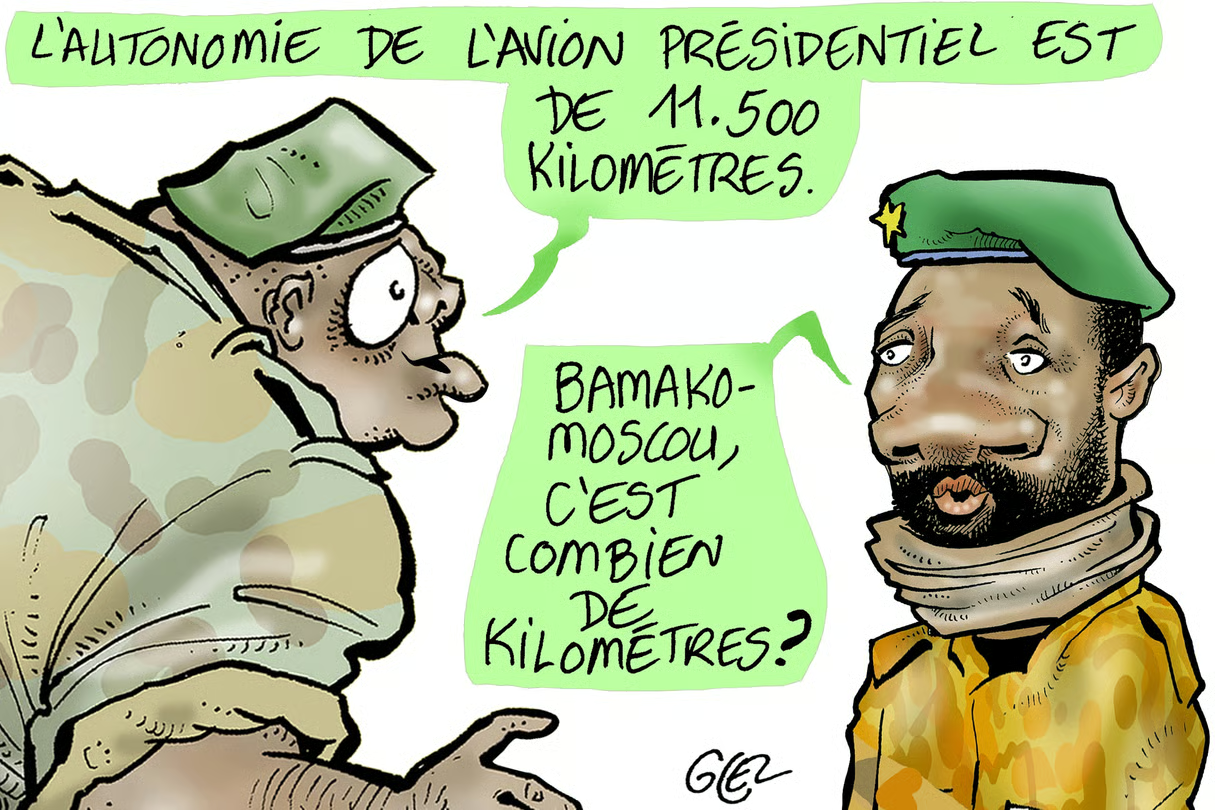
The Malian transitional government has recently taken delivery of a brand-new presidential aircraft, sparking debate across the nation. The state-of-the-art jet, destined for the head of state’s official use, represents a significant investment at a time when public scrutiny over government spending remains intense.
Why this acquisition matters
In the current economic climate, the arrival of a new aircraft for state functions has drawn both praise and criticism. Supporters argue that modern aviation capabilities are essential for efficient governance and international diplomacy, particularly as Mali strengthens ties with global partners. Detractors, however, question the timing and necessity of such an expenditure, especially amid pressing domestic challenges.
The aircraft replaces an older model that had served previous administrations, including that of former President Ibrahim Boubacar Keïta. Its acquisition underscores the transitional authorities’ commitment to maintaining operational continuity while navigating complex political and economic realities.
A closer look at the new presidential jet
The newly acquired aircraft boasts advanced features designed for long-haul travel, security, and comfort. Equipped with cutting-edge avionics and reinforced safety systems, it is tailored to meet the demands of high-level state visits and emergency deployments. While specific technical details remain classified, officials have confirmed that the jet meets all international aviation standards.
Its introduction coincides with a period of renewed focus on Mali’s diplomatic engagements. The timing suggests a strategic move to enhance the country’s presence on the global stage, particularly in regional and international forums where air travel efficiency plays a crucial role.
Public reaction and political implications
The decision to invest in a new presidential aircraft has ignited conversations across Malian society. Critics point to the substantial cost as a misplaced priority, especially when essential public services face funding shortages. Meanwhile, proponents emphasize the long-term benefits of reliable state transportation for governance and crisis response.
Political analysts suggest that the acquisition could influence perceptions of the transitional government’s priorities. As Mali continues its path toward stability, the use of state resources—particularly in high-profile areas like aviation—remains a sensitive topic.
Balancing modern governance with economic realities
The purchase of the new aircraft reflects a broader debate about how transitional governments should allocate limited resources. While some view it as a necessary step toward modernizing state infrastructure, others see it as an extravagant expense that could have been deferred.
The Malian presidency has so far remained tight-lipped about the total cost and financing details, further fueling speculation. As the nation moves forward, the aircraft’s role in governance and diplomacy will likely continue to be a point of discussion among citizens and policymakers alike.

More Stories
Gabon : la participation citoyenne devient un enjeu de gouvernance
Gabon : Force ouvre sa rentrée associative à Akanda sur des propositions citoyennes
Dakar 2026 : Diomaye Faye invite la jeunesse sénégalaise à incarner l’Afrique