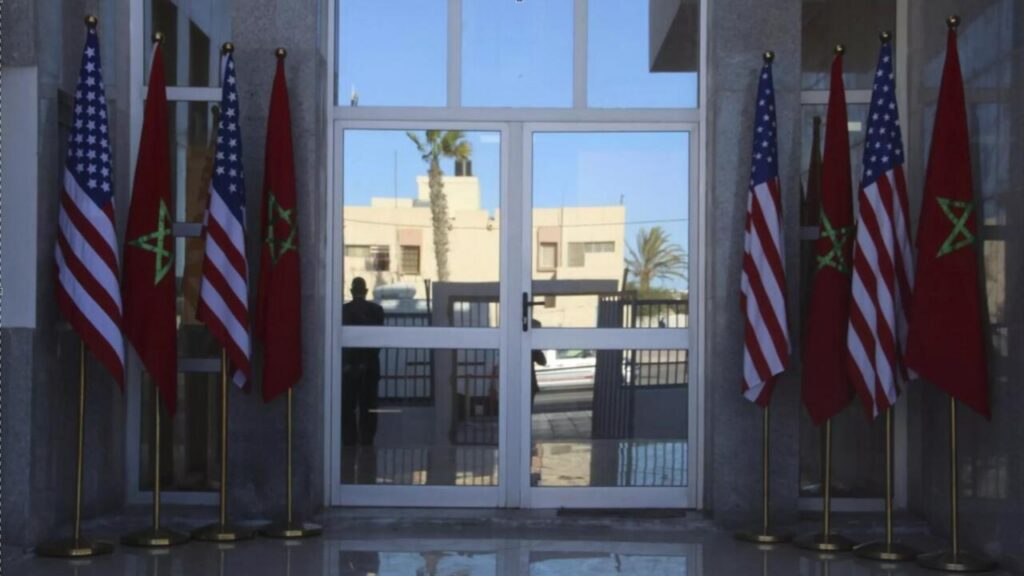
The Moroccan government senses an unprecedented opportunity to secure decisive backing from the United States on two longstanding territorial disputes. As diplomatic and economic overtures from Washington intensify since late July, Rabat is capitalizing on shifting geopolitical dynamics to advance its claims over both the Western Sahara and the Spanish enclaves of Ceuta and Melilla.
In 2020, the U.S. formally endorsed Morocco’s autonomy plan for Western Sahara in exchange for the North African kingdom’s normalization of relations with Israel. Now, American support appears to be expanding, with indications that Washington may also back Morocco’s historical claims to Ceuta and Melilla—territories that remain under Spanish sovereignty.
Washington’s Strategic Shift in North Africa
The current momentum in U.S.-Morocco relations reflects broader strategic calculations in Washington. The timing aligns with increased pressure on Spain, particularly following the recent influx of tens of thousands of Moroccan nationals and sub-Saharan migrants into Ceuta. This mass movement has intensified tensions between Rabat and Madrid, creating a window for Morocco to push its territorial agenda.
Analysts note that the Trump administration’s approach to North Africa—marked by pragmatic alliances and transactional diplomacy—has emboldened Morocco to pursue its objectives with greater confidence. The potential U.S. endorsement of Morocco’s claims to Ceuta and Melilla would represent a significant escalation in the decades-long dispute, further straining relations between Morocco and Spain.
The Western Sahara Factor
Morocco’s push for international recognition of its 2007 autonomy proposal for Western Sahara remains a cornerstone of its foreign policy. The plan, which envisions limited self-governance under Moroccan sovereignty, has gained traction in recent years, particularly among key allies in the West. The U.S. recognition in 2020 was a major diplomatic victory for Rabat, and further U.S. support could isolate the pro-independence Polisario Front, which has long sought a referendum on self-determination.
The evolving stance of the United States is reshaping the geopolitical landscape of North Africa, with ripple effects across the Sahel and Mediterranean regions. Morocco’s strategic positioning—as a stable partner in counterterrorism and migration control—has strengthened its hand in negotiations with Western capitals.
Ceuta and Melilla: A New Flashpoint
The enclaves of Ceuta and Melilla, located on Morocco’s northern coast, have been flashpoints in the bilateral relationship between Morocco and Spain for generations. While Madrid maintains administrative control over the territories, Rabat has never formally abandoned its claims. The recent surge in cross-border movements has reignited debates over sovereignty, with Morocco framing the issue as a humanitarian crisis that demands urgent resolution.
If the United States were to lend its diplomatic weight to Morocco’s position, it could pressure Spain to engage in negotiations—a scenario that would likely face strong resistance in Madrid. The potential for escalation underscores the delicate balance of power in the region and the high stakes involved in U.S. foreign policy decisions.


More Stories
Behind the violence: how the M23’s control of DRC mines fuels a cycle of abuse
Unpacking the surge: why Nigeria’s farmer-herder clashes are driving 600 refugees into Cameroon’s Northwest
Why Paris Saint-Germain’s midfield dominance sank Marseille in Ligue 1