Morocco insists on Ceuta claims despite Spain’s migration crisis
An ex-Spanish ambassador to Morocco has warned that Morocco will not abandon its territorial claims over the Spanish North African enclaves of Ceuta and Melilla, framing the issue as a key factor in the recent surge of migrants into Ceuta.
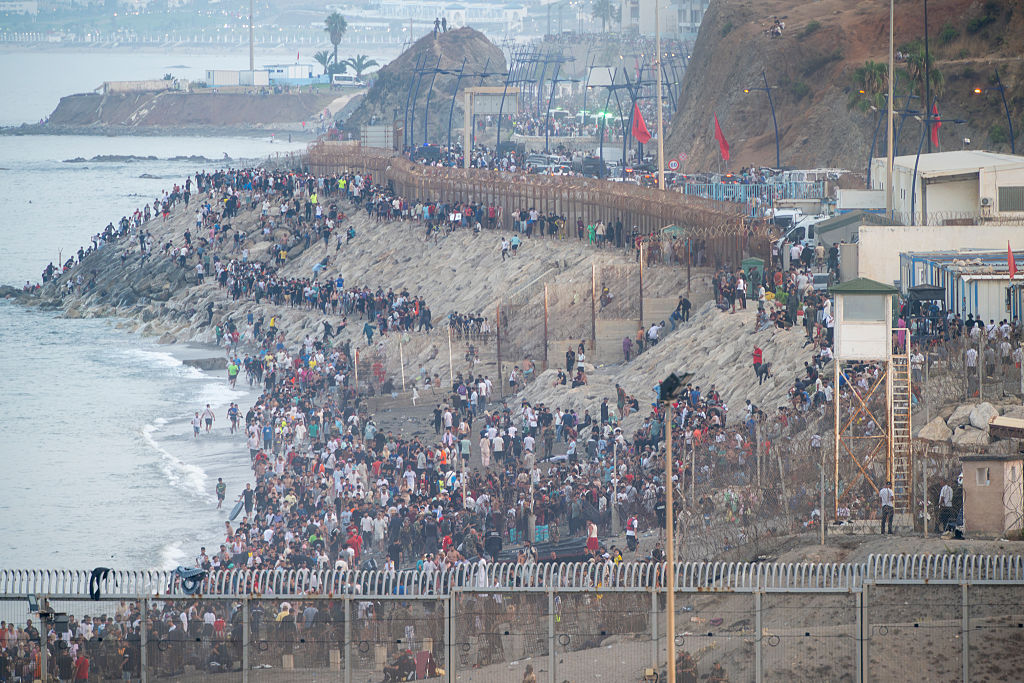
The arrival of over 72,000 migrants in late July sent shockwaves through Spain and the European Union, reigniting a decades-old territorial dispute that had been simmering beneath the surface.
Jorge Dezcallar, a former Spanish intelligence chief and ambassador to Morocco, emphasized that Rabat has never waived its demands regarding Ceuta and Melilla. According to him, these unresolved tensions played a significant role in the sudden influx of migrants that overwhelmed Ceuta.
In his assessment, Morocco is testing the waters at a time when it perceives Spain’s government as weakened. Dezcallar pointed to Spain’s current leadership under Prime Minister Pedro Sánchez, which has faced mounting corruption scandals involving high-ranking officials and close associates. The government’s pro-immigration policies and sharp criticism of the United States have also strained relations with European allies.
Spain-Morocco relations: a volatile dynamic
Dezcallar described the relationship between Spain and Morocco as emotionally charged rather than pragmatic, marked by dramatic fluctuations. Despite these tensions, the two nations remain deeply interconnected through trade and critical cooperation on migration control, counterterrorism, and regional security.
Rabat’s persistent claims over Ceuta and Melilla
Moroccan officials and state-aligned media have increasingly highlighted the sovereignty claims over Ceuta and Melilla, territories that have been under Spanish control for centuries—long before Morocco existed as a modern state.
Abdellatif Ouahbi, Morocco’s Justice Minister, reiterated this stance, stating, “This issue remains a priority. Every time we meet with Spanish counterparts, we raise it.”
He added, “We remain firmly anchored to our territories […] It is a matter we will resolve through negotiation and with patience.”
In response, Spain’s Defense Minister, Margarita Robles, firmly declared from Ceuta: “Let there be no doubt: Ceuta and Melilla are Spanish, and they are non-negotiable.”
The Spanish monarchy has never visited Ceuta or Melilla, and a Spanish foreign minister only set foot in these territories for the first time in modern democratic history this week—seen by some as an attempt to avoid provoking Morocco.
Madrid and Rabat attribute the immediate trigger of the latest crisis to human trafficking networks exploiting a July ruling by Spain’s Supreme Court, which barred the immediate deportation of migrants arriving by sea at Ceuta and Melilla.
Dezcallar suggested there was at least some level of permissiveness or negligence on the part of Moroccan authorities.
Growing threats and diplomatic tensions
The former ambassador cautioned that Spain lacks the means to prevent future surges, noting that this is not the first such incident. A major diplomatic rupture occurred in 2021 when Spain allowed the hospitalization of Sahrawi leader Brahim Ghali. In retaliation, Morocco facilitated the arrival of nearly 10,000 migrants in Ceuta, a move Defense Minister Robles described as “blackmail.”
Dezcallar remarked, “You can forgive a mistake once, but not twice […] I cannot believe the government was unaware,” referencing warnings from Ceuta authorities about a gradual rise in irregular arrivals the week prior.
Intelligence sources and police unions recently warned of a potential new surge in Ceuta by August 15, as calls to storm the city proliferated on social media. Spain’s intelligence services have also confirmed the threat.
Concluding with a stark warning, Dezcallar asserted, “Anyone who thinks Morocco will abandon its claims on Ceuta and Melilla is mistaken.”