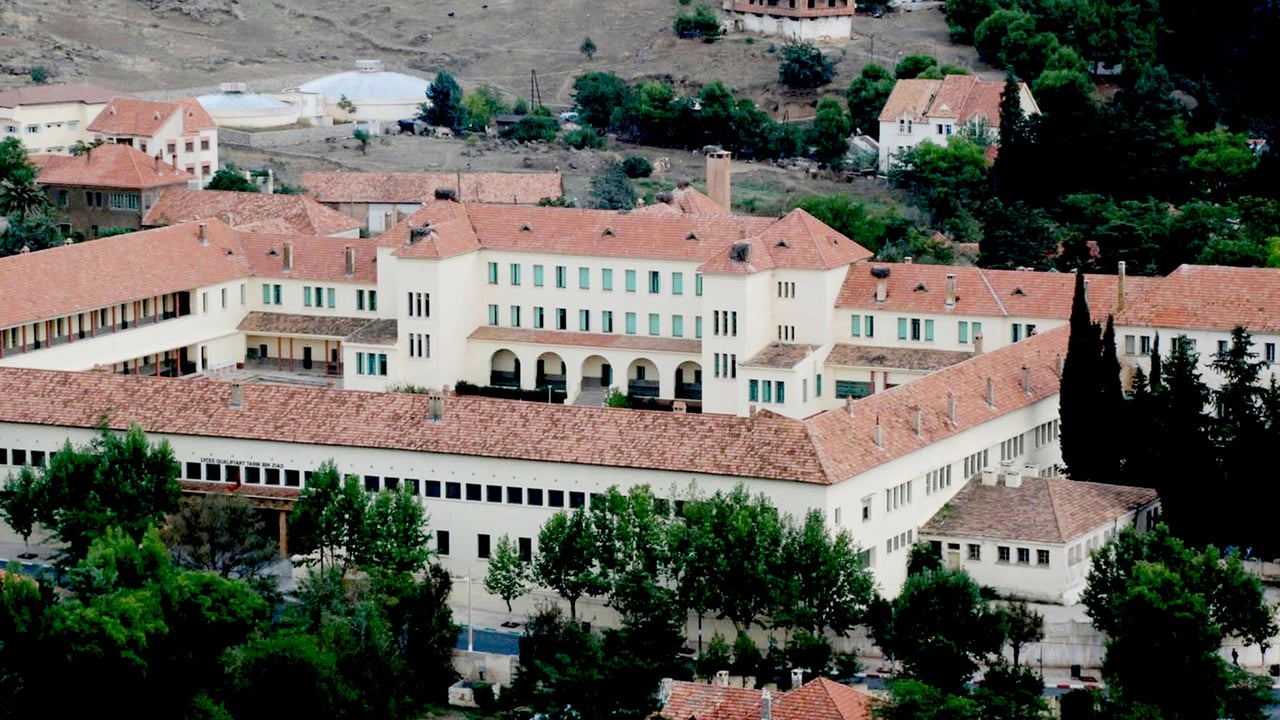
Azrou’s legacy stretches beyond its mountainous backdrop in the Middle Atlas. Once envisioned by French colonial authorities as the cornerstone of a Berber policy in Morocco, the Collège Berbère d’Azrou was meant to cultivate a loyal, francophone elite—far removed from the nationalist fervor brewing in cities like Fès and Rabat. This institution, later renamed Lycée Tarik Ibn Ziad, would serve the colonial administration and military. Yet history had other plans.
A Cradle of Dissent and Leadership

From its halls emerged not the obedient administrators colonial planners envisaged, but a generation of independence activists, ministers, governors, and even thirteen generals. Some of these alumni later served King Mohammed V, followed by King Hassan II. Others found themselves entangled in the turbulent events of the 1971 and 1972 coups. Their journey reflects a broader paradox: the institution designed to reinforce colonial control became an incubator for the very leaders who would shape modern Morocco.
Origins and Intentions
Established in the early 20th century, the Collège Berbère d’Azrou was part of a deliberate strategy to integrate Berber communities into the colonial framework. The French protectorate sought to create an elite that would be culturally aligned with Western values while remaining politically docile. The curriculum emphasized French language and culture, while sidelining traditional Amazigh heritage. The remote location of Azrou, nestled in the Atlas Mountains, was intended to isolate students from nationalist movements gaining momentum in urban centers.
From Colonial Design to National Legacy
The institution’s transformation began long before Morocco regained independence in 1956. By the time the French withdrew, the college had already produced a cadre of leaders who would play pivotal roles in the new nation. Among its most notable alumni were figures who championed Amazigh rights, served in high-ranking government positions, and even led military campaigns. The irony was palpable: a school meant to suppress dissent became a catalyst for change.
Military and Political Impact
A closer look at the college’s graduates reveals a striking pattern. Thirteen alumni rose to the rank of general, some commanding key units in the Royal Armed Forces. Others transitioned into civilian leadership, shaping policies that defined Morocco’s post-colonial trajectory. Their careers often spanned decades, bridging the reigns of Mohammed V and Hassan II. The 1971 and 1972 coups, in which several alumni were implicated, marked a turning point. These events underscored the complex legacy of the institution—one that defied its original purpose.
A New Identity
Renamed Lycée Tarik Ibn Ziad in honor of an 8th-century Arab conqueror, the school’s identity evolved alongside Morocco’s. Today, it stands as a symbol of resilience and adaptability, reflecting the nation’s ability to redefine its institutions in the face of change. While its early mission was rooted in colonial ambition, its later achievements belong to Morocco’s own narrative of struggle and progress.
Voices from the Past
Testimonies from former students offer a window into this transformation. Many recall a strict, disciplined environment that paradoxically fostered critical thinking. The disconnect between colonial expectations and student aspirations created fertile ground for dissent. These firsthand accounts, along with scholarly analysis such as Mohamed Benhlal’s Le collège d’Azrou: une élite berbère civile et militaire au Maroc, 1927-1959, paint a vivid picture of an institution caught between two eras.
Legacy and Lessons
The story of Azrou’s college is more than a historical footnote—it is a lesson in unintended consequences. Colonial planners underestimated the agency of those they sought to control. Instead of producing compliant officials, the college nurtured leaders who would redefine Morocco’s future. Its graduates became architects of independence, architects of governance, and sometimes, architects of disruption. Today, the institution’s legacy invites reflection on the power of education to both constrain and liberate.