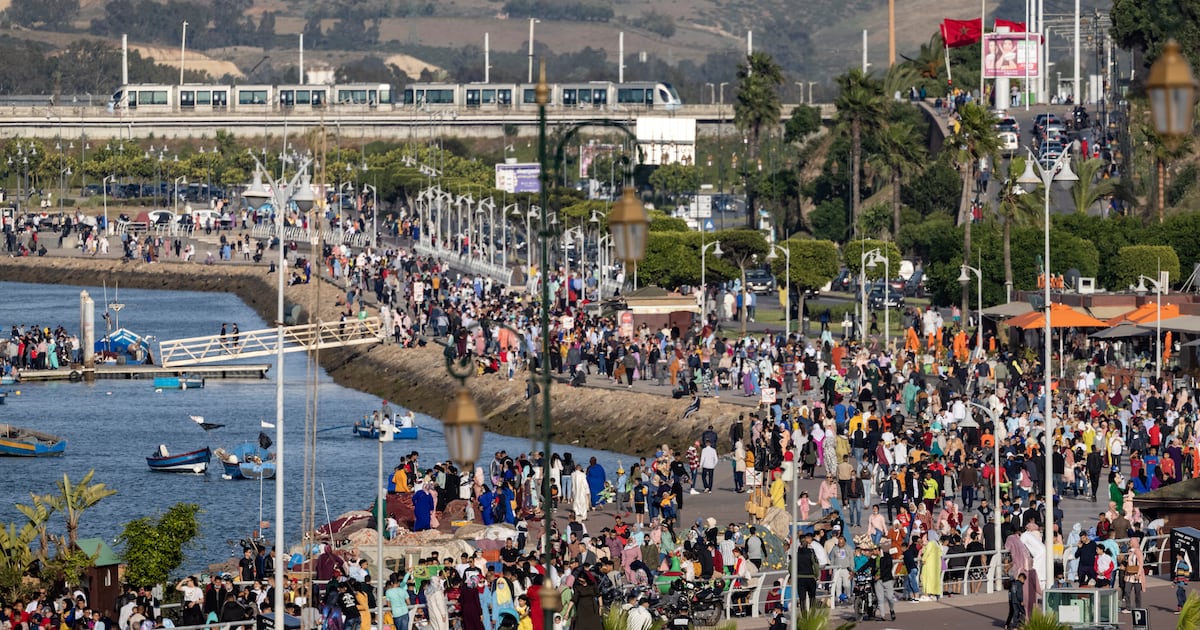
Morocco’s High Commission for Planning has unveiled fresh demographic projections for the kingdom, spanning from 2024 to 2060. The analysis, which accounts for varying trends in birth rates, mortality, and migration flows, paints a picture of a nation undergoing profound demographic transformation.
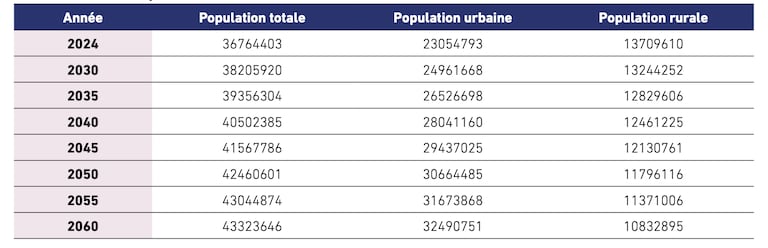
Under the central scenario—considered the most likely trajectory—the country’s population is projected to rise from 36.8 million in 2024 to 43.3 million by 2060. This represents a 17.8% increase over 36 years, translating to an average annual addition of 182,000 inhabitants. However, the growth rate is expected to slow significantly, with the annual population increase dropping from 0.7% in 2024 to near zero by 2060. This signals Morocco’s transition into a phase of demographic stability after decades of steady expansion.
Urbanization will continue to reshape the country’s demographic landscape. By 2060, nearly 32.5 million Moroccans—about three-quarters of the population—are expected to reside in cities, while rural areas will shrink to around 10.8 million inhabitants. This shift will intensify existing challenges tied to urban development, placing greater pressure on housing, infrastructure, and public services. The High Commission for Planning emphasizes the urgent need for coordinated public policies to address these imbalances, warning that unchecked urban growth could exacerbate territorial disparities.
Fewer births, fewer students: shifting education needs
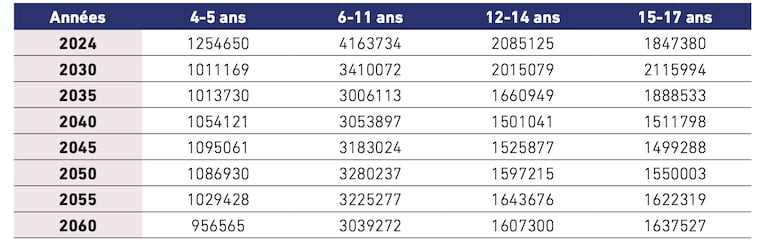
Declining fertility rates will lead to a notable reduction in the number of young people entering the education system. The preschool population (ages 4-5) is projected to drop by 23.8%, from 1.25 million in 2024 to 960,000 by 2060. Primary school-aged children (6-11 years) will see a 27% decline, from 4.16 million to 3.04 million. Similarly, middle school students (12-14 years) will decrease by 22.9%, and high school students (15-17 years) by 11.4%.
These demographic shifts present a strategic opportunity for Morocco’s education sector. With fewer students to accommodate, resources previously dedicated to expanding classroom capacity can be redirected toward improving teaching quality, upgrading curricula, and strengthening pedagogical support. The potential reduction in pressure to build new schools could allow for greater investment in teacher training and educational innovation.
An aging workforce and rising dependency ratios
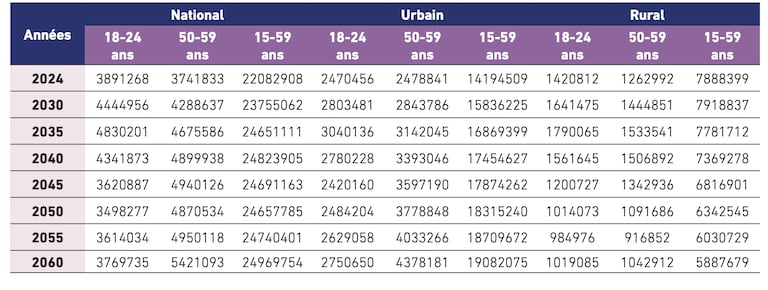
The working-age population (15-59 years) is projected to grow from 22.08 million in 2024 to 24.96 million in 2060, an increase of 13.1%. However, this growth will be unevenly distributed. In urban areas, fueled by rural-to-urban migration, the working-age population is expected to rise by 34.4%, reaching 19.1 million. In contrast, rural regions will see a 25.4% decline, dropping to 5.9 million. The High Commission for Planning cautions that this urban concentration will intensify competition in the labor market, particularly as cities absorb workers from declining rural areas.
Young adults aged 18-24—key new entrants to the workforce—will experience a slight national decline of 3.1%, from 3.89 million to 3.77 million. Yet, this trend varies by region. Urban areas will see an 11.3% increase, while rural zones will face a sharp 28.3% drop. Meanwhile, those nearing retirement (50-59 years) will surge by 44.9% nationally, driven by a 76.6% rise in cities and a 17.4% decline in rural areas.
This demographic window offers Morocco a temporary advantage: a growing working-age population relative to dependents. However, this advantage is temporary. As the proportion of people aged 60 and older swells, the country must act swiftly to capitalize on its workforce before the aging wave fully impacts the labor market and social systems.
One in four Moroccans will be 60 or older by 2060
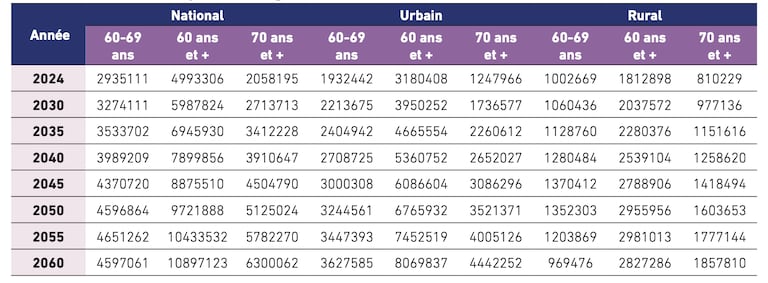
The population aged 60 and above is set to more than double, rising from 5 million in 2024 to 10.9 million by 2060—an average annual increase of 2.2%. By then, seniors will represent 25.2% of Morocco’s total population, up from just 13.6% today. This marks a dramatic demographic shift: in just over half a century, the share of elderly citizens will have tripled. The trend is most pronounced in urban areas, where the number of seniors will increase 2.5 times, from 3.18 million to 8.06 million. In rural areas, the growth is slower, with a 1.6-fold increase from 1.81 million to 2.83 million.
The acceleration in urban aging stems from two key factors. First, internal migration draws working-age individuals to cities, where they often remain until old age. Second, rural areas face higher mortality rates among the elderly, limiting the growth of their senior populations. The trend is even more pronounced among those aged 70 and older. Their numbers will nearly triple from 2.06 million in 2024 to 6.3 million by 2060, with urban areas seeing a 256% increase compared to a more modest rise in rural zones.
The roots of this demographic shift trace back to Morocco’s fertility transition, which began in 1975. As the first post-transition generations reach old age around 2035, the pace of aging will accelerate. Combined with declining mortality and, to a lesser extent, migration patterns, this will reshape Morocco’s social and economic landscape in the decades ahead.
A call for forward-looking public policies
The High Commission for Planning underscores that accelerated aging will raise the dependency ratio—the number of dependents (young and elderly) per working-age adult—posing significant challenges. These include financing pensions, expanding healthcare for an older population, and preserving intergenerational solidarity amid weakening traditional family structures. The erosion of rural-urban ties further complicates the task of maintaining social cohesion.
In the commission’s view, aging is not a temporary phenomenon but a structural trend that will define Morocco’s future. Policymakers must act now to adapt education systems, labor markets, territorial planning, and social protection mechanisms. The goal is to prepare a nation that may grow more slowly, but ages more rapidly, ensuring no segment of society is left behind in this transformative era.