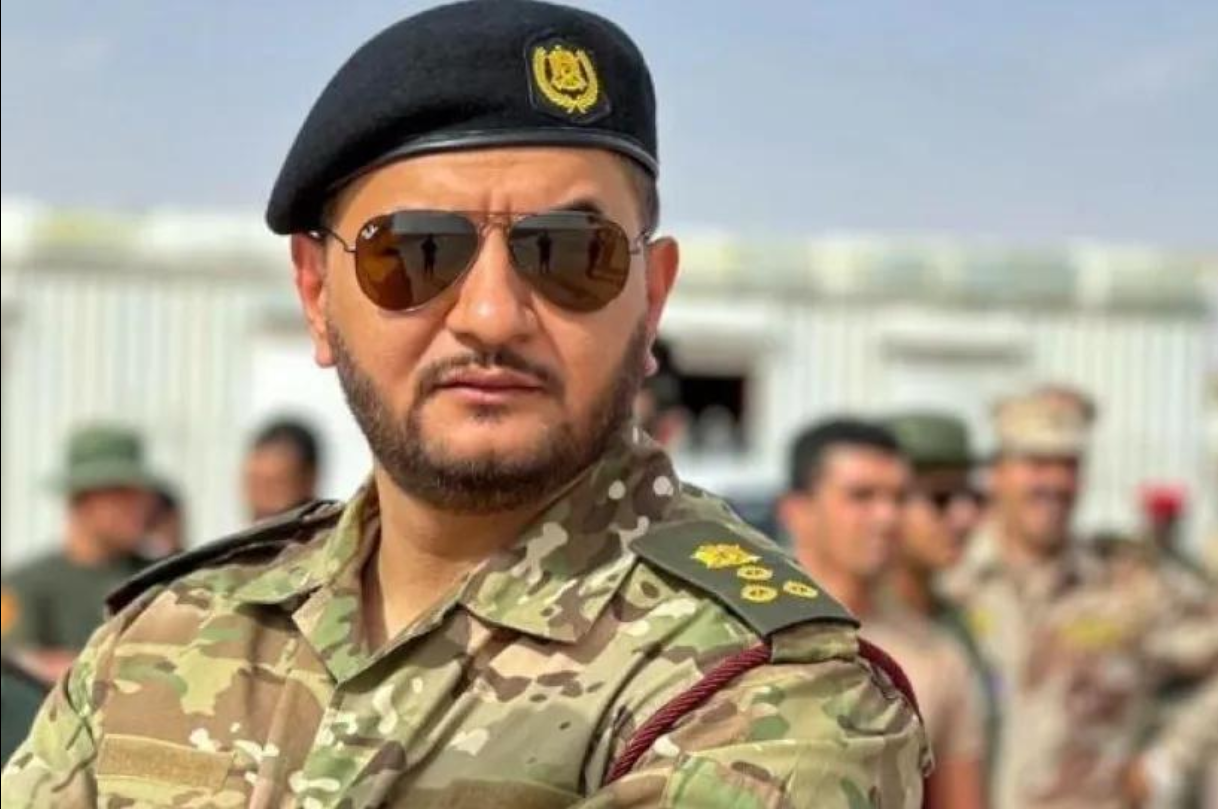
The air in Benghazi carried an unmistakable charge of change on the first Sunday of November. As Prime Minister Ali Mahaman Lamine Zeine of Niger stepped off the plane, the handshake with Saddam Haftar—deputy commander of Libya’s eastern forces—marked more than a diplomatic courtesy. It signified a turning point that could reshape the geopolitical landscape of the Sahel.
What unfolded in the Libyan port city was no ordinary meeting. The signing of a Strategic Cooperation Protocol between Niger and the eastern Libyan government signaled a deliberate shift in Niamey’s foreign policy at a moment when regional power balances hang in the balance. This move came just days after Algeria took a historic step—its parliament approved the deployment of military units into Niger, a decision that echoes across the desert and reshapes the strategic triangle linking Algeria, Libya, and the Sahel state.
Algeria’s bold move into Niger
On October 25th, Algeria’s Parliament endorsed the dispatch of units from the People’s National Army (ANP) to Niger. This decision shattered decades of military non-intervention doctrine, justifying the move as a necessary shield for national energy and economic interests—especially the protection of oil investments and the proposed Trans-Saharan Gas Pipeline.
Yet the strategic logic runs deeper. Algeria seeks to secure the fragile corridors linking the Maghreb to the Sahel, a region increasingly contested by armed groups and external actors. The anticipated base near Madama, deep in the northeastern Nigerien desert, lies within striking distance of both Libya’s restless south and Algeria’s own southern flank. From this remote outpost, Algiers aims not only to monitor movements of militants but also to assert control over the trans-Saharan trade and energy routes that have long sustained its regional influence.
The question now looms: how far will Algeria go in leveraging its military presence in a territory where Khalifa Haftar’s forces are steadily consolidating their influence? That presence is reshaping the rules of engagement—and the stakes are rising.
The triple frontier: where power games intensify
The tri-border area where Niger, Libya, and Algeria meet has become the epicenter of a silent war of influence. This vast and porous expanse is not merely a transit zone for people and goods—it is a battleground where military control, political loyalty, and economic leverage collide.
In southern Libya, the Haftar clan has steadily expanded its reach, pushing northward with a mix of tribal alliances and military operations. Algerian authorities watch with growing concern as Haftar’s influence stretches toward the Nigerien border. The fear is not unfounded: militants hostile to Niamey’s government have reportedly found sanctuary in southern Libya, though the exact nature of support remains shrouded in ambiguity.
For Niamey, this is a critical vulnerability. By deepening ties with Benghazi, the government seeks to counterbalance Haftar’s advance not only on the security front but also in the political domain. A stronger partnership with eastern Libya could allow Niger to project influence into southern Libya—where porous borders and ungoverned spaces create both threats and opportunities.
From distrust to confrontation: Algeria vs. Haftar in the Sahara
The breach between Algiers and the Haftar clan has widened over time. While Algeria has historically backed the Tripoli-based Government of National Accord, the Haftar faction has pursued its own regional alliances, carving out military and political space in eastern Libya. The recent rapprochement between Niger and Benghazi may well be interpreted in Algiers as a deliberate counter-move—a bid to dilute Algeria’s strategic footprint in the Sahel.
The Benghazi protocol, though its full contents remain undisclosed, holds the potential to expand into deeper military, security, and economic cooperation. Yet it remains unclear whether this constitutes the foundation of a formal anti-Algerian bloc or simply a pragmatic realignment amid shifting sands. One thing is certain: the protocol injects new momentum into a regional chessboard where every move reverberates across borders.
For now, both sides are measuring each other’s next steps. Algeria’s military presence in Niger adds a new dimension to an already tense standoff, while Haftar’s growing ties with Niamey signal that the power struggle is no longer confined to Libyan soil—it now extends into the heart of the Sahel.
Niger’s balancing act in a high-stakes triangle
For Niger, caught between Algiers’ expanding footprint and Haftar’s advancing influence, the challenge is immense. The country faces twin pressures: Islamic insurgencies at home and the risk of becoming a battleground for regional powers. In response, Niamey appears to be playing a delicate game—reaching out to both Algeria and Benghazi not out of allegiance, but out of necessity.
This balancing act could offer short-term breathing room. By diversifying partnerships, Niger may reduce its dependence on any single actor. But the strategy carries risks. A misstep could plunge the country into the crossfire of rival ambitions. Every diplomatic maneuver, every troop movement, every whispered alliance now carries the weight of history.
The November summit in Benghazi was not just another meeting. It was a declaration—a signal that the Sahel’s geopolitical tectonics are shifting. And in this realignment, Niger has become more than a bystander. It has become a pivotal player in a contest where the sands of the Sahara are shifting beneath everyone’s feet.
One conclusion stands clear: the rivalry between Algeria and Haftar’s faction is no longer confined to Libya. It is now unfolding across the deserts of the Sahel, where borders are but lines in the sand—and power is measured in influence, not miles.