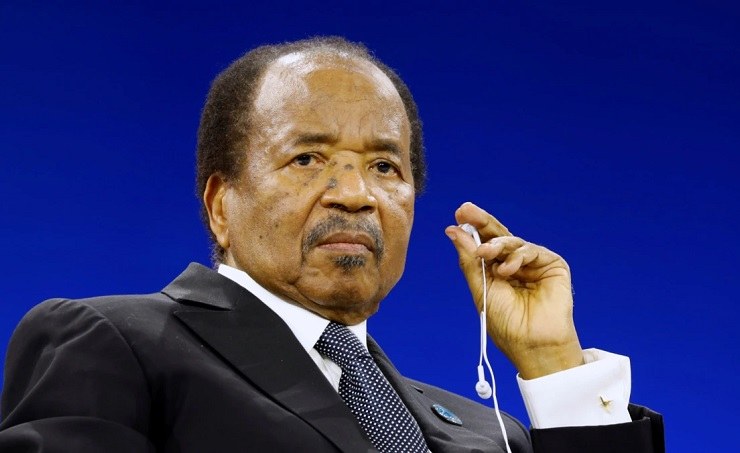
The health and prolonged absence of Cameroon’s Head of State, President Paul Biya, has ignited a wave of speculation and heated exchanges between government officials and opposition figures. Addressing the nation’s concerns, René Emmanuel Sadi, Minister of Communication and government spokesperson, firmly refuted rumors of a power vacuum, declaring, ‘The President is alive and in command. There is no vacancy.’
The 93-year-old leader, born on February 13, 1933, has been away from the country for nearly two months, a period that has triggered widespread unease. Opposition groups argue that such prolonged invisibility calls for greater transparency regarding both the President’s condition and the stability of national institutions.
Opposition voices demand accountability and institutional clarity
Critics, including prominent figures like Jean-Michel Nintcheu and the Union démocratique du Cameroun (UDC), have intensified calls for the Constitutional Council to assess the situation. They warn that the Republic’s stability cannot hinge on silence or unconfirmed reports, going so far as to describe the current governance as a dangerous ‘institutional void.’
These leaders insist that the absence of a clear framework risks undermining public trust and institutional continuity, particularly as the country navigates an era of unprecedented uncertainty.
Constitutional provisions for presidential succession
Cameroon’s Constitution outlines a strict protocol for handling presidential vacancies. According to Article 6, Paragraph 4, if the President is permanently incapacitated—whether due to death, resignation, or definitive impediment—the Constitutional Council must confirm the vacancy. A new election must then be organized within 20 to 120 days following the vacancy’s official declaration.
Interim leadership: roles and limitations
During such a transition, the presidency is temporarily assumed by the President of the Senate. Currently, this role is held by Aboubakary Abdoulaye, aged 64, who would be succeeded by the first vice president, Naomie Mikel Bégala épouse Akono, aged 63, in case of any impediment. The interim leader is constitutionally barred from altering the Constitution, reshuffling the government, or calling a referendum, nor can they stand as a candidate in the ensuing presidential election.


More Stories
Mali’s military under siege: the human cost behind Assimi Goïta’s strategic missteps
Niger’s August crisis: how Tiani’s reliance on Russia exposed deeper fractures in the military
Burkina Faso’s military push raises urgent questions amid mass displacement crisis