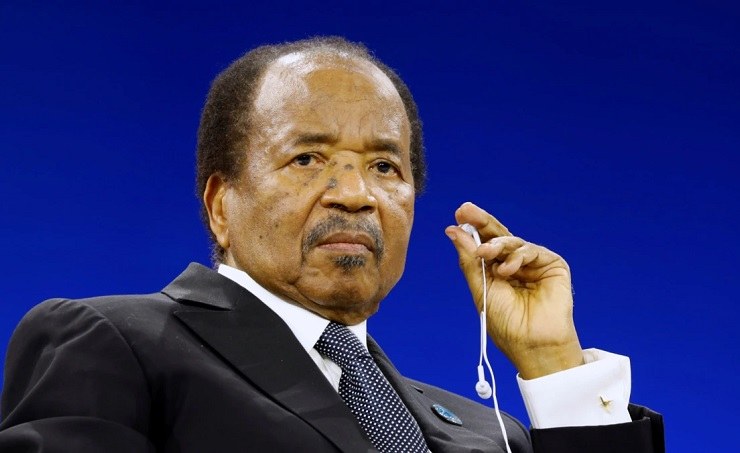
After 56 days of absence fueling intense speculation, Cameroon’s government has finally broken its silence: President Paul Biya is alive and his return is imminent. Yet the details remain shrouded in uncertainty.
Government breaks months-long silence with rare announcement
For two full months, the nation held its breath. Rumors swirled, social media exploded with theories, and opposition voices grew louder by the day. Then, on a Sunday morning, the government spoke. Through a televised address, Communication Minister and government spokesperson René Emmanuel Sadi declared, ‘The president is alive. There is no power vacuum.’ His words were clear, direct, and intended to quell the mounting anxiety—but they only deepened the mystery.
Paul Biya: Africa’s longest-serving leader at 93 years
At 93 years old, Paul Biya is not just Cameroon’s leader—he is the world’s oldest serving head of state and has ruled the country for 43 unbroken years. In June 2026, he departed Yaoundé for what was officially described as a ‘private stay in Europe.’ What was expected to be a brief trip has stretched on for nearly two months, becoming the longest absence of his decades-long presidency.
During this time, the presidency’s public activity has been minimal: a handful of military decrees, official telegrams, and social media posts congratulating French President Emmanuel Macron on Bastille Day. No images. No public statements. No appearances. Just silence—silence that has been filled with increasingly bold assumptions.
Media blackout fuels public skepticism
National media outlets have criticized the lack of transparency. ‘50 days is too long!’ declared a front-page headline in Le Messager, one of Cameroon’s leading newspapers. ‘Departing on June 7 with his wife for a private trip in Europe, President Biya has now spent over 50 days outside the country, leaving the nation in paralysis, a government paralyzed, and citizens gripped by stress and uncertainty about tomorrow.’
Presidential party insists: ‘The Lion has not left’
In response to the growing unease, the ruling RDPC party sought to reassure the public. Christophe Mien Zok, the party’s propaganda director, wrote in an editorial on July 15: ‘Power is not vacant. The Lion has not left.’ Yet such assurances did little to calm opposition leaders, who have grown increasingly vocal.
Opposition deputy Jean-Michel Nintcheu went further, formally petitioning the Constitutional Council to declare a power vacuum—a bold move given the absence of a vice president since constitutional reforms in April 2026.
Government finally responds—but questions linger
It fell to Minister René Emmanuel Sadi to deliver the government’s official response in a Sunday interview. His tone was measured, his message precise: no power vacuum exists. ‘Those calling for a declaration of a power vacuum should read the constitution more carefully,’ he stated. ‘President Biya is alive. He has not resigned.’
When pressed for a return date, Sadi remained evasive: ‘I cannot tell you exactly when President Biya will return. And even if I could, it is not for me to announce it.’ Yet he offered a promise: ‘I can say he will return very soon.’
Unprecedented absence raises legal and political questions
This absence is unlike any other. It surpasses even the 42-day trip Biya took in late 2024. Over 43 years in power, he has spent roughly 2,600 days abroad—nearly seven full years away from Cameroon. Records show no other African leader has ever spent so much time outside their country on private visits.
Reports suggest close members of Biya’s inner circle, including family members, may currently be in Switzerland. While unconfirmed by authorities, the claim has intensified public curiosity about the true nature of his stay.
Constitution remains silent on presidential absences
The legal debate centers on whether the constitution allows such prolonged absences. The opposition argues that after 45 days, the Constitutional Council should intervene. Yet the law offers no such clarity.
The UDC, an opposition party, has pointed out that no legal text in Cameroon regulates how long a president can remain outside the country. ‘There is no provision on the duration of a president’s absence abroad,’ the party noted in a public statement. The government has relied on this legal gray area, while critics call it a dangerous institutional void.
Nation holds its breath as uncertainty persists
Cameroonians are divided. Some express relief at the announcement that the president is alive. Others remain skeptical. Social media is ablaze with comments. ‘President Biya is the luckiest man in the world,’ wrote one user. ‘He can come and go as he pleases, with no consequences.’ Another noted, ‘50 days abroad—another record. What does this say about his health?’
The government’s delayed response has left many unconvinced. The lack of a specific return date, the vague explanation for the prolonged stay, and the absence of medical updates have only fueled speculation. Will the promise of an imminent return be enough to restore confidence? Or will it merely provoke more demands for transparency?
The unspoken question: what comes after Biya?
Beyond the immediate crisis lies a deeper issue: succession. At 93, Biya embodies the regime itself. But for how much longer? The question is no longer whispered. It is spoken aloud in boardrooms, in opposition meetings, and now, in public.
The UDC has called for an ‘institutional process to regulate prolonged presidential absences,’ framing it as a move toward transparency. Yet behind this demand lies the inevitable question: how will Cameroon govern itself once the ‘Lion’ is no longer on the throne?
Unanswered questions cast long shadows
Despite the government’s statement, major questions remain unanswered:
- Where is President Biya? Reports suggest Switzerland, but no official confirmation exists.
- What is the true purpose of his stay? Described as ‘private,’ the duration and circumstances defy easy explanation.
- When will he return? ‘Very soon,’ says the minister. But ‘soon’ is not a date.
- What is his health status? The minister confirms he is ‘alive.’ That is all.
Can government reassurance restore trust?
The government faced a difficult task: respond too late, and rumors flourish; respond too vaguely, and trust erodes. René Emmanuel Sadi defended the constitutional framework, pushed back against opposition claims, and delivered a promise. Yet in a country where power is deeply personalized and information is tightly controlled, words from a minister may carry less weight than the silence of the president himself.
As Cameroon waits, the nation holds its breath. The promise of an imminent return is eagerly anticipated—but it may not be enough. The crisis has exposed more than just the absence of a leader. It has revealed the fragility of institutions, the weight of silence, and the urgent need for clarity in governance.
Until then, Cameroonians wait. They wait for their president. They wait for answers. And above all, they wait to see if the ‘Lion’ will roar again—or if the silence will finally break the spell.

More Stories
Benin’s ARS second term: the strategic playbook behind stricter healthcare oversight
Mali’s military under siege: the human cost behind Assimi Goïta’s strategic missteps
Niger’s August crisis: how Tiani’s reliance on Russia exposed deeper fractures in the military