
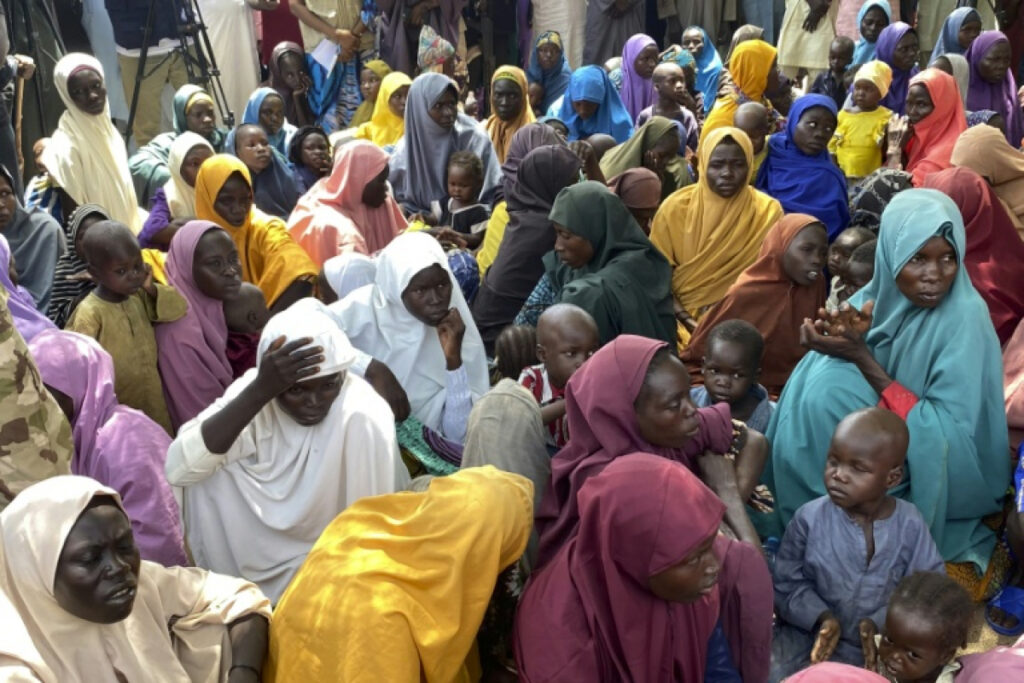
Following a successful military operation, authorities in Nigeria have formally handed over more than 400 women and children to local officials. These individuals were rescued from Boko Haram captivity, having been abducted earlier this year in Borno State, located in the country’s volatile northeast region.
A decade and a half of relentless jihadist violence, first by Boko Haram and later by its splinter faction, the Islamic State’s West Africa Province (ISWAP), has left deep scars across the region. Thousands have lost their lives, while millions have been forced from their homes, creating one of Africa’s most pressing humanitarian crises.
how the hostages were freed
Military authorities confirmed that approximately 360 individuals were freed during a weekend operation conducted with intelligence support, not as a result of direct negotiations or ransom payments. An additional 82 individuals were rescued in late May or early June, bringing the total number of freed hostages to around 434, according to Borno State Governor Babagana Umara Zulum.
The victims were seized from the village of Ngoshe, a small settlement less than 10 kilometers from the Cameroonian border, nestled within the rugged Gwoza hills—a long-standing stronghold of Boko Haram activity. The area has faced repeated attacks over the years, making it a high-risk zone for abductions.
a moment of relief and gratitude
“We are deeply grateful to Allah for this liberation,” shared Hassana Buba, a 43-year-old survivor, speaking from the Pulka displacement camp where the former captives were transferred. “This is a moment of joy, and we give thanks for our freedom.”
While the government denies paying ransoms—despite persistent allegations from analysts and families—such payments remain a contentious issue. Between July 2024 and June 2025, an estimated $1.66 million was reportedly paid to armed groups, including jihadists, bandits, and separatist factions, according to data from a Lagos-based intelligence firm.

More Stories
Is Chad truly heading towards political appeasement?
Bradley Barcola will adapt faster than Florian Wirtz at Liverpool, says Jermaine Pennant
Togo eyes nuclear power to secure future energy sovereignty