Signature: bYU9CuXMOMngPgmD6Q6vvKC/AMqfYm8InPRlBoYu3BbKkFJCbbzQFGHNU2u5WbR9kbW+lHFrWnRBzxbtxIsxfHTHlw4Lo4+sqf07CP0lw+FbYFXy67lKppEzQNi9ydsKLv2kL276J5hOLW3kH10CwVKlEWpzXjqh1/yH6wqGQ3WoF/S5QZJT3BBkpQWBtARZjbBqDz5SyS0dhWdP2+uo1UFY9ttamb4bgbCQJp4ZTIkDXIRepa/1nkmnPTjYI9IVW+AFMs/lDvqgK9b9aSTKwK3yDZTSHwH1tbBv5yGnmKLbiuEc/jzw7lLKm/vM4LZ8QVKdwV+VLYfjNv98+VUP0a80r09cuKXoyWmqlW35RgWUP3Evc7wLQmbmAK1cL3rPP50p7Nx9cYd3J+Q2CybMP2Cla8pNLC5nSde99C87+S8CHZt531D17q+g3BTb/bSKYxywmReS/AzIFuu3slAywbfWt4HYJBgZgN55HSx+enBkIhx8Kb42/9eWwhkSZmWIUKqfN40eCD1RwXv4xNril/DPrEXIM2OpgP6Sb9QNz4OYHEQyijoy/yuAvhtdjKLZpxf9gBCc7cyIdoQ7d0M8U7EfJF8uwcVt2h0e4cTq8dJuh9X4k1wwPJxtCi3sOMPHd//JEo/73e//rKHm8poYNLBd0EoiWsbIwM4CyaADIm3iXORxK/DUhFR2+p7hsK2U7M0hl3v3Kut++T/S9lpPYsIKgd+IwrrHSfPNEIBAZfq6Wjo+rRRYDVfuvrL4yXKoTjDfLtV+H756A/69KmZLDjwH9NF0PVNksc2GSiO6vFAg8530XS+2nUFdqNogFFMQDNx4O8g2TAs/2Lk+cGGFX46+fTV9MHt0OkL972Hh2Y9eZaVzcsTYZu1b+hkAZrf9PvAN5HyTEFNPJpgG/3SvmHPD3wqG8SG0GfQmgT86uzqDhVaq0dYFaxpb+8KHgjKFOQe0sE5oxww1bJZ8Dw8EzT9sKtB8w9FcVQdufNTH5HY=
Villagers flee as jihadist attacks intensify in Loga
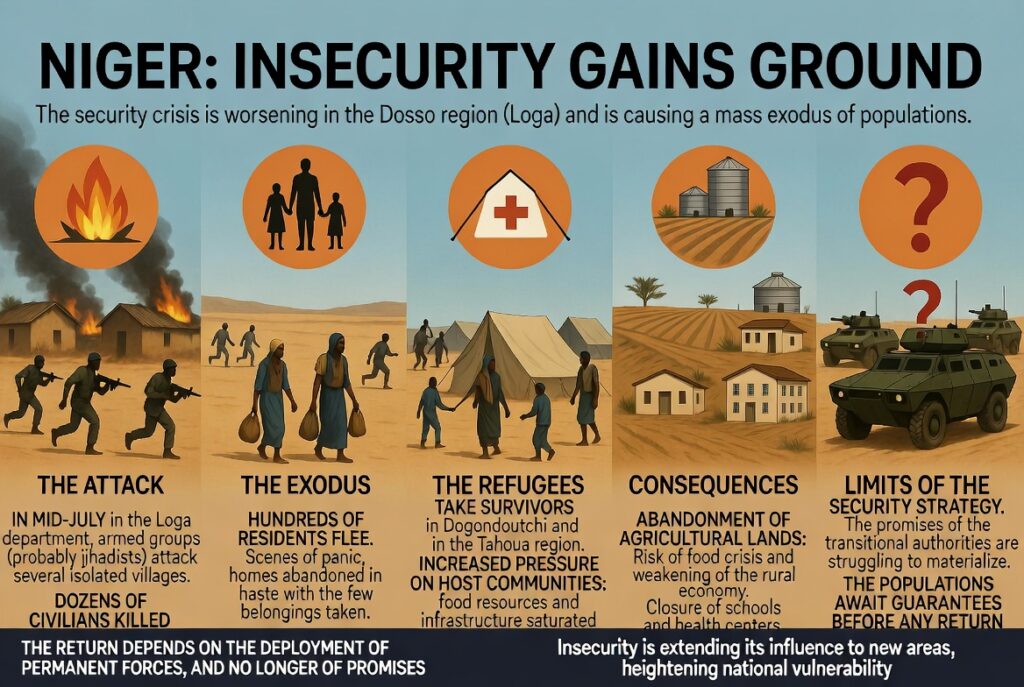
The security crisis in Niger has taken a devastating turn in the Loga district of Dosso Region, where escalating violence in mid-July has driven hundreds of residents from their homes. The relentless attacks, attributed to armed jihadist groups operating in the area, underscore a grim reality: despite repeated pledges from military authorities, many communities remain dangerously exposed to incursions that leave civilians paying the ultimate price.
The assaults, which targeted remote villages, exposed the fragility of local security measures. Witness accounts paint a picture of terror homes abandoned in haste, families clutching only what they could carry as they fled, and entire communities plunged into chaos. The death toll among civilians has risen into the dozens, with survivors recounting harrowing scenes of violence and loss.
Displaced populations seek refuge amid mounting pressures
Those who escaped the violence have primarily sought shelter in Dogondoutchi and neighboring areas of Tahoua Region. Yet, their arrival has placed an unsustainable burden on host communities already struggling with economic hardship, crumbling infrastructure, and scarce food supplies. The convergence of displaced families and local vulnerabilities highlights the deepening humanitarian crisis unfolding across Niger.
Military strategy under scrutiny as attacks spread
The latest wave of violence has reignited debates over the effectiveness of Niger’s security strategy under its transitional leadership. Since the change in government, restoring national security has been framed as an absolute priority, yet attacks continue to strike both border regions and interior zones. This persistent instability raises serious questions about the adequacy of military operations and the redeployment of defense forces, leaving many to question whether the state’s promises align with ground realities.
The surge in internal displacement serves as a stark indicator of the conflict’s worsening trajectory. When families abandon their lands, farms, and livelihoods, it signals a profound erosion of trust in the state’s ability or willingness to protect them. For these displaced communities, return is no longer contingent solely on the cessation of hostilities but on tangible security guarantees that remain conspicuously absent.
Residents demand concrete security before considering return
Nigerien authorities have vowed to bolster military presence in the affected zones to create conditions conducive to the return of displaced populations. Yet, skepticism runs deep among locals. Many insist they will only venture back once security forces demonstrate a sustained and capable presence capable of thwarting future attacks. For a population weary of empty assurances, the bar for trust has been raised and it remains unmet.
This crisis extends beyond immediate human suffering. The abandonment of farmlands threatens upcoming harvests, deepening food insecurity and destabilizing rural economies already battered by years of violence. Schools shutter, healthcare facilities falter, and local economies unravel, leaving communities increasingly vulnerable. The humanitarian toll is mounting, with displaced families urgently requiring food, clean water, medical care, and dignified shelter. Aid organizations warn of dwindling resources to address the spiraling needs of Niger’s growing displaced population.
The events in Loga also reveal a troubling expansion of the security crisis. Once confined to traditional hotspots, attacks now encroach into newer territories, amplifying fears that armed groups are exploiting gaps in security protocols. This geographic spread underscores the intensifying challenge of containing the violence and the urgent need for a more robust, adaptive response.
For the residents of Loga, the path forward remains clear: security must come first. Until their basic safety is assured, the exodus will persist, with consequences that ripple through every facet of Niger’s social, economic, and political fabric a crisis that grows ever more entrenched with each passing day.




More Stories
Niger’s August crisis: how Tiani’s reliance on Russia exposed deeper fractures in the military
Burkina Faso’s military push raises urgent questions amid mass displacement crisis
Behind the three-day delay: what really delayed Senegal’s 2026 revised budget bill