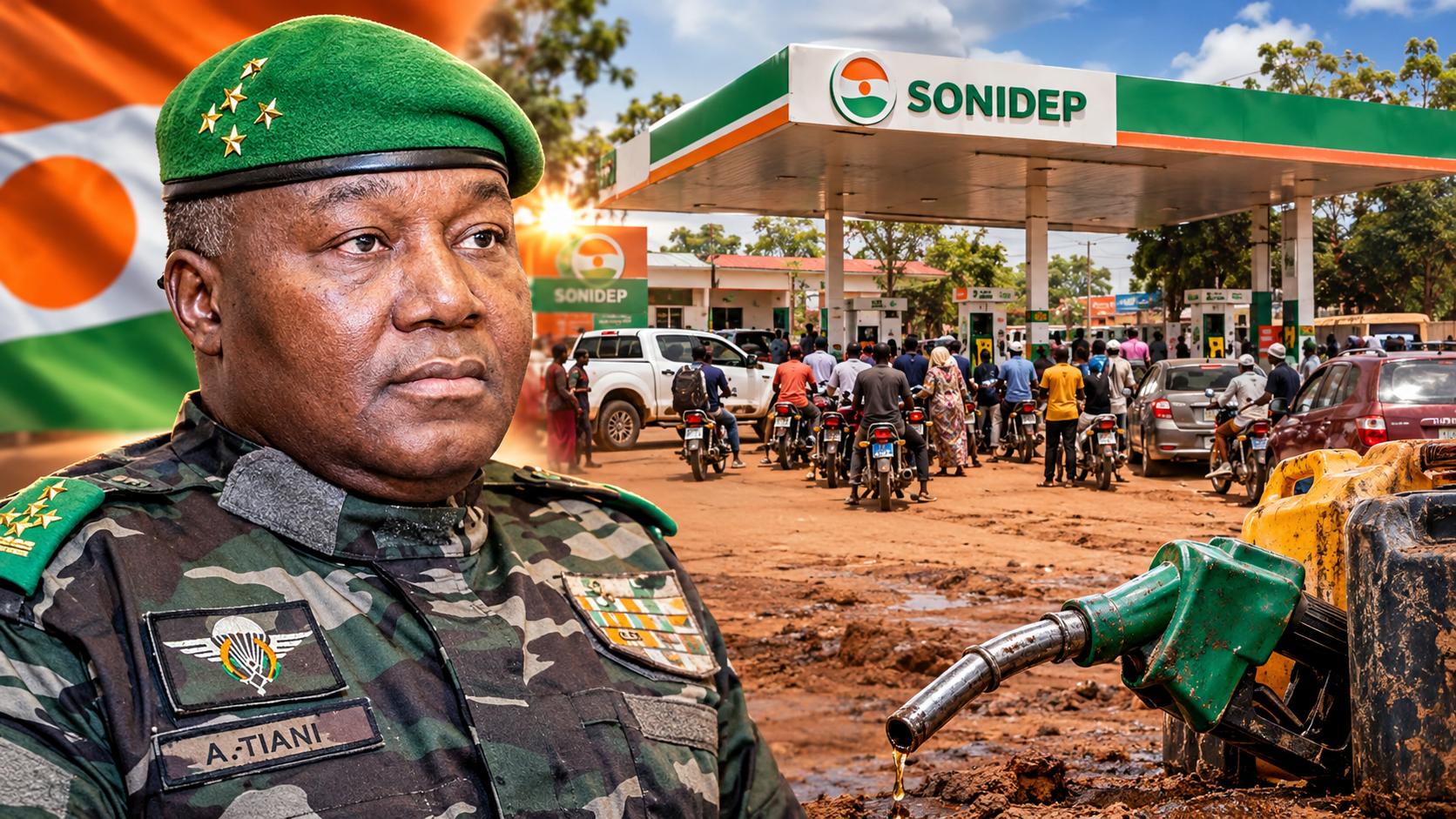
The streets of Niger tell a starkly different story from the one presented in official statements. While long queues form outside gas stations across the country, authorities insist despite overwhelming evidence that the fuel shortage is little more than a baseless rumor.
This glaring disconnect between reality and government rhetoric has ignited a fierce debate. Is the population being misled, or is the official narrative wilfully ignoring the hardships faced by citizens? The question looms large: who should the public trust when experience contradicts declared policy?
From denial to discord: how Niger’s fuel crisis exposes flawed communication
The government’s insistence that no shortage exists stands in sharp contrast to the visible struggles of drivers, motorcyclists, and commuters who spend hours waiting for fuel. If this were merely a rumor, why do the lines persist day after day? While authorities attribute the situation to logistical challenges, motorists see something far more troubling: a failure in leadership.
Niger’s situation is not unique. Across the Sahel region, military-led governments face a recurring challenge: reconciling unpopular realities with narratives of resilience and progress. In neighboring Mali, officials recently acknowledged prolonged fuel disruptions in their New Year address, framing them as manageable challenges rather than a crisis yet the impact on daily life remains undeniable.
Why cheap fuel alone cannot sustain an economy
For months, Niger’s regime touted its remarkably low fuel prices as proof of effective policy. Yet affordability matters little when supply remains erratic. A fuel crisis cannot be measured by sticker price alone; it is defined by accessibility. When transporters, farmers, and businesses struggle to keep operations running, the economic toll far outweighs any temporary savings at the pump.
The fragility of Niger’s supply chain further complicates the issue. Like its Sahel counterparts, Niger relies heavily on fuel imports from coastal nations, leaving its markets vulnerable to global and regional disruptions. Even minor delays in shipments can trigger cascading shortages something no government can dismiss with blanket denials.
Transparency or obfuscation: the heart of the matter
The crux of the debate is not whether the word “shortage” is officially banned. It is whether Niger’s leadership is willing to engage with the truth. If no crisis exists, authorities could easily dispel doubt by publishing concrete data: stockpile levels, regional distribution records, import volumes, and station re-supply schedules. When citizens see one reality and authorities demand belief in another, credibility erodes and quickly.
Governments across the Alliance of Sahel States have frequently condemned so-called “disinformation campaigns,” suggesting that public skepticism stems from manipulation. Yet this framing only underscores a deeper dilemma: when governance prioritizes narrative over facts, trust the bedrock of any functioning society becomes the first casualty.
What comes next: accountability and the road to recovery
The burning question now is whether Niger’s authorities will transition from denial to action. Citizens are not asking for miracles only for honesty and solutions. Can the government implement emergency measures to stabilize supply? Will it acknowledge the scale of the problem without resorting to rhetorical deflection?
One truth is certain: the longer the disconnect persists, the harder it becomes to reclaim public confidence. In the end, the people of Niger will judge not just the crisis itself, but the sincerity of those entrusted with addressing it.
By Ramatou Soumana — Journalist