Benin’s 2027 budget has crossed a symbolic threshold after being presented to parliament, setting new benchmarks in public debate over economic priorities and fiscal responsibility. At 4.76 trillion FCFA, the budget marks a 14.7% increase from the revised 2026 plan, reflecting deeper commitments to growth acceleration, debt moderation, and social transformation. But the real test lies ahead: can this ambitious plan translate into real gains for citizens amid rising expectations and lingering skepticism?
From plan to public: how the 2027 budget sparks debate
With the budget now in parliamentary hands, lawmakers, economists, and civil society are weighing in on what this unprecedented 4.76 trillion FCFA package truly means. Supporters hail it as a bold step toward economic sovereignty and job creation, particularly in agriculture and industry, while critics question whether the deficit target of 2.8% of GDP is realistically achievable without compromising social spending or future debt sustainability. The stage is set for a high-stakes negotiation over priorities, funding mechanisms, and accountability.
Mixed voices across the economic spectrum
- Agricultural lobby: Hails the focus on modernizing farming and increasing local processing capacity, calling it long overdue for food security and rural jobs.
- Industry associations: Welcome the push for industrial diversification but warn that bureaucracy and infrastructure gaps could blunt the impact of new incentives.
- Youth activists: Argue that investment in vocational training and entrepreneurship must go beyond rhetoric, with clearer implementation timelines and monitoring.
- Human rights groups: Praise social spending increases but demand transparency in how funds for health and education are allocated and audited.
Where the budget places its bets: economic and social transformation at a glance
The government has laid out five strategic levers to drive growth and inclusivity:
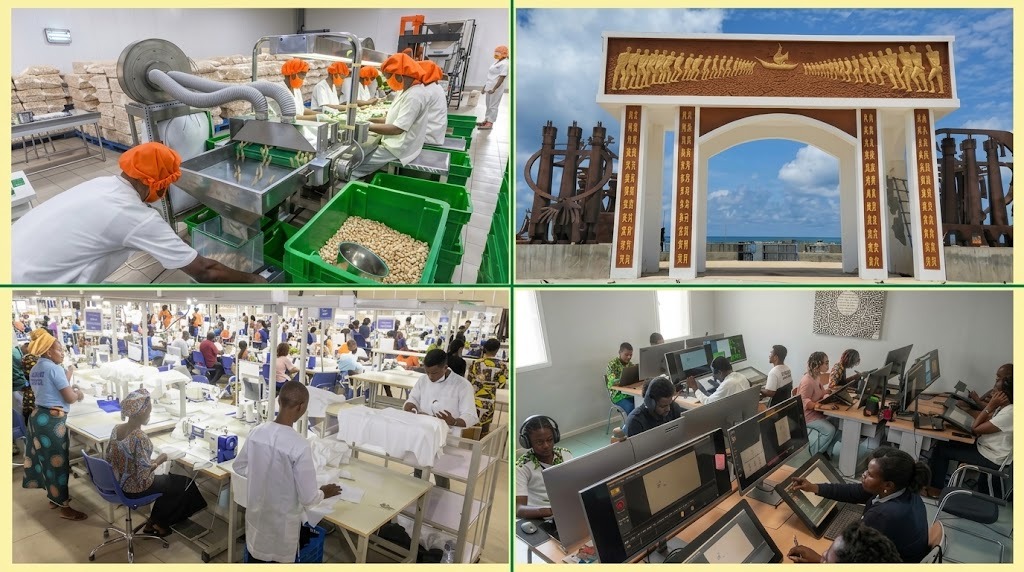
- Agricultural modernization: Targeted at boosting productivity, shortening supply chains, and increasing value-added processing within Benin.
- Industrial expansion: Focused on attracting investment, supporting SMEs, and creating high-value manufacturing jobs.
- Tourism and culture: Designed to unlock Benin’s rich heritage as an eco-tourism and cultural hub, diversifying revenue sources.
- Digital innovation: Seen as a cross-cutting enabler to improve governance, education, and service delivery through technology.
- Human capital development: Emphasizes education reform, youth employment, health system upgrades, and social safety nets.
A closer look at social investments
Social spending is set to rise to 1.6 trillion FCFA, a 24% jump from 2026, targeting vulnerable households, girls’ education, school feeding programs, and emergency relief.
Notable initiatives include:
- The scaling up of the ARCH (Assurance pour le Renforcement du Capital Humain) program, offering conditional cash transfers and skill-building for the extreme poor.
- Full national rollout of free secondary education for girls, aligned with gender equity goals.
- Universal expansion of school meal programs to improve attendance and learning outcomes.
- A new national social benefits platform and emergency assistance fund to streamline support during crises.
Healthcare upgrades: hospitals, nutrition, and emergency care
Health remains a cornerstone of the budget, with 1.5 trillion FCFA earmarked for sectoral upgrades. Among the most visible commitments: construction of five new zone hospitals, rehabilitation of regional centers, and nationwide expansion of child nutrition programs.
New measures include:
- Densification of child vaccination campaigns, with a focus on hard-to-reach areas.
- Strengthened malaria control and maternal health initiatives in rural districts.
- System-wide emergency response upgrades to cut treatment delays and improve survival rates.
Education: building, equipping, and reforming
The budget doubles down on education infrastructure and reform. Over 600 billion FCFA is allocated to build and rehabilitate secondary schools, university facilities, and digital learning systems.
Key actions include:
- Continuation of the laptop and school furniture rollout in underserved regions.
- Reforms to the student grant system, prioritizing STEM and vocational fields aligned with labor market needs.
- Targeted recruitment of teachers under merit-based, skills-first criteria.
- Phased elimination of automatic career advancement in favor of performance-linked evaluations.
Local empowerment: unlocking municipal potential
Recognizing that central investment alone won’t transform regions, the government is piloting a new municipal financing model.
The initiative focuses on two pillars:
- Communal Investment Fund (FIC): A revolving pool of resources allowing local governments to co-finance projects tied to economic value chains.
- Economic zoning mechanism: Facilitates access to diversified funding from partner banks and development agencies, reducing reliance on state transfers.
The goal: more predictable, transparent, and equitable allocation of public funds at the grassroots level—essential for inclusive growth and local ownership of development.
Beyond the numbers: what the public is really asking
Amidst the technical discussions, citizens and civil society are sharpening their questions. Can the government balance deficit control with urgent social investments? Will education and health reforms translate into better services, not just more buildings? How will micro and small businesses, especially in rural areas, access the industrial and digital opportunities promised?
The public debate is shifting from whether the budget is big enough to whether it is smart enough. Transparency, monitoring, and timely implementation will determine whether 4.76 trillion FCFA becomes an engine of transformation or another missed opportunity.