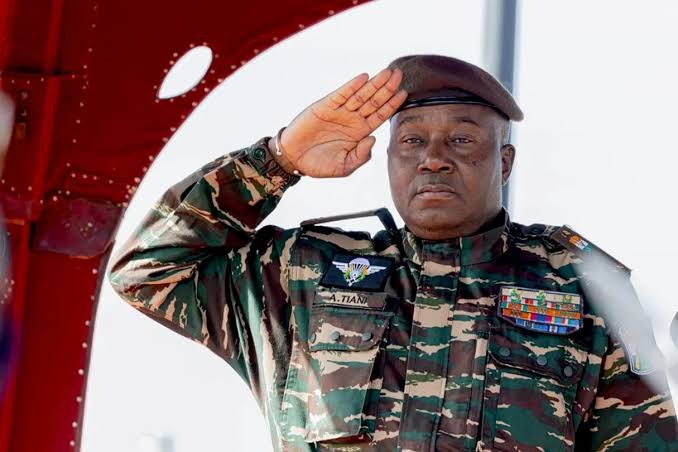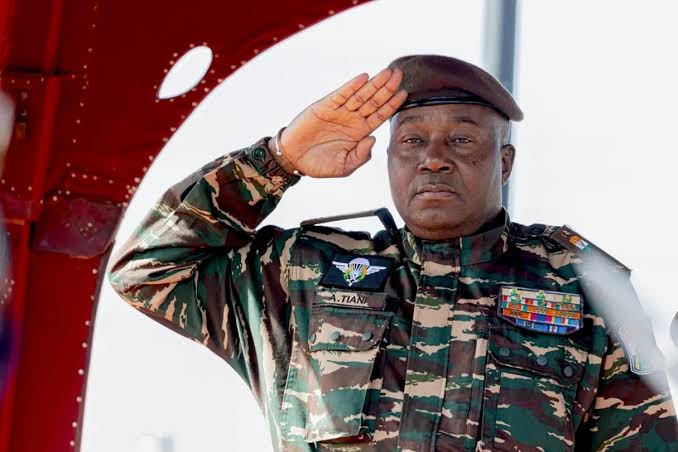
With its economy in freefall and state coffers nearly empty, Niger’s military rulers have launched an unprecedented financial offensive against China’s CNPC. Under General Abdourahamane Tiani’s transitional regime, Niger has ordered the state-owned Chinese oil giant to surrender over $5 billion in foreign exchange—more than 3 trillion West African CFA francs—within just six weeks. Observers warn this aggressive stance could either shore up immediate liquidity or trigger a catastrophic withdrawal of Chinese investment.
How Niger’s economic crisis fuels reckless financial demands
Years of poor governance, shrinking export revenues, and a ballooning security budget have pushed Niger to the brink of bankruptcy. The 2025 national budget, slashed from 3.03 trillion to 2.75 trillion CFA francs, offers a stark snapshot of the crisis. Instead of adopting fiscal discipline or seeking balanced negotiations with foreign partners, the junta has resorted to what analysts describe as a high-stakes financial gamble—epitomized by its $5 billion ultimatum to CNPC.
The government’s justification for the demand—claiming only 105 billion CFA francs in oil revenue from the Agadem project were transferred over two years—raises eyebrows. In 2024, Beijing extended a $400 million loan to Niamey, explicitly secured against future oil earnings. This means the regime has already borrowed against revenues it now claims are missing—a glaring contradiction that undermines its credibility.
Niger’s seven-point ultimatum to CNPC: a blueprint for coercion
The $5 billion demand is part of a coordinated campaign to assert control over CNPC and reshape Niger’s oil sector in favor of the state. Each demand is crafted to pressure the company into compliance:
- Sudden capital outflow: An ultimatum to repatriate billions in foreign exchange immediately, without regard for financial feasibility or market conditions.
- Local hiring quotas: Irrational targets demanding up to 90% of CNPC’s workforce be Nigerien, despite severe local talent shortages and operational needs.
- Pipeline audit reversal: A full-scale review of the $2.3 billion Niger-Benin pipeline aimed at unilaterally renegotiating tariffs downward.
- Refinery takeover: Gradual removal of Chinese technical staff from the SORAZ refinery, with state-appointed managers gradually replacing them.
- Reserve inflation: A unilateral reassessment of the Agadem oil fields to inflate reserves and justify higher royalty demands.
- Forced reinvestment: A requirement to funnel $1 billion into high-risk exploration projects like Dinga Deep and Abolo-Yogou, regardless of feasibility or return on investment.
- Government interference: The insertion of state officials into CNPC‘s corporate governance to influence strategic and financial decisions.
Why Niger’s attack on CNPC could backfire spectacularly
This financial brinkmanship comes at a perilous geopolitical moment. China remains Niger’s largest foreign investor and a crucial ally—both financially and diplomatically. By escalating from rhetoric to overt coercion, the Tiani regime risks triggering a swift capital flight, pulling out not just funds but critical technical expertise, infrastructure development, and long-term partnership.
This is not the first time Niamey has pursued aggressive tactics. Earlier this year, Chinese executives were expelled under opaque allegations within 48 hours. Such brinkmanship, combined with the current financial demands, signals a pattern of coercion that erodes investor trust and deters future foreign direct investment.
History shows that when foreign investors face contract violations or coercive tactics, they respond with withdrawal—not compliance. The junta might achieve a short-term liquidity boost, but at what cost? A self-inflicted wound that leaves Niger more isolated, economically weaker, and diplomatically exposed than ever before.
The actions of the Tiani administration reveal not strategic acumen, but desperation. And as past crises have shown, desperate leaders often make decisions that carry the heaviest long-term consequences—for their nations and their people.