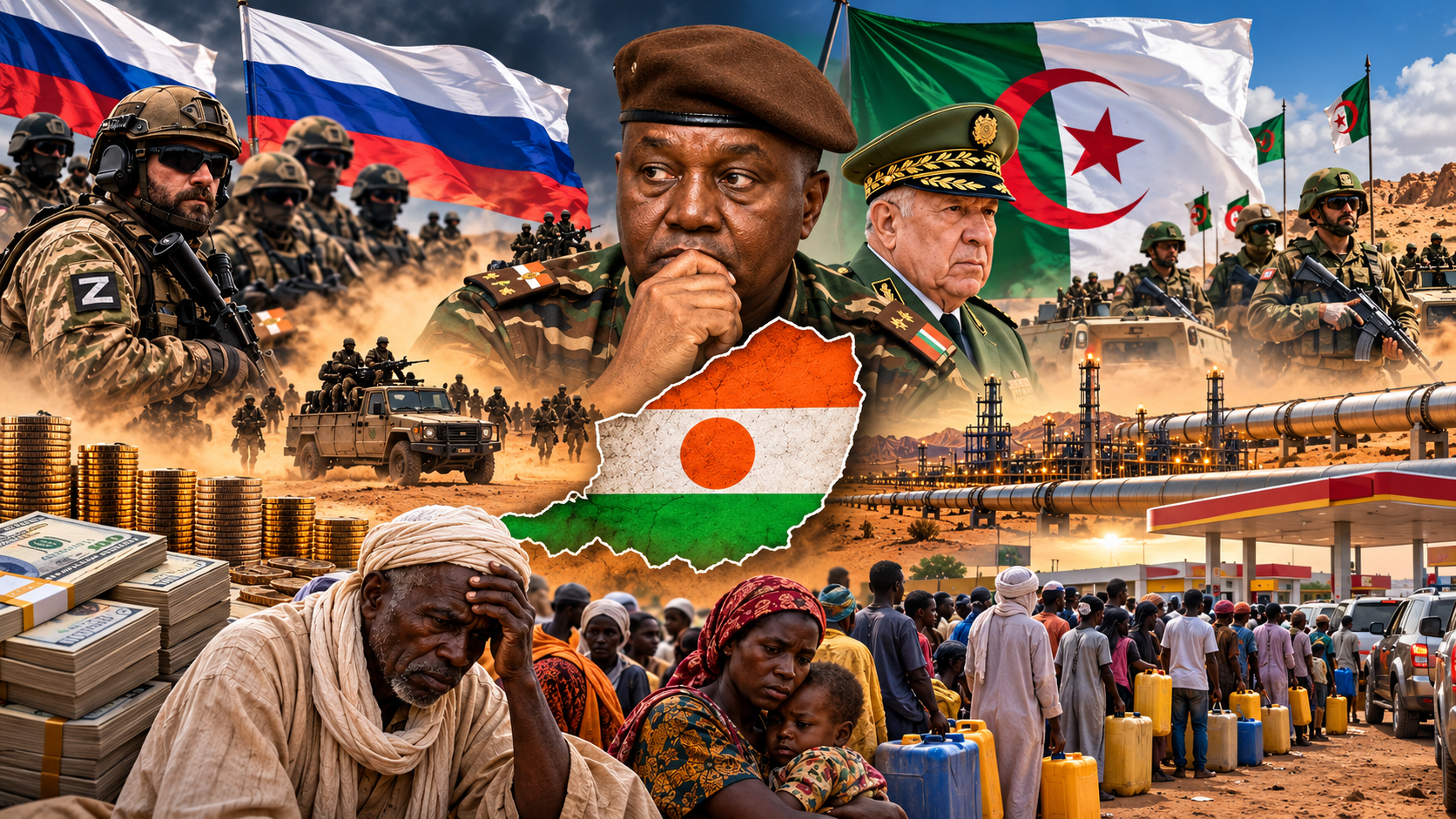
Niger’s military leaders are recalibrating their security strategy, turning to Algeria after a year of heavy reliance on Russian mercenaries failed to deliver tangible stability. The Algerian Parliament’s unprecedented approval of military deployment to Niger marks a watershed moment in regional security dynamics, but it has left citizens and analysts questioning the true motives and long-term implications of this pivot.
From Russia to Algeria: A strategic gamble with unproven outcomes
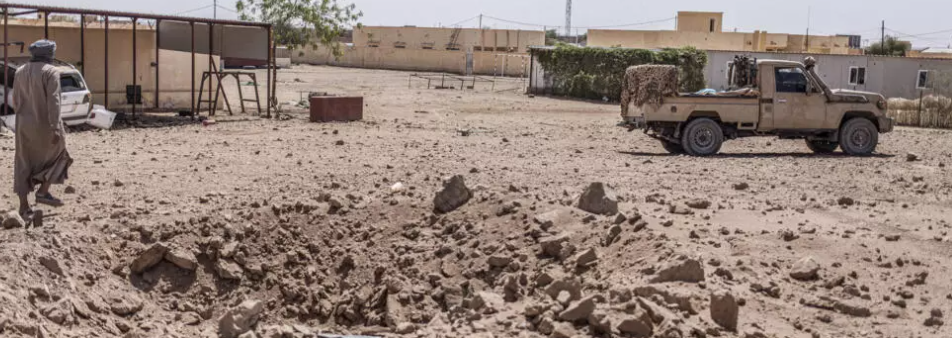
The regime of General Abdourahamane Tiani, which seized power in July 2023, built its early security doctrine around cooperation with Russian forces, including personnel linked to Africa Corps. Despite these alliances, violence persists across swaths of the country. Armed attacks continue to target civilians, roadways remain vulnerable, and state authority struggles to extend beyond urban centers. These persistent challenges raise a critical question: why is additional foreign military support now being sought when existing partners have not yet demonstrated decisive results?
A costly equation: Russian mercenaries and the price of insecurity
The financial burden of the Russian cooperation remains shrouded in secrecy. While some estimates cite figures as high as $10,000 per mercenary per month, no public contracts have confirmed these claims. What is clear is that such expenses if real place a heavy strain on a national budget already stretched thin by competing priorities including education, healthcare, and infrastructure development.
The central dilemma is not whether Niger has the sovereign right to seek external military support, but whether these partnerships deliver measurable security dividends for the population. A partnership cannot be deemed successful solely on the basis of political discourse or newly signed agreements. True effectiveness must be measured in reduced casualties, safer communities, and restored access to essential services.
Algeria’s role: Partner in security or protector of strategic interests?
On October 25, 2026, Algeria’s Parliament approved the deployment of units from the People’s National Army (ANP) to Niger a historic departure from Algeria’s traditionally cautious foreign military engagement. The move follows high-level diplomatic exchanges and the signing of a military cooperation protocol, signaling a deepening strategic alignment.
Yet beneath the diplomatic language, a key question emerges: does Algeria’s involvement aim primarily to address Niger’s security crisis, or to safeguard its own energy interests? The timing is no coincidence. Algeria’s economy is closely tied to energy exports, and Niger hosts significant oil and gas infrastructure, including components of the proposed Trans-Saharan Gas Pipeline. Securing these assets aligns with both nations’ interests, but also raises concerns about how military presence will translate into tangible protection for ordinary Nigerien communities.
What’s on the table?
Border surveillance: Joint patrols and monitoring of cross-border movements.
Energy corridor security: Protection of oil fields, pipelines, and related infrastructure.
Logistical support: Potential assistance in training, logistics, and intelligence sharing.
However, without clear operational definitions, the full scope of Algeria’s mission and its cost remains unclear. Will this deployment include combat troops? Will Algerian forces operate independently or in coordination with Nigerien units? And most critically, how will success be measured and by whom?
Who pays the bill? Transparency in a high-stakes gamble
The most pressing concern for Niger’s citizens is financial responsibility. Already grappling with food insecurity and economic decline, families face the prospect of diverted public funds toward military operations with uncertain outcomes.
Questions linger: Who will finance the operation? Will Algeria cover operational costs? Will Niger bear a share of the logistical, housing, or supply expenses? Or will credit agreements or resource concessions create hidden liabilities?
Transparency is not optional it is essential. A government that invokes national sovereignty must also demonstrate accountability. Citizens deserve clarity on the cost of security partnerships, the expected benefits, and the mechanisms for measuring progress. Without public oversight, military cooperation risks becoming a black box where public funds are spent with limited scrutiny and even more limited results.
Beyond military deployment: The need for a national security strategy
The regime’s frequent recourse to foreign military partners first Russia, now Algeria reflects a failure to develop a cohesive, self-sustaining national security framework. While external support can provide temporary relief, sustainable peace requires robust local institutions, trained security forces, and community-based reconciliation efforts.
Military agreements, no matter how ambitious, are not substitutes for governance. They cannot fill gaps in healthcare, education, or economic opportunity all of which are fundamental to long-term stability. Nor can they replace the obligation of a government to protect its people on its own soil.
The measure of success: Protecting people, not just pipelines
The true test of this partnership will not be the number of foreign troops deployed, nor the volume of signed agreements. It will be measured in the lives saved, communities secured, and roads made safe for children, farmers, and traders.
For General Tiani’s government, this moment demands more than strategic posturing. It requires proof. Proof that every dollar spent strengthens security, not just influence. Proof that partnerships serve the nation’s interests, not external agendas. And above all, proof that the sovereignty so loudly proclaimed is matched by accountability and results.
Until then, the question remains: how many partners and how much debt will it take before Niger’s people finally see the peace and protection they deserve?
By Ramatou Soumana — Journalist