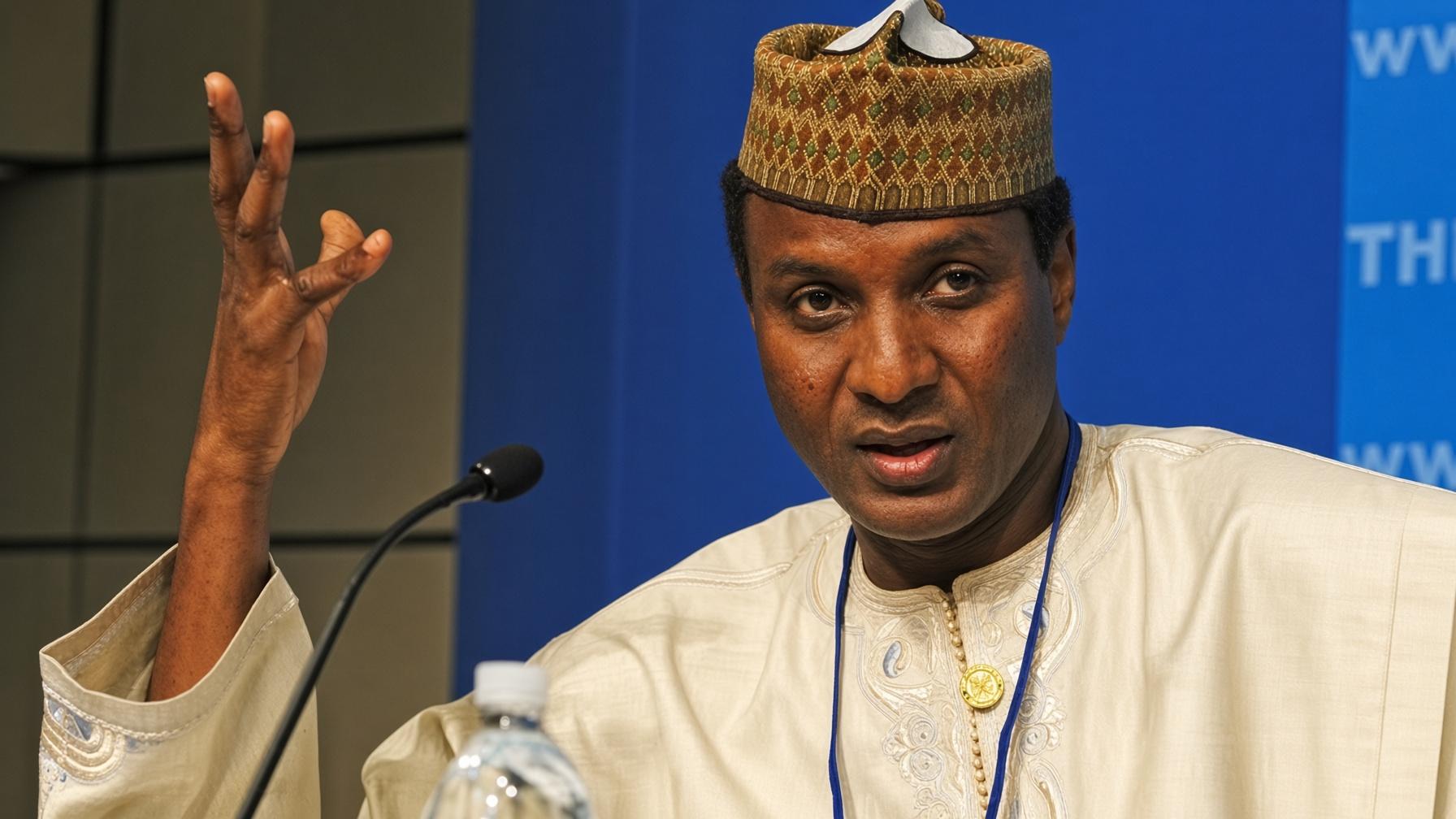
The 81st United Nations General Assembly had barely wrapped up its opening sessions when the fallout from Prime Minister Ali Mahaman Lamine Zeine’s address began to ripple through Niamey and beyond. His speech, delivered to a hall of international envoys, leaned heavily on the familiar vocabulary of the ruling military council: reclaiming national resources, achieving economic independence, and breaking free from neocolonial influence. Yet as the diplomatic dust settles, a far more uncomfortable conversation is taking shape across Niger — one driven not by slogans but by balance sheets, shutdowns, and a growing sense of betrayal among ordinary citizens.
From podium applause to public unease
The immediate reaction to Zeine’s UN performance was predictably divided. Supporters of the National Council for the Safeguard of the Homeland (CNSP) hailed it as a defiant assertion of sovereignty. But within hours, economic analysts, opposition figures, and even some former allies began asking pointed questions. How can a government claim economic liberation while its flagship public enterprises hemorrhage money and production? The gap between the rhetoric in New York and the reality in Arlit and Niamey has become impossible to ignore.
A sovereignty narrative under strain
Under General Abdourahamane Tiani, the junta has staked its legitimacy on the promise of reclaiming Niger’s mineral wealth from foreign hands. But the operational record of the very companies entrusted with that mission tells a different story — one of mismanagement, lost revenue, and evaporating public services.
The SOMAÏR collapse: when control replaces competence
For years, the uranium mines of Arlit were framed as a symbol of exploited national wealth. When the CNSP pushed out the French partner Orano and took operational control of the Société des Mines de l’Aïr (SOMAÏR), the message was clear: Niger would finally manage its own resources. The outcome, however, has been nothing short of a cardiac arrest for the uranium sector.
- Supply chain breakdown: Critical chemical reagents, including sulfuric acid, can no longer reach the site reliably. Border blockages and logistical paralysis have brought operations at Arlit to a near standstill.
- Commercial deadlock: Without established distribution networks or trusted export certificates, tons of yellowcake sit unsold in storage — a glaring symbol of isolation.
- Social fallout: Local subcontractors go unpaid, jobs disappear, and the tax revenues that once financed hospitals and schools have become a mirage.
The lesson is brutal: changing the flag on a factory gate does not make its machines run. In mining engineering, patriotic slogans are no substitute for technical expertise and disciplined management.
What the 80% production drop really means
Since the new authorities took over, uranium output has plummeted by roughly 80%. This is not a temporary dip. It is a structural failure that has erased years of value creation and left Niger’s most iconic export industry gasping for air.
The SONIDEP black hole: 25 billion FCFA and counting
If uranium is a slow-motion disaster, the oil file looks increasingly like a full-blown state scandal. The Société Nigérienne des Produits Pétroliers (SONIDEP), elevated by the CNSP to lead the marketing of crude oil — including through the new mega-pipeline to Benin’s coast — was supposed to be the financial engine of a new era.
Instead, internal balance sheets and progress reports point to losses exceeding 25 billion CFA francs. The figure alone exposes the bankruptcy of the military’s economic model. On one side, SOMAÏR’s production has collapsed by nearly 80%, gutting the uranium value chain. On the other, SONIDEP — meant to harvest the fruits of national oil — has accumulated a record deficit instead of filling state coffers. Together, these two public jewels represent a system of resource evaporation hidden behind a veil of illusory nationalism.
Unanswered questions fuel public suspicion
How can a national company with a monopoly on fuel distribution — in a country aspiring to be a major oil exporter — manage to dig such a financial abyss? The absence of certified accounts and the oil ministry’s radio silence have only deepened suspicions: poor management, dubious negotiated contracts, improvised intermediaries, and inflated invoices.
The public debate is no longer about whether the junta’s economic narrative is flawed. It is about who will be held accountable — and when.
Sovereignty cannot be a shield for incompetence
Faced with this industrial rout, the reflex of the Tiani-Zeine tandem is well rehearsed: blame ECOWAS, international sanctions, the “invisible hand of imperialism,” or the mismanagement of previous regimes. But at some point, the leaders must answer to their own people.
- Where are the audit reports promised with such fanfare after the July 2023 coup?
- How are the sales contracts for Niger’s oil and uranium actually negotiated?
- What exactly happens to the rare revenues that reach the public treasury if national companies are going bankrupt?
True sovereignty is measured by tangible results: public enterprises that create value, salaries paid on time, investment in basic services, and full transparency in public finances.
A national conversation that cannot be silenced
By using patriotic rhetoric to mask the SOMAÏR and SONIDEP failures, the CNSP is distorting the very meaning of sovereignty. The Nigerien people cannot eat speeches delivered at the UN. They need an economy that works — and a government willing to answer for the one that is falling apart.
The fallout from the UN address has opened a new chapter in Niger’s public debate. The question now is not whether the sovereignty narrative can survive the numbers, but whether the junta can afford to ignore the mounting anger at home.