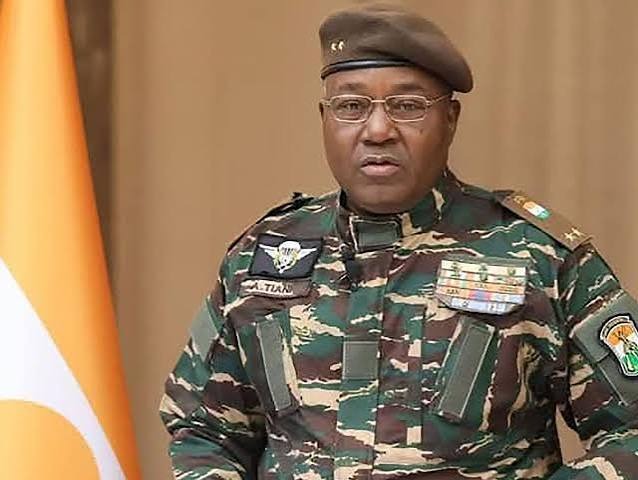
The corridors of Niamey’s palace have never felt more suffocating. What was once a strategic stronghold is today the general’s personal prison—where the architect of Niger’s 2023 coup now faces a stranger truth: power taken by force may satisfy ambition, but it cannot silence the fear of betrayal.
How a palace siege became the general’s daily reality
Three years after seizing power, General Abdourahamane Tiani no longer commands the loyalty of his men—he commands their suspicion. Once a shadowy guardian of presidential security, he now spends his nights in a fortified bunker, his movements confined, his trust in the military shattered. The illusion of control has given way to an inescapable question: could anyone with his history ever rule without the sword hanging over their head?
The turning point came not with a foreign invasion or a regional coup, but with an uprising from within. On the night of August 28–29, 2026, soldiers drawn from multiple garrisons breached the air force base and advanced toward the palace. It was only the rapid intervention of Russian-backed Africa Corps mercenaries that saved Tiani from a fate far worse than political defeat.
The Barmou betrayal: a miscalculation that backfired
In a desperate attempt to regain authority, the general made a fatal move in September 2026: he dismissed General Moussa Salaou Barmou, the respected chief of staff and one of the architects of the 2023 takeover. Barmou, once a loyal lieutenant, was placed under house arrest—an act that ignited a firestorm within the ranks.
Soldiers across elite units saw the removal as a betrayal of the revolution. Whispers among officers soon escalated into open ultimatums: cease arbitrary arrests, release detained comrades, or face mass insurrection. The message was clear—Tiani’s grip was slipping, and the army he once led was no longer his to command.
Security doctrine reversed: the enemy now wears a uniform
Tiani didn’t rise to power by being reckless. A career security specialist, he understood the mechanics of coups better than most. But leadership by fear is a paradox: it ensures obedience, not devotion. Once the mutiny exposed the fragility of his authority, the general discovered that his greatest vulnerability wasn’t Al-Qaeda at the border—it was the barracks where loyalty was once unquestioned.
The irony is brutal. In 2023, toppling a civilian government was a straightforward operation. In 2026, staying in power means surviving the institution that put him there—and every day, that battle grows harder to win.
Trapped in his own fortress
Confined to a heavily guarded bunker, Tiani’s world has shrunk to a few trusted advisors, foreign mercenaries, and a dwindling circle of soldiers who still answer to him. His public appearances are rare; his speeches, when delivered, carry the tone of a man speaking from behind bars—not from a throne.
What began as a quest for sovereignty has devolved into a cycle of survival. The general who once orchestrated a takeover by force now spends his days scanning for threats in shadows he can no longer control. And in Niamey, the question on everyone’s lips is no longer about who rules Niger—but who will survive to rule it next.

More Stories
Mali’s war of narratives: how a once-neutral news site became a megaphone for official military spin
Senegal’s palm oil revival: how Jakarta’s expertise could end a decade of stagnation
Behind the scenes: how Gabon is reshaping EU fishing talks for stronger sovereignty