Powering forward: how Mali keeps its lights on despite political divide
As Mali charts a new course outside the Economic Community of West African States (ECOWAS), one steady force remains: a regional electrification initiative that refuses to stall. The ongoing collaboration underscores a pivotal moment where practical benefits outweigh diplomatic ruptures, ensuring that communities across Mali continue to gain access to critical energy resources.
A project born before the break and still delivering
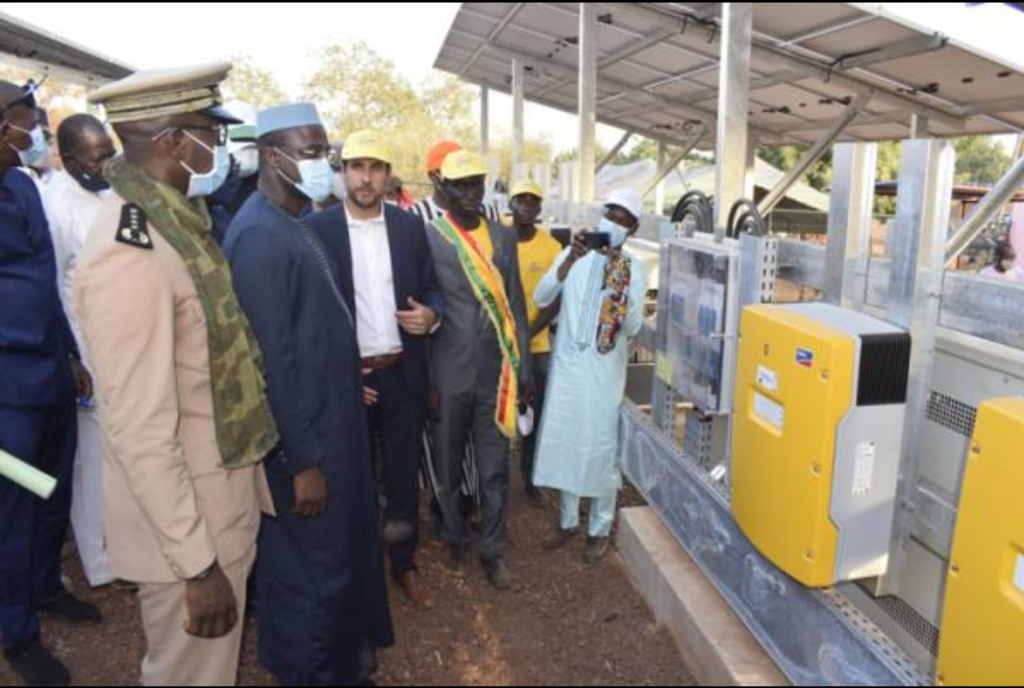
The ECOWAS Regional Electricity Access Project (ECOWAS-REAP), launched in 2019 with a $225 million commitment from the World Bank, is making tangible progress in Mali, Guinea-Bissau, and Gambia. Despite the political separation between Bamako and the regional bloc, the project’s tangible results have become impossible to ignore. Data from the latest steering committee meeting in Abuja revealed that nearly 500,000 people now have improved or new access to electricity, with 490 communities newly connected.
Sustained cooperation in action
The Malian delegation’s presence at the Abuja meeting signals that technical collaboration persists, even amid broader political tensions. While the World Bank funds the initiative, ECOWAS handles regional coordination, demonstrating how development projects can outlast institutional fractures.
The unshaken commitment behind the numbers
The figures tell a story of progress, but behind them lies a story of resolve. The Malian government, through the national electric utility company Energie du Mali (EDM-SA), has remained engaged in monitoring and evaluating the initiative’s implementation. Officials are now advocating for an extension of at least 30 months to address security constraints and contractual delays, a request currently under review by the World Bank.
Energy as a cornerstone for growth
For Mali, reliable electricity is more than a convenience—it is a lifeline for economic stability, social services, and local businesses. The country’s leadership has repeatedly emphasized that the needs of its people do not waver with political realignments, and neither should the development efforts designed to meet them.
Breaking barriers: can infrastructure survive political rifts?
The Mali-ECOWAS case offers a resounding yes. Even as Bamako distances itself from the regional bloc, the shared infrastructure and financial commitments forged through ECOWAS-REAP remain intact. The project’s longevity hinges not on political harmony, but on the enduring need for accessible power and the recognition that energy access is a non-negotiable pillar of progress.
Looking ahead: sustainability and self-reliance
For ECOWAS, the challenge now is ensuring the durability of these installations and empowering national electricity providers to manage them long-term. For Mali, the path forward focuses on deepening energy access regardless of regional affiliations, proving that when development imperatives take precedence, cooperation finds a way.