
«It is unacceptable for coup plotters to win elections through democratic means»
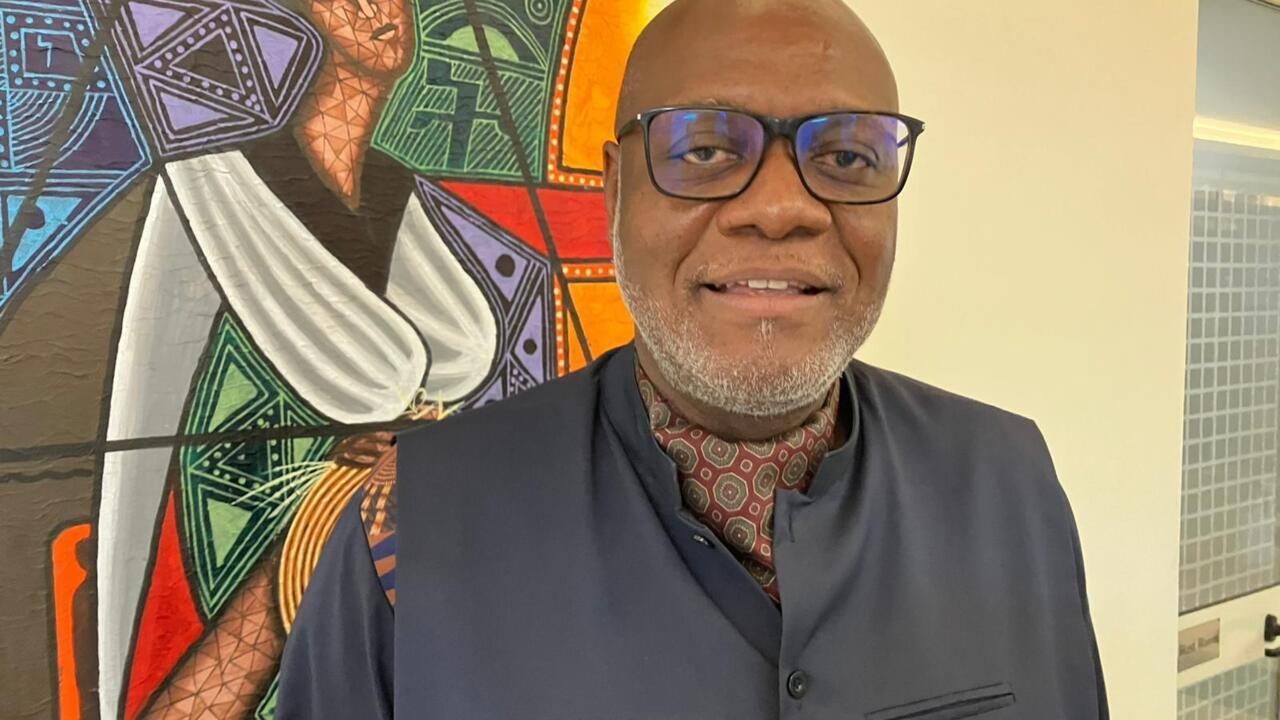
The 39th African Union summit concluded with a bold declaration to silence the guns and put an end to unconstitutional power transfers. But can this commitment truly be taken seriously? Paul-Simon Handy, a Cameroonian researcher and regional director of the Institute for Security Studies (ISS) for East Africa, was in Addis Ababa to share his insights as a guest on Africa Midi.
An ambitious but fragile declaration
The African Union’s latest summit in Addis Ababa sent a clear message: no more unconstitutional changes of government will be tolerated. Yet, the declaration to silence the guns raises questions about practical enforcement. How can the AU ensure that leaders who seized power through coups are barred from participating in elections?
Paul-Simon Handy, an expert on African security issues, argues that while the AU’s stance is commendable, its implementation remains a challenge. «The organization must go beyond declarations,» he insists. «Legal frameworks need to be strengthened to prevent coup perpetrators from running for office and regaining legitimacy through elections.»
Coup leaders and electoral legitimacy
The debate intensifies as several countries in Africa face political instability. Handy highlights that the AU’s credibility hinges on its ability to translate words into action. «Allowing coup plotters to participate in elections undermines democratic principles and sends a dangerous signal,» he warns. «It normalizes unconstitutional transitions and weakens trust in democratic processes.»
Regional implications
The issue is not confined to one region. From the Sahel to Central Africa, the shadow of coups looms large. Handy points out that regional organizations must collaborate more closely to enforce the AU’s stance. «Collective action is essential,» he emphasizes. «Sanctions, diplomatic isolation, and legal measures must be consistently applied to deter future coup attempts.»
Can Africa break the cycle?
The AU’s declaration is a step in the right direction, but its success depends on the commitment of member states. Handy remains cautiously optimistic: «While challenges persist, there is growing political will to address this issue. The key lies in balancing firmness with pragmatic solutions that restore stability without sacrificing democratic values.»
The summit’s outcome will be tested in the coming months. Will African leaders uphold the AU’s principles, or will the cycle of coups and electoral manipulations continue?