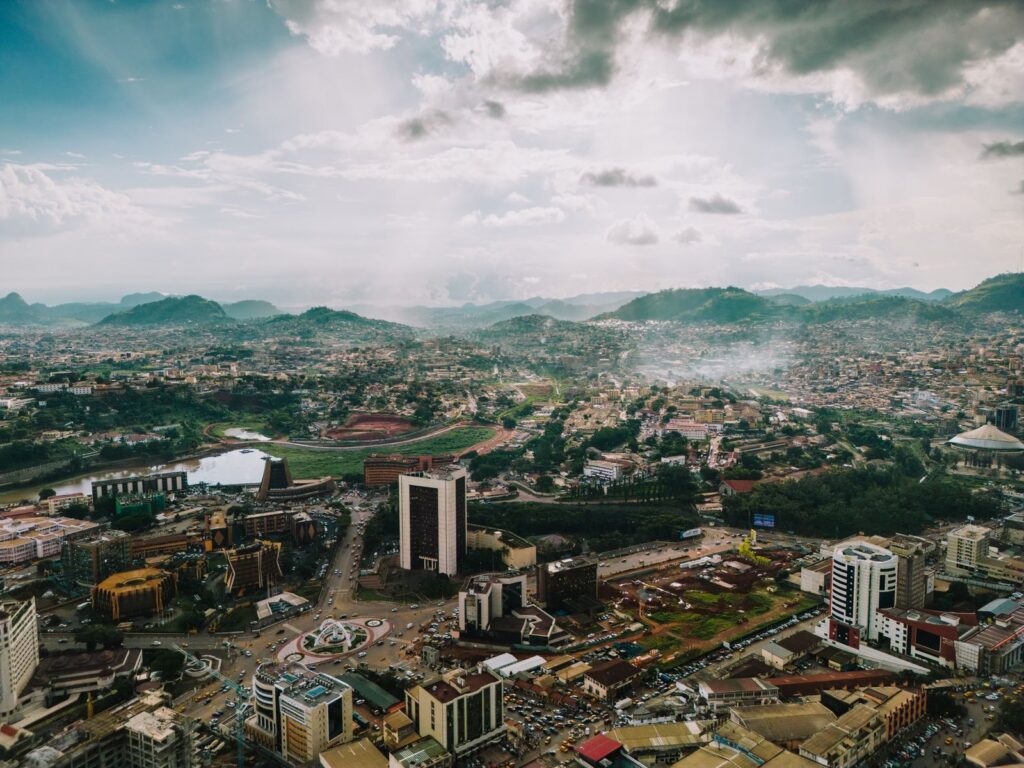
Yaoundé is bracing for a significant moment as Cameroon‘s President Paul Biya prepares to cut short another extended stay abroad. The Élysée Palace—home to Cameroon’s presidency—has confirmed his imminent return, a statement that arrives amid persistent speculation about his health and the stability of the nation’s leadership.
At 91, the veteran leader remains Africa’s longest-serving head of state, and each prolonged absence from Cameroon fuels fresh rounds of conjecture. Officials insist the president remains fully in control despite his infrequent public appearances and the rarity of in-person cabinet meetings. Yet, the gap between governance and governance at a distance continues to raise eyebrows.
Centralised power under scrutiny
Since assuming office in November 1982, President Biya has built a governance model defined by tight centralisation and a pyramid of authority that converges on his person. His frequent absences, however, expose a structural contradiction: how does a system designed around one person function when that person is physically absent?
The Cameroonian government operates with minimal public engagement from its leader. Cabinet sessions are infrequent, presidential speeches are rare, and major policy decisions are often executed through remote decrees. This pattern of governance by proxy has begun to unsettle both domestic and international observers, prompting calls for greater transparency.
Opposition figures, including Maurice Kamto of the Movement for the Renaissance of Cameroon (MRC), have demanded clarity on whether the president retains the capacity to fulfill his duties. The Cameroonian People’s Democratic Movement (RDPC), the ruling party, counters these concerns by reaffirming Biya’s full mental and physical vigour.
Election year tensions heighten uncertainty
The timing of Biya’s return could not be more consequential. With the 2025 presidential election on the horizon, the nation holds its breath over whether the 91-year-old leader will seek an eighth term—a move that would further polarise an already divided political landscape. Neither the RDPC nor the president himself has publicly committed to a decision, leaving the political arena in a state of suspended animation.
Beyond politics, Cameroon faces pressing economic and security challenges. Growth is projected at around 4%, a figure that falls short of meeting the needs of a fast-growing, youthful population. The Anglophone crisis in the Northwest and Southwest regions, the ongoing threat of Boko Haram in the Far North, and inter-communal tensions across several zones demand decisive leadership—something increasingly difficult to guarantee from afar.
International partners weigh in on stability
For global stakeholders such as France, China, and the United States, Cameroon’s stability is not just a domestic concern but a regional priority. The country sits at a critical crossroads between Central Africa and the Gulf of Guinea, boasts significant oil reserves, and serves as a key logistics hub for landlocked neighbours like Chad and the Central African Republic. Any prolonged uncertainty over state leadership is viewed as a potential risk to broader regional security.
While local business leaders adapt to the unpredictability of a presidency governed from abroad, critical sectors—including telecommunications, infrastructure, and hydrocarbons—often stall awaiting presidential directives. Yet, Cameroon’s entrenched bureaucracy continues to function, albeit with reduced dynamism, preventing any visible rupture in governance.
The official announcement of Biya’s return offers a momentary pause in the speculation but does little to resolve deeper questions about the future of Cameroon’s leadership. In Yaoundé and beyond, all eyes are now on the coming weeks to see whether actions will match words. The presidency has reiterated that the head of state’s return is imminent, setting the stage for another chapter in a leadership style that has defined Cameroon for over four decades.

More Stories
Behind the violence: how the M23’s control of DRC mines fuels a cycle of abuse
Unpacking the surge: why Nigeria’s farmer-herder clashes are driving 600 refugees into Cameroon’s Northwest
Why Paris Saint-Germain’s midfield dominance sank Marseille in Ligue 1