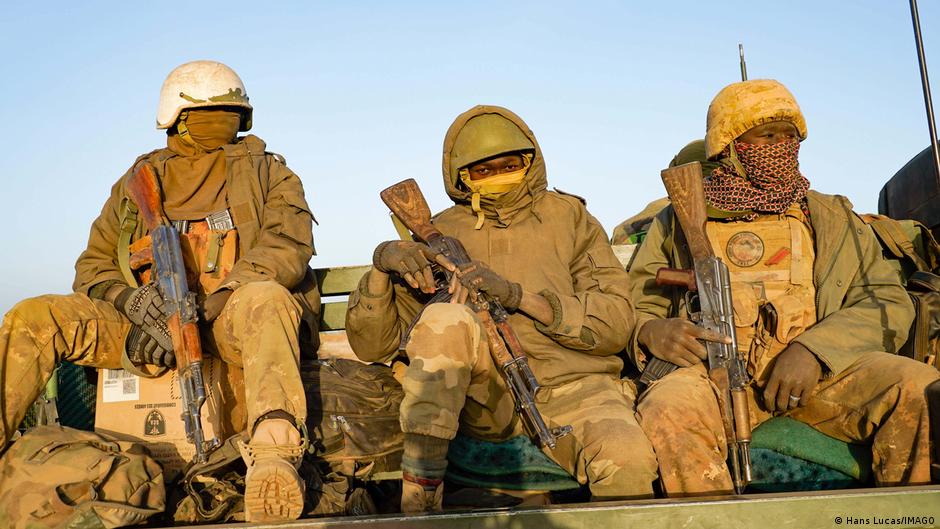
The presence of Russian paramilitaries in Mali, operating under the Africa Corps banner, has raised questions about their disproportionately low casualty rates compared to Malian troops. While jihadist attacks continue to target security forces across the country, the death toll among Russian fighters remains minimal. What factors contribute to this stark difference?
Strategic positioning and numerical disparity
Analysts point to a critical imbalance in troop numbers as a key explanation. With an estimated 1,500 to 2,000 Russian fighters deployed in Mali, their presence pales in comparison to Mali’s Forces Armées Maliennes (FAMa), which boast over 13,000 active personnel. This numerical disparity means Malian troops bear the brunt of the fighting, as they are often stationed in high-risk zones.
Security expert Mamadou Mouth Bane highlights this dynamic: “The Russian paramilitaries are not intended to replace Malian forces. Instead, they operate in a support role, focusing on logistical and intelligence tasks such as drone reconnaissance and data analysis. Meanwhile, Malian soldiers remain on the front lines, exposed to the heaviest threats.”
Combat experience and advanced resources
Another factor is the experience level of Russian fighters. Many are veterans of conflicts abroad, having honed their combat skills in Syria, Ukraine, and other regions. Their expertise is complemented by access to sophisticated weaponry and protective gear, which enhances their survivability in hostile environments.
Abdoulaye Sounaye, a Sahel specialist at the Leibniz Center Modern Orient in Berlin, explains: “The Russian paramilitaries are not typical soldiers—they are seasoned mercenaries with extensive combat experience. Their ability to counter jihadist attacks stems from advanced training, superior equipment, and mobility advantages, including aerial support. This gives them a significant edge over Mali’s conventional forces.”
Selective engagement and high-risk avoidance
Some observers suggest that Russian forces adopt a calculated approach, prioritizing the protection of critical infrastructure and high-value targets. By focusing on strategic operations rather than continuous frontline duty, they minimize exposure to prolonged engagements where casualties are most likely.
This strategy allows them to provide targeted support while reducing their own vulnerability. Meanwhile, Malian troops, who lack comparable resources, are left to endure the sustained pressures of counterinsurgency operations.