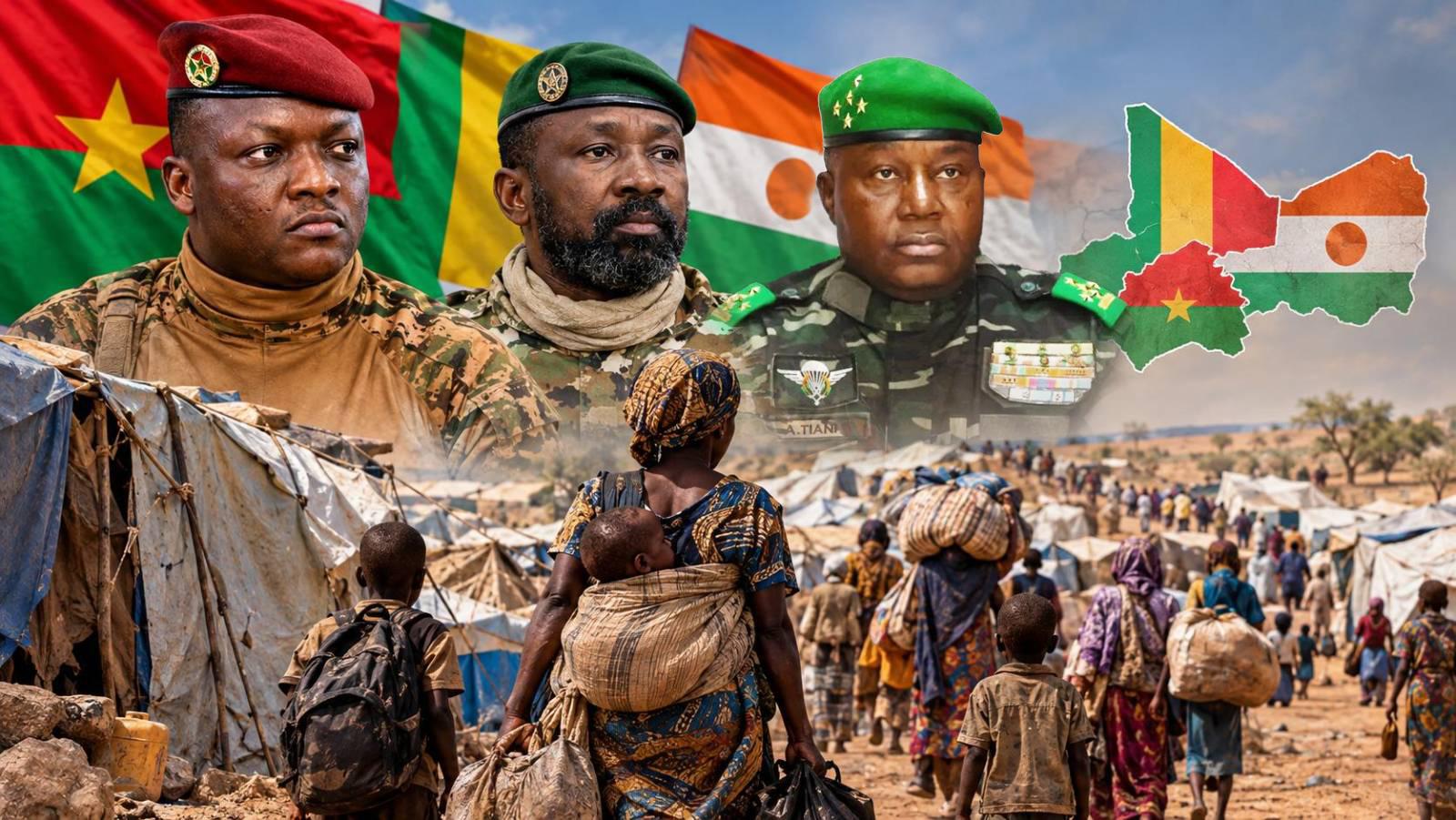
In the heart of the Sahel, a silent exodus continues to reshape nations. New data reveals that nearly 4 million people have been forcibly displaced across Burkina Faso, Mali, and Niger, a figure that has nearly doubled since 2020 a year marked by Mali’s first military coup. The surge in displacement not only underscores a humanitarian emergency but also casts a harsh light on the widening chasm between military-led governments’ declarations and the lived experiences of those they govern.
Displacement at record highs: when security promises fall short
Since the military takeovers in the Sahel’s Alliance of States (AES), governments have wielded sovereignty and territorial restoration as central narratives. Yet the escalating displacement crisis raises a pressing question: why, despite these assurances, do displacement figures continue to climb? Each additional person uprooted represents a family stripped of stability, a child denied education, and a livelihood erased by violence.
The numbers tell a story of unresolved struggle. Displaced communities frequently abandon fertile lands, close-knit networks, and economic opportunities all in search of refuge. Far beyond political rhetoric, their reality is defined by makeshift shelters, interrupted education, and the daily struggle to secure food and safety. Such conditions expose the gap between official narratives and ground-level suffering.
From sovereignty to survival: re-evaluating government priorities
The crisis places the priorities of AES governments under scrutiny. Headlines proclaim military victories and sovereign achievements, yet displacement persists challenging the assumption that enhanced security measures alone can reverse the tide. While governments emphasize territorial control, displaced populations highlight critical gaps in humanitarian access, shelter, and long-term integration.
This disconnect extends beyond statistics. It touches every aspect of governance: from the allocation of resources to the responsiveness of local institutions. When political campaigns overshadow crisis response, communities pay the price. Restoring stability requires more than statements it demands actionable support and transparent accountability.
The human face behind the crisis
Behind each displacement figure lie thousands of individual stories. Women, children, and the elderly face heightened vulnerability cut off from livelihoods, education, and healthcare. Camps and host communities strain under growing demands, revealing both the inadequacy of current aid systems and the urgency of structural reform.
Yet, even amid these challenges, resilience persists. Grassroots organizations, local leaders, and international partners continue to play a vital role in delivering essential services. Their efforts serve as a reminder that sustainable solutions hinge on collaboration not only between nations, but between leaders and the communities they serve.
What comes next? accountability and long-term strategy
The future of the Sahel hinges on two critical factors: leadership accountability and realistic policy planning. Governments must move beyond symbolic campaigns and address the root causes of displacement violence, weak governance, and climate-induced instability. Without tangible improvements in safety and access to essentials, the crisis will continue to fester.
International observers have called for renewed focus on humanitarian corridors and inclusive recovery programs. Such initiatives must prioritize long-term stability over short-term gains. The over 3.9 million displaced individuals across Burkina Faso, Mali, and Niger deserve no less.
As the region navigates this complex juncture, one truth becomes clear: the legitimacy of military-led governance will ultimately be measured not by the strength of its declarations, but by the security and dignity restored to its people.
By Yacouba Boukari — Journalist