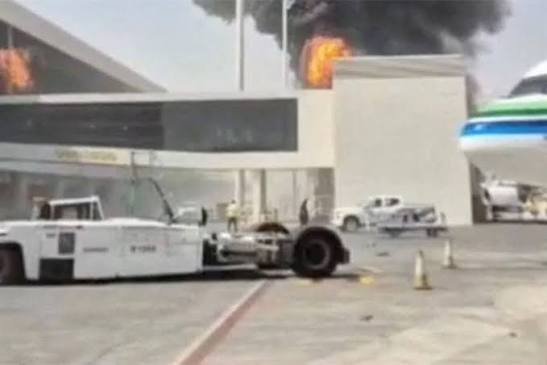
The King Khalid International Airport in Riyadh faced a devastating assault over the weekend, with the Houthi rebels in Yemen claiming responsibility for the deadly strike. Saturday’s attack left 13 people dead and 308 injured, according to Saudi officials, while a follow-up incident the next day saw a projectile slam into Terminal 4, igniting a fire that claimed one life and injured 11 others. The strikes have ignited a firestorm of reactions across the region, raising urgent questions about the trajectory of the Yemen conflict and the kingdom’s security vulnerabilities.
Houthi rebels escalate strikes on Saudi soil
In a statement, the military spokesperson for the Houthi movement, Yahya Saree, declared the group’s responsibility for the coordinated assault, targeting Riyadh’s airport alongside strikes on Dammam’s airport and critical oil facilities. The rebels issued a stern warning to airlines, urging them to avoid Saudi airspace entirely. The Saudi defense forces reported intercepting several projectiles, though one penetrated a passenger hall in Riyadh, where flames quickly engulfed the area.
Airport operations were immediately suspended to assess damage and reinforce safety protocols. With the conflict in Yemen entering a more volatile phase, these cross-border strikes signal a dangerous new chapter in the prolonged standoff between the Saudi-led coalition and the Houthi movement.
Why Houthis are ramping up attacks on Saudi Arabia
The Houthi rebels have framed their escalation as retaliation for Saudi Arabia’s military interventions in Yemen, where Riyadh has backed government forces against the rebel group. Recent months have seen a surge in hostilities following intensified offensives by Saudi-backed troops and a resurgence of airstrikes targeting Houthi strongholds. The rebels argue that their strikes against Saudi territory are a direct response to these operations, warning the kingdom of further blowback if the conflict persists.
Saudi authorities, however, have framed the attacks as a direct threat to national security, condemning the aggression while ramping up security around key installations. The kingdom’s response underscores a growing sense of urgency as it grapples with the expanding footprint of the Yemen war on its own soil.
Travel chaos: flights grounded as airport reels from fallout
The temporary closure of Riyadh’s airport and the subsequent safety checks triggered widespread flight disruptions, forcing passengers to scramble for updates on their travel plans. Authorities and diplomatic missions advised travelers to verify flight statuses before heading to the airport, as delays and cancellations became inevitable amid the crisis.
The ripple effects of these strikes extend beyond immediate casualties. With fears mounting over potential new attacks on airports and critical infrastructure, the incident has intensified calls for de-escalation—though the path to resolution remains uncertain. The conflict’s spillover into Saudi Arabia raises pressing questions about regional stability and the long-term viability of peace efforts in Yemen.
What’s next for Saudi Arabia and Yemen?
The latest strikes on Riyadh have pushed the Yemen conflict into uncharted territory, with both sides digging in their positions. Analysts warn that unless diplomatic breakthroughs emerge, the cycle of violence could escalate further, drawing Saudi Arabia and its neighbors deeper into the fray. For now, the kingdom’s focus appears to center on shoring up defenses while exploring options to curb the Houthi threat—either through renewed negotiations or a more robust military response. Yet time is not on its side as public pressure mounts for swift and decisive action.
The fallout from these attacks will likely shape the near-term future of the conflict, with global eyes closely watching whether Saudi Arabia can contain the damage—or if the embers of war will spread even further.