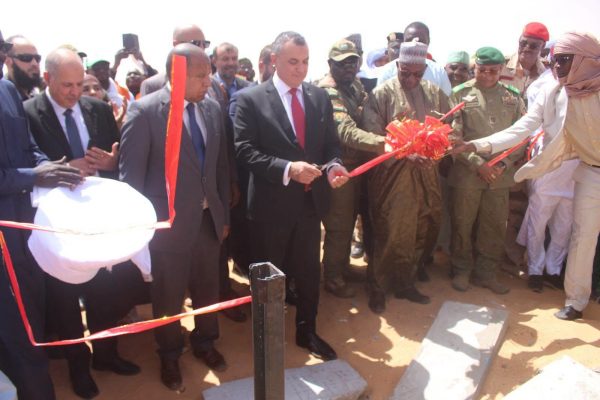
Senegal’s Prime Minister, Ahmadou Alhaminou Mohamed Lo, recently highlighted a glaring economic paradox during a high-profile visit to Abidjan: the two most powerful economies in West Africa are trading remarkably little with each other. The bilateral trade figure—250 billion West African CFA francs (roughly 380 million euros)—has become a symbol of stagnation, sparking sharp public debate about why a region so rich in potential remains so poorly connected.
Can Abidjan and Dakar ignite a West African trade revolution?
The anomaly runs deep. Despite accounting for nearly two-thirds of the GDP of the West African Economic and Monetary Union (WAEMU), Senegal and Ivory Coast contribute a mere fraction to each other’s foreign trade. While Ivory Coast’s external trade hovers around 20 trillion FCFA annually, Senegal’s trails at about 10 trillion. Both nations trade far more with the European Union, China, and India than they do with their closest regional partner—an imbalance the African Development Bank has flagged for over a decade.
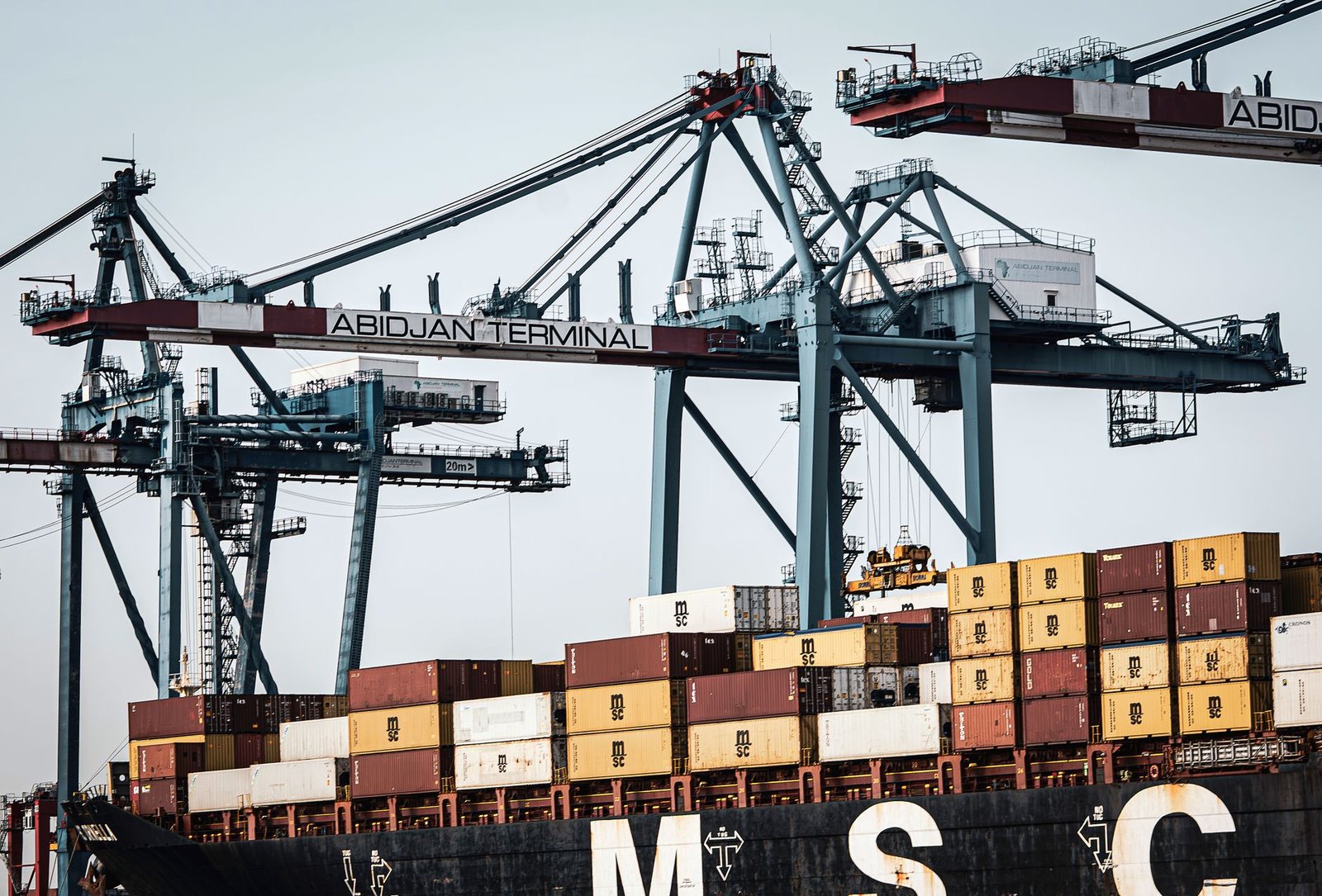
Structural factors are largely to blame. Both economies are built on competing sectors such as agriculture, fishing, and hydrocarbons. Senegal’s recent oil and gas ventures—such as the Sangomar and Grand Tortue Ahmeyim fields—only add to the competition rather than foster complementarity. Meanwhile, non-tariff barriers, limited direct maritime links between Abidjan and Dakar, and high road freight costs along Sahelian corridors continue to suffocate trade growth.
Business leaders urged to turn diplomacy into real commerce
Speaking at an economic forum in Abidjan, Prime Minister Lo challenged private sector actors in both countries to seize the initiative. Since assuming office in 2025 under President Bassirou Diomaye Faye, Lo has overseen Senegal’s long-term economic transformation agenda—Vision 2050—a plan aimed at rapid industrialization, high-value service growth, and export diversification. These are areas where Ivory Coast’s experience in agro-industry, banking, and energy could serve as a template.
While Ivorian firms have begun embedding themselves in Senegal—especially in banking, hydrocarbons, and retail—Senegalese players have ventured into Abidjan’s insurance, logistics, and telecoms sectors. Yet these investments rarely translate into measurable trade flows. As Lo admitted candidly:
“Despite massive investment potential, two-way commerce remains stuck at 250 billion FCFA—far below what our people deserve and our economies need to thrive.”
This diagnosis echoes findings from the WAEMU Commission, which reports that intra-community trade accounts for only about 15% of total regional commerce—one of the lowest rates in the world, lagging far behind Southern Africa or Southeast Asia. Even the African Continental Free Trade Area (AfCFTA), launched in 2021, has yet to yield a noticeable boost in bilateral ties between Dakar and Abidjan.
Olympic spotlight shines on stalled integration
The timing of Lo’s visit was hardly coincidental: it came just weeks before the Dakar 2026 Youth Olympics (October 31–November 13), Africa’s first-ever Olympic Games. The event is more than a sporting milestone—it’s a diplomatic showcase and a test of regional coordination. Lo appealed for Ivorian youth participation, leveraging Ivory Coast’s strong sports infrastructure as a model for engagement across West Africa.
Yet the stakes go well beyond the Games. Embedded within Senegal’s 2050 strategy, the development of its gas reserves, and its repositioning within ECOWAS, the relationship with Ivory Coast is now seen as a decisive lever for progress. The 250 billion FCFA figure is no longer just a benchmark—it’s a floor to be overcome.
“My mission is not just to strengthen ties, but to reimagine them—to unlock new opportunities that deliver real economic growth and improve lives across our borders.”
What’s next for West Africa’s most promising trade axis?
The public reaction has been sharp. Civil society groups, business chambers, and media outlets across both countries are demanding urgent action. Key demands include:
- Improving logistics: accelerating port-to-port maritime connections and reducing road freight costs along the Dakar-Abidjan corridor.
- Enhancing complementarity: shifting from competing sectors toward value chains where both nations excel—such as cocoa-to-chocolate processing, pharmaceutical manufacturing, and digital services.
- Unlocking trade finance: expanding credit guarantees and cross-border payment systems to reduce transaction friction.
- Boosting institutional coordination: reviving stalled joint commissions and investing in joint trade promotion agencies.
Observers warn that without decisive steps, the 250 billion FCFA ceiling will remain a ceiling—and not a floor. For a region hungry for growth, the fallout of inaction could be severe. The debate is no longer theoretical. It’s about whether Dakar and Abidjan will take the lead—or fall behind.