Political tensions in Sénégal’s Assemblée nationale have reached a boiling point as the executive and legislative branches clash over the legal framework governing special credits.
The latest standoff unfolded during a technical committee review of a proposed law introduced by deputies Guy Marius Sagna, Mame Diarra Bèye, and Alphonse Mané Sambou. The bill aims to regulate special credits, funds allocated for critical national priorities such as defense, security, and intelligence activities.

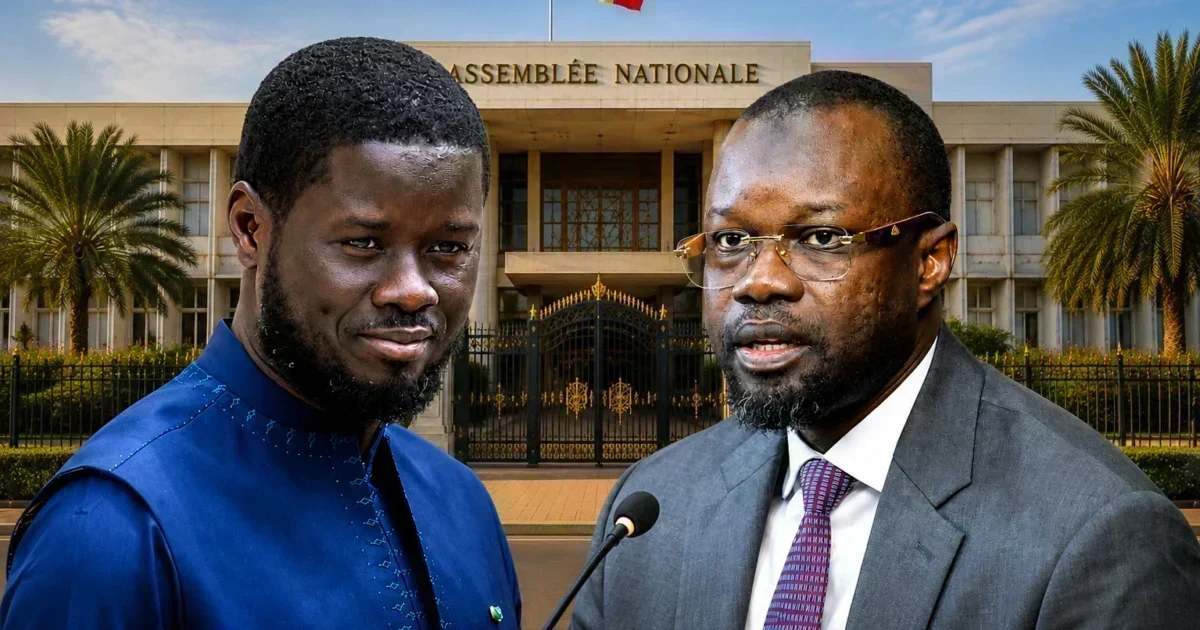
Diomaye’s strategic move backfires as Sonko’s party rejects all six amendments
The government’s attempt to steer the legislation took an unexpected turn when President Bassirou Diomaye Faye bypassed the designated minister, Cheikh Diba, by appointing Justice Minister Moussa Sarr to represent the executive in the technical committee. The move, formalized through an interim decree signed on August 7, raised eyebrows and signaled a deliberate escalation in the political tug-of-war.
Upon arrival, Minister Sarr raised objections to the bill’s structure, citing inconsistencies and procedural flaws. He subsequently proposed six amendments, all of which were swiftly rejected by members of the Pastef party. The deputies suspended discussions to deliberate among themselves before reconvening, only to confirm their refusal to endorse any of the amendments.
Disputes over scope and oversight dominate the debate
The proposed law initially restricted special credits to defense, security, and intelligence expenditures. However, the executive sought to broaden its scope to include social stability, African values of solidarity, and emergency humanitarian situations—measures that were met with resistance from the parliamentary majority.
Alphonse Mané Sambou, one of the bill’s co-authors, introduced an amendment that was adopted, reinforcing parliamentary oversight. The revised text mandates that the Commission des Finances et du Contrôle budgétaire assume exclusive responsibility for monitoring special credits, ensuring stricter accountability in their utilization.
Other key points of contention included:
- Definition of special credits: The government’s expanded interpretation clashed with the deputies’ narrower focus on national security and intelligence.
- Oversight mechanisms: While the executive proposed routine regulatory checks, the legislature insisted on direct parliamentary control.
- Inclusion of additional institutions: The government attempted to extend special credits to the presidency, the National Assembly, and the Prime Minister’s office, a proposal that was unanimously rejected.
What’s next for the special credits law?
The technical committee ultimately adopted the deputies’ version of the bill, setting the stage for a full parliamentary vote next week. Analysts anticipate further clashes, as the executive is expected to reintroduce its amendments during the plenary session. Given Ousmane Sonko’s firm stance against the use of the blocked voting procedure—except for government-sponsored bills—another constitutional challenge looms.