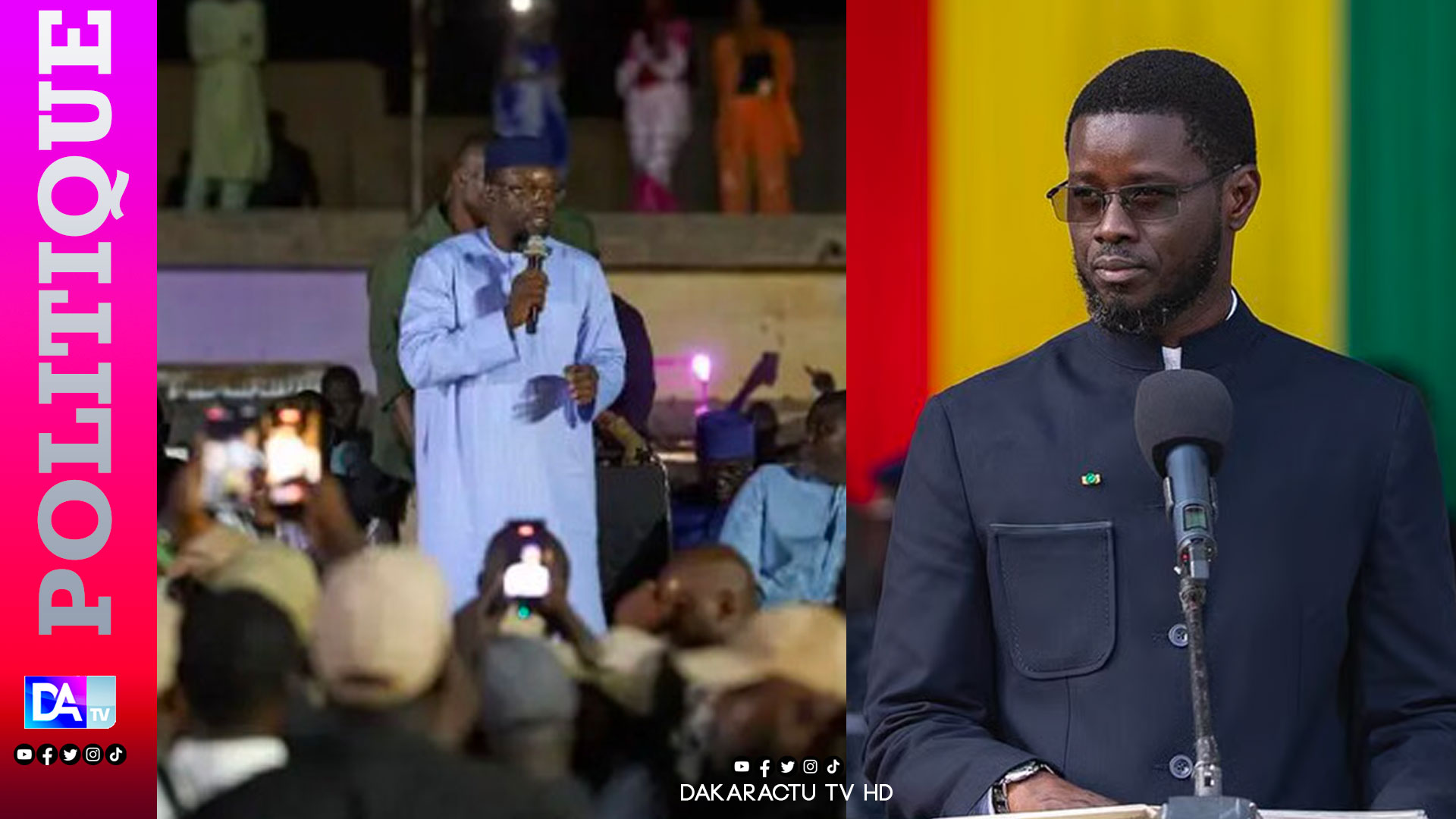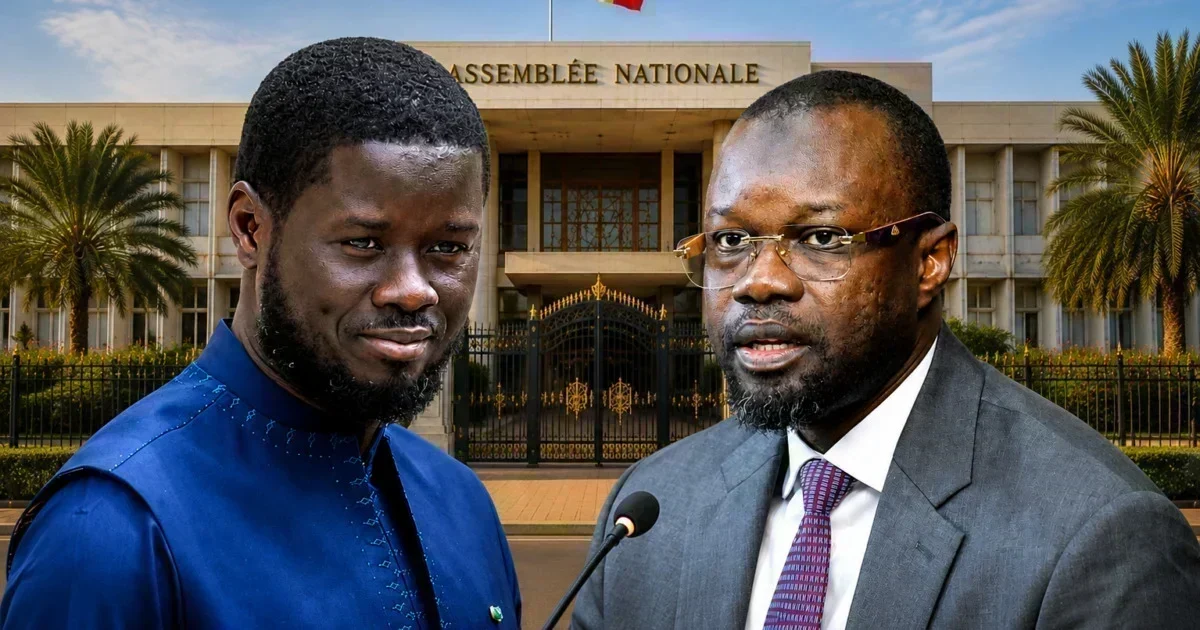
As Senegal’s National Assembly prepares to vote on the 2026 Rectified Finance Law, a critical showdown is brewing between President Bassirou Diomaye Faye and National Assembly Speaker Ousmane Sonko. With the nation’s economic future hanging in the balance, public debate has intensified over whether Sonko holds the constitutional firepower to block, reshape, or delay the budget – and what the fallout could mean for ordinary citizens.
Following constitutional shifts and institutional realignment earlier this year, the two key figures now face each other across the aisle, transforming what was once a governing partnership into a high-stakes parliamentary confrontation. The 2026 Rectified Finance Law arrives amidst heightened fiscal scrutiny and IMF-backed austerity measures, making every budget vote a potential inflection point for the country’s economic stability.
Parliamentary power play: Sonko’s arsenal of budgetary tools
Under Senegal’s constitution, the National Assembly holds sweeping authority over public finances, granting Ousmane Sonko significant leverage. With his party, Pastef, controlling 130 of 165 seats, Sonko’s coalition could outright reject the law in full session – the most direct path to halting the budget. But such a move would carry heavy political consequences, potentially scuttling ongoing IMF negotiations and forcing the government to rely on emergency decrees.
Alternatively, Sonko’s majority could deploy more nuanced amendments. Constitutional Article 82 restricts the scope of budget amendments, permitting only those that reduce spending or increase revenue. While the government could counter by grouping amendments through a single vote, forcing a block decision, the National Assembly retains the power to systematically dismantle key expenditure lines – especially those tied to IMF conditionalities. This “surgical” approach allows Sonko to reshape fiscal policy without triggering a total budget collapse.
A separate but equally potent instrument lies in the Assembly’s internal rules. Constitutional Article 60 prevents party-switching by elected lawmakers, effectively locking in Pastef’s discipline and limiting the government’s ability to poach votes. Should the government seek to bypass parliamentary roadblocks, it would need to deploy heavier constitutional artillery – including a high-risk confidence motion that could, if rejected, trigger a government collapse.
Playing for time: the constitutional clockwork
Ousmane Sonko wields procedural influence as Assembly President, yet the constitution sharply limits delays. Article 84 grants the executive the right to demand priority scheduling, while Article 68 enforces a strict 60-day deadline for adopting finance laws. With the draft submitted on September 18, 2026, the clock runs out around mid-November. If the law remains unapproved, President Faye may enact it by decree – incorporating any amendments already passed. But deliberate inertia could backfire: a prolonged deadlock might hand Faye a potent justification to dissolve the Assembly shortly after the constitutional two-year moratorium expires on December 2, 2026.
That milestone looms large. Once the Assembly clears the two-year threshold, Faye gains the constitutional authority to call snap elections. A protracted budget stalemate, whether by rejection or obstruction, could provide the political cover needed to dissolve the legislature and reset the legislative equation. Conversely, a smooth passage would deny Faye that strategic lever – turning the budget vote into a race against time.
High stakes: censure, dissolution, and the cost of confrontation
Constitutional Article 86 offers another explosive option: the Prime Minister may stake the government’s survival on the budget vote. A confidence motion would be adopted unless a no-confidence motion garners an absolute majority within 24 hours. Pastef’s 130-seat supermajority could easily muster the 83 votes required, giving Sonko the power to both topple Faye’s budget and topple the government itself. Such a move would plunge Senegal into a constitutional crisis just weeks before the President’s dissolution power takes effect.
Yet the risks are steep. A no-confidence victory might force early elections, but it could also trigger international market jitters, undermine IMF talks, and erode public confidence. For Sonko, the calculus is brutal: every constitutional weapon at his disposal carries monumental political and economic repercussions. For Faye, the equation is no less fraught – with the FMI watching closely, the President must weigh whether to force a vote, trigger a decree, or risk the fallout of an Assembly showdown.
At its core, the debate over the 2026 Rectified Finance Law is not merely about numbers in a ledger. In the shadow of Senegal’s constitutional architecture, it may well define the balance of power between Palace and Parliament, determine the nation’s immediate economic trajectory, and set the stage for the next political cycle – all before the calendar turns to December.