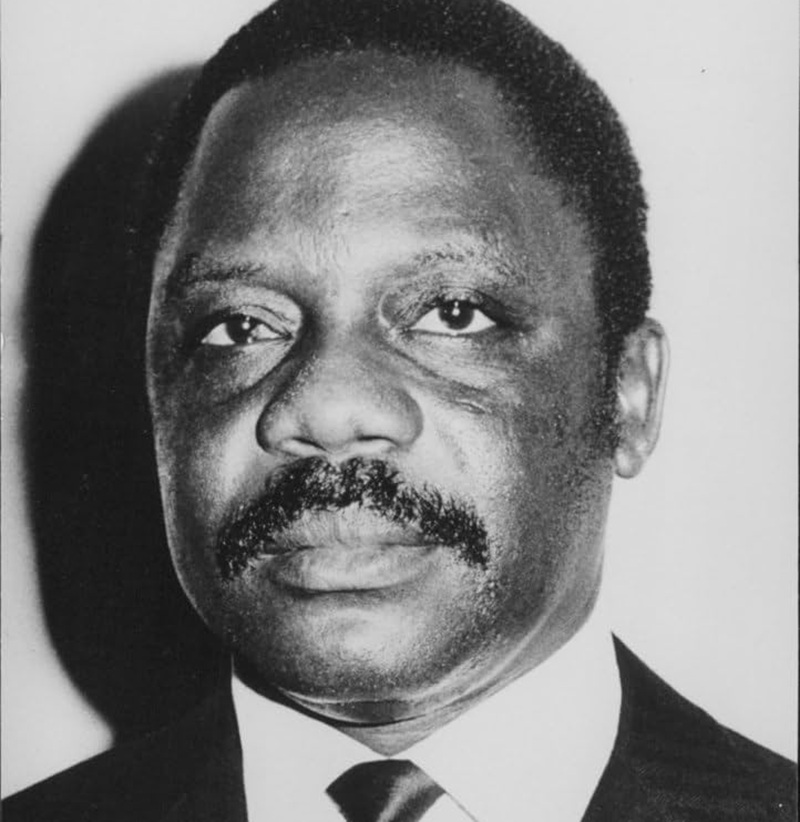

the shadow over the Congo river: how spies shaped a nation’s power
By Gilbert MUHIKA/Political Analyst.
In the Democratic Republic of the Congo, seizing power has never been a matter of ballots or debates. It has always been a game played in the shadows. Since gaining independence in 1960, every leader, every rebellion, every transition has relied on a shadowy figure: the master spy. Unseen but feared, indispensable yet untouchable.
the invisible state within the state
Congolese intelligence services are not just another government department. They are the government itself. When the National Intelligence Agency coughs, the Presidential Palace shudders. When the External Intelligence Service listens, ministers fall silent. When the National Intelligence Agency arrests, the courts obey.
Why? Because the Congo was forged in the fires of the Cold War, coups, and deep distrust. On 30 June 1960, independence was proclaimed. By 14 September, Mobutu had staged his first coup. Between those two dates lay a void. A void the intelligence services rushed to fill.
Their true mission was never written into any law. Officially, they gather political, economic, and social intelligence. Unofficially, they do three things:
- Protect the leader – from enemies, the army, or even his own people.
- Watch everyone – opponents, ministers, religious leaders, students, the diaspora.
- Instill fear – so that no one dares challenge the status quo.
three architects of fear
From 1960 to 1990, one system wore three faces. Three men wrote the grammar of fear in the Congo:
- Victor Nendaka Bika, the “Oufkir of the Congo”: A nurse turned intelligence chief who transformed the colonial-era Sûreté into a political weapon. He established the golden rule: the head of intelligence answers only to the head of state, not to ministers.
- Seti Yale, the “Grey Eminence”: He professionalized the system. Trained by Israel and the USA, he built the External Intelligence Service (CND) – the Congolese KGB. He installed wiretaps, surveillance, and torture as standard procedure.
- Honoré Ngbanda, the “Terminator”: He industrialized fear. The CND became a state within a state. Every ministry had its spy. Every embassy, its listening post. He exported terror as far as Europe.
The red thread from 1960 to 1990 was clear: “Whoever controls intelligence controls power.” Mobutu understood this from the start. He multiplied intelligence agencies – CND, SNIP, SARM, DSP – ensuring they spied on one another. But he never allowed one man to control the machine for too long. Nendaka was sacked in 1965. Seti Yale was sidelined. Ngbanda was dismissed in 1990.
By 1997, the system collapsed with Mobutu. But it did not die. It evolved. The SNIP became the AND, then the ANR. The acronyms changed. The basements remained. The methods endured.
a tale of shadows and secrets
This series uncovers 30 years of history seen from the underground. It begins with a nurse hastily appointed in October 1960. It ends with a “Terminator” swept away by the winds of democracy in 1990. Between those dates: wiretaps, disappearances, fatal transfers, and twisted coups.
Welcome to the real story of power in Kinshasa. The story that is never broadcast on the radio. The story whispered in windowless offices.
Everything began in October 1960. The Congo was just three months old. Mobutu had just overthrown Lumumba. Someone was needed to secure the state – someone who asked no questions. That someone was Victor Nendaka Bika…
“The Oufkir of the Congo: How Victor Nendaka invented the power-crushing machine”
He never wore a uniform. Yet from 1960 to 1965, this nurse-turned-spy made the Congo tremble. Victor Nendaka Bika, the first director of the National Intelligence Agency, laid down the rules of the game: threatening ministers, manipulating documents, and delivering opponents into the hands of their enemies. A dive into the archives of terror.
13 December 1961: The day the police staged a coup against its own minister
The scene unfolded in the offices of the National Intelligence Agency. Christophe Gbenye, the Minister of the Interior, still believed he held authority. He signed a statement: Victor Nendaka, the agency’s director, was to be removed. “Reassigned elsewhere.”
Nendaka’s response came in the form of a phone call.
He turned to Mobutu for support. The general immediately dispatched armed troops to surround the intelligence agency’s headquarters. They threatened to arrest and imprison Christophe Gbenye if he intervened.
Days later, the Moniteur Congolais published the order: Nendaka stayed. Gbenye was gone.
This was the first time in Congo that a police chief had threatened a minister with the army… and won. The “Oufkir” model was born.
16 January 1961: The handwritten note that killed Lumumba
Forty years later, an elderly man still brandished his trump card before a Belgian inquiry commission: a yellowed sheet of paper.
“When we learned that Tshombe would welcome Lumumba, the evacuation plans for three prisoners were altered by André Lahaye, an intelligence agent […] I kept this document,” Victor Nendaka explained.
This document was the order transferring Patrice Lumumba, Maurice Mpolo, and Joseph Okito to Élisabethville. As Chief Administrator of the National Intelligence Agency, Nendaka organized the convoy. On the night of 17 January, the three men were executed.
His defense?
“Kasa-Vubu agreed to the transfer because he, like me, believed Lumumba would not be killed in Katanga. In our traditions, we did not kill our adversaries. Debates under the baobab tree settled disputes.”
Historians note: “Victor Nendaka, who had poor relations with Lumumba since the 1960 elections, was suspected of involvement in this incident.”
October 1960: The nurse who turned intelligence into a political weapon
One month after Mobutu’s first coup, Nendaka was appointed director of the National Intelligence Agency.
“Nendaka rapidly reorganized the agency and transformed it into an effective intelligence-gathering service.”
He created the National Investigations Bureau (BIN). Its mission was no longer to arrest thieves. It was to profile, monitor, and neutralize Lumumbists. He joined the “Binza Group” with Mobutu and became a key player in the shadowy circle that ruled the country.
Why did history nickname him the “Oufkir of the Congo”? Like Morocco’s general, Nendaka imposed three rules that would haunt the Congo for 60 years:
- The intelligence agency above the law: He had his office surrounded by soldiers when a minister tried to remove him.
- Intelligence as a political project: As a member of the Binza Group, he helped appoint and dismiss prime ministers with the support of the CIA.
- Plausible deniability: Regarding Lumumba, he always claimed, “It was not me. It was D’Aspremont, Tshombe, Lahaye.”
In 1965, Mobutu sidelined him. Too powerful. But the machine was already in motion. Seti Yale, Honoré Ngbanda, and others merely industrialized Nendaka’s methods.
In our next installment: How Seti Yale transformed the small, artisanal BIN into the CND – the “Zairian KGB” trained by Israel and the USA. Exclusive testimonies on the CND’s underground cells in the 1970s.
The “Monster of Darkness” as seen by his contemporaries.
Some Congolese writings describe him as “TERMINATOR THE BLOODTHIRSTY, VICTOR NENDAKA BIKA, THE MONSTER OF DARKNESS” for his role in organizing Lumumba’s fatal transfer. He maintained his innocence until his death, insisting the Lumumba Commission was “trying to frame him.”

Related Posts

Central african republic forestry ministry cracks down on illegal loggers mimicking Wagner tactics
Central African Republic forestry ministry warns loggers over unpaid taxes and Wagner-style tactics The Central African Republic’s Ministry of Forestry Economy has issued a stern […]
Sonko’s sharp critique of Senegal’s imf deal stirs debate
Politics Sonko’s sharp critique of Senegal’s IMF deal stirs debate 01/09/2026 Ousmane Sonko, former Prime Minister and current President of Senegal’s National Assembly, has weighed […]
Senegal political controversy: ousmane sonko faces legal action over touba remarks
Senegal political controversy: Ousmane Sonko faces legal action over Touba remarks In a significant political development in Senegal, opposition leader Ousmane Sonko has become the […]