
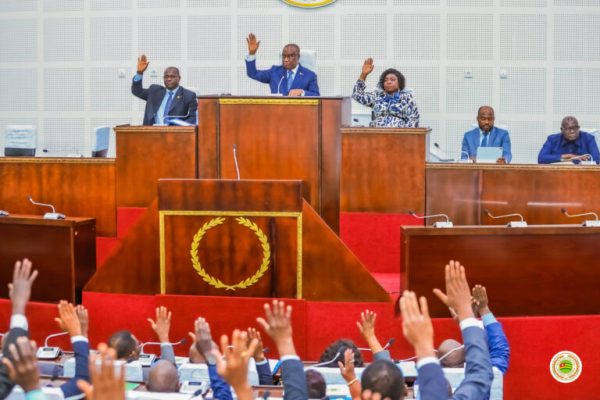
Lomé, June 10, 2026 — Togo’s National Assembly approved four bills on Tuesday, June 9, 2026, aimed at strengthening nuclear safety and radiological risk management. The decision, taken during the third plenary session of the first ordinary meeting of the year, marks a key milestone in aligning Togolese legislation with international standards.
Presided over by the Speaker of the Assembly, H.E. Prof. Komi Selom Klassou, the session welcomed Robert Koffi Messan Eklo, the minister delegate in charge of Energy. Lawmakers validated on first reading the texts allowing Togo to join four international conventions: the Convention on Nuclear Safety (Vienna, 1994), the Joint Convention on the Safety of Spent Fuel Management and on the Safety of Radioactive Waste Management (1997), the Convention on Early Notification of a Nuclear Accident (1986), and the Convention on Assistance in the Case of a Nuclear Accident or Radiological Emergency (1986).
The underlying goal is to equip the state with a robust regulatory shield to oversee scientific activities, prevent contamination risks, and guarantee full compliance with safety protocols.

A strengthened multilateral anchor through four conventions
“Nuclear energy is an energy of the future, useful in several vital sectors: electricity production, health, industrialization, agriculture, and livestock,” recalled Aklesso Atcholi, president of UNIR. “But it is essential to establish and maintain a high level of safety to protect people, property, and the environment.”
Indeed, while radiological technologies offer major development prospects—especially in medical treatment or agricultural optimization—their environmental implications demand constant vigilance. Consequently, by ratifying these conventions, Togo not only improves its own anticipation capabilities but also gains access to international mechanisms for mutual assistance and real-time information sharing in a crisis.
“These bills reflect a coherent approach: we are not just choosing an energy of the future; we are choosing the highest accompanying safety standard,” said Minister Eklo. “Ratifying these texts sends a strong signal to the international community: Togo is a modern, responsible, and rigorous state.”
Balancing technological progress with the safety imperative
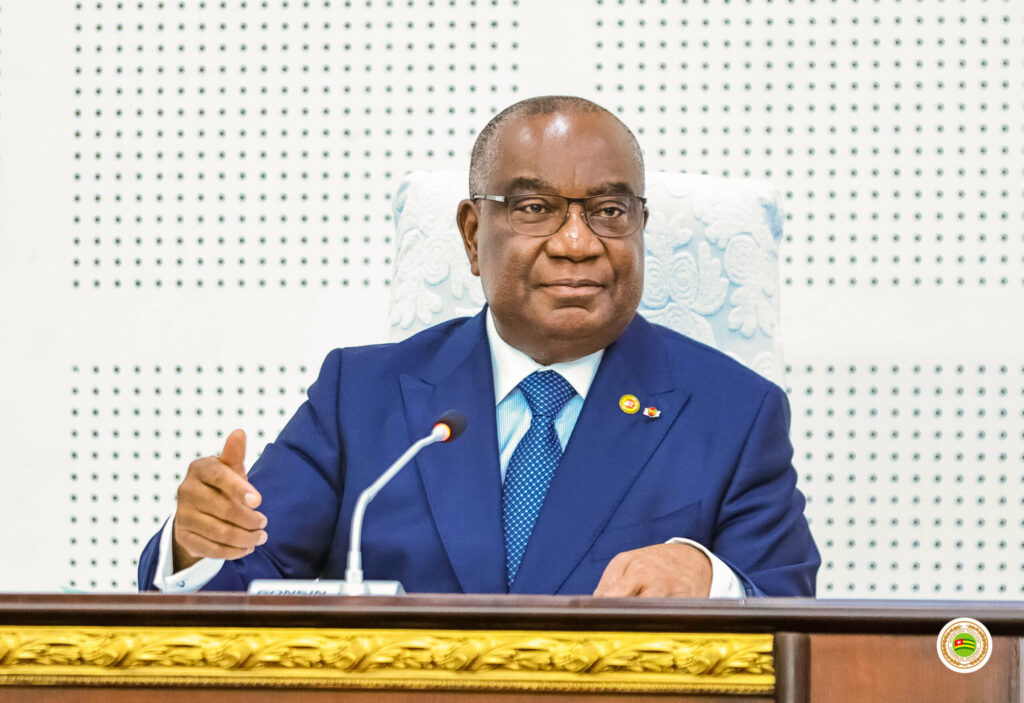
For the Speaker of the National Assembly, Professor Komi Selom Klassou, this reform enshrines a doctrine of collective responsibility in the face of cross-border crises.
“Informed by the tragic history of Chernobyl, Togo is convinced that faced with risks of such magnitude, no state can act alone,” he argued, placing these texts within a comprehensive vision of protecting populations and peaceful diplomacy.
In accordance with the functioning of Togo’s parliamentary system, these four bills will be transmitted to the Senate in the coming days for scrutiny under identical terms. Once that step is completed and the laws are promulgated, Togo will complete its institutional transformation, inseparably linking its technological horizon to the requirement of public safety.



More Stories
Is Chad truly heading towards political appeasement?
Bradley Barcola will adapt faster than Florian Wirtz at Liverpool, says Jermaine Pennant
Togo eyes nuclear power to secure future energy sovereignty