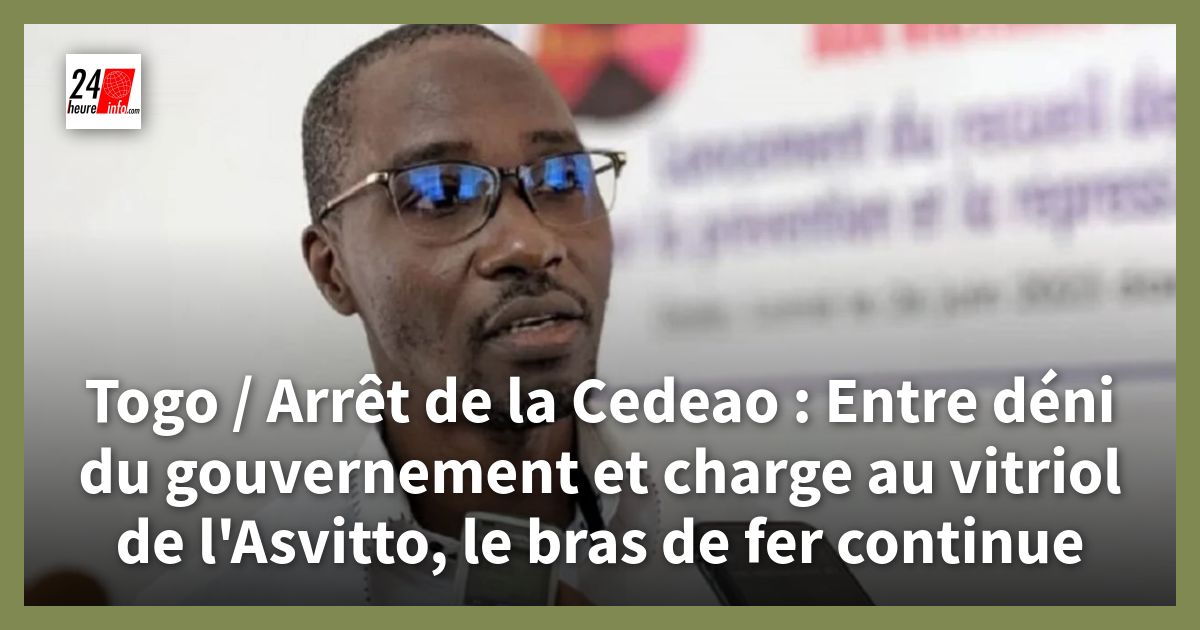
The aftermath of the ECOWAS Court of Justice’s ruling against Togo’s constitutional alterations continues to spark intense debate in Lomé. While government officials dismiss the verdict outright, the Association of Victims of Torture in Togo (ASVITTO) has launched a scathing attack, labeling the move as ‘state-sanctioned hooliganism.’
Lomé’s legal shield against the ruling
In response to the regional court’s decision, Togolese authorities swiftly invoked a legal defense, arguing that the ECOWAS Court lacks jurisdiction to assess national constitutional matters or overrule sovereign legislative processes. This maneuver aims to strip the ruling of its legal weight within the country’s courts.
ASVITTO fires back: ‘A clear case of denial’
The government’s stance has drawn sharp criticism from civil society. On X (formerly Twitter), ASVITTO condemned the approach, calling it a ‘flawed strategy that misses the mark.’
The group, which has long accused authorities of orchestrating a ‘constitutional coup,’ accused the regime of being ‘trapped in their own desperation, waiting for their inevitable downfall.’ Their statement underscored a recurring pattern: ‘They’ve consistently shown disregard for ECOWAS rulings.’
‘One thing remains constant: their habitual disrespect and outright dismissal of ECOWAS decisions.’
The association pointed to the plight of political prisoners still behind bars in Lomé, despite multiple regional court orders demanding their immediate release.
Direct appeal to ECOWAS for decisive action
ASVITTO did not hold back in its criticism, urging regional bodies to take ‘urgent, targeted action’ to enforce the court’s ruling (Case No. ECW/CCJ/JUD/01/26).
Issued in January, the landmark ruling declared the 2024 constitutional reforms incompatible with the African Charter on Democracy, Elections, and Governance. The NGO’s message was unequivocal: ‘This form of state-sanctioned lawlessness must end in our region.’
A standoff with human consequences
The current impasse resembles a silent confrontation: one side clinging to legal technicalities, the other warning of a government failing to honor its international obligations. Meanwhile, the court’s verdict remains unimplemented, leaving incarcerated dissidents in limbo—far from the rhetoric of officials and activists alike.