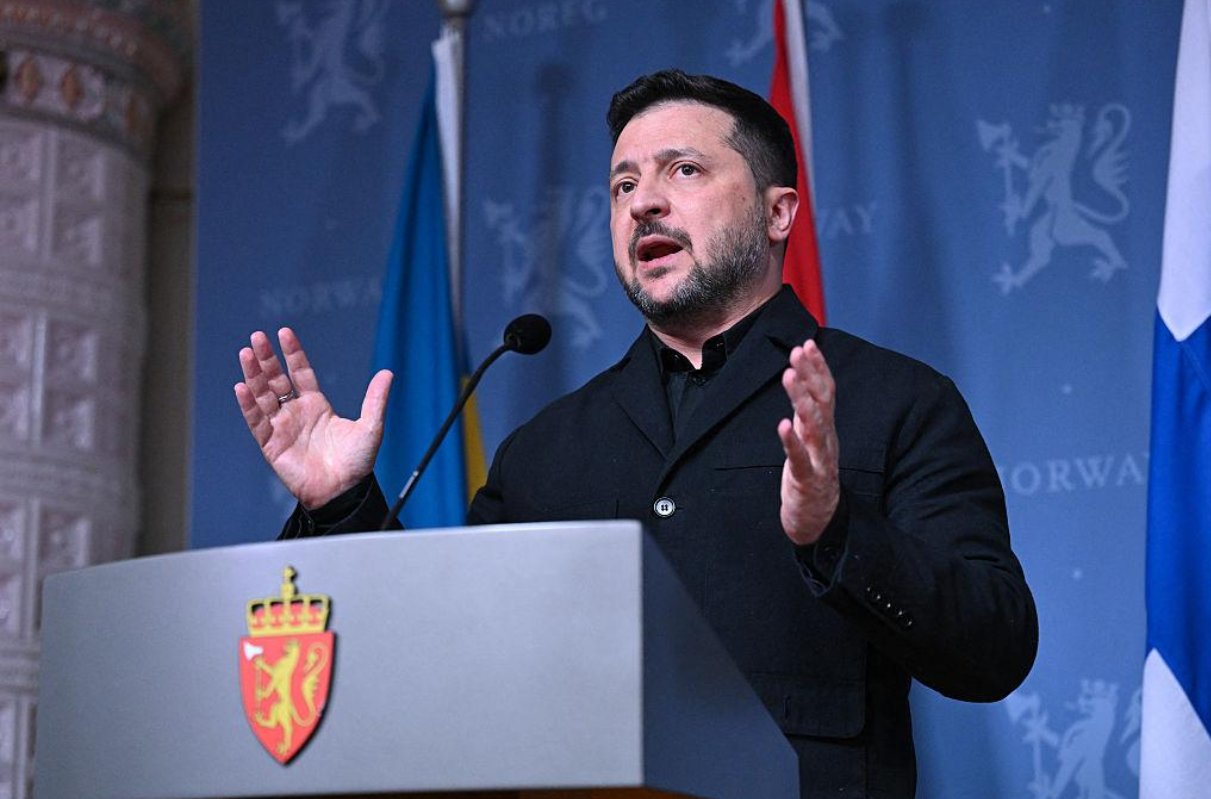
The war in Ukraine has reached a potential turning point. On October 21, 2026, president Volodymyr Zelensky announced Ukraine’s readiness to freeze the frontlines at their current positions—a decisive move aimed at halting the bloodshed and paving the way for negotiations with Washington and European capitals on long-term security guarantees. Yet, in a subsequent interview with CNN the following day, he made it unequivocally clear: this was not a concession. Ukraine would not recognize Russian-occupied territories as Moscow’s, nor would it surrender a single square inch still under Kyiv’s control.
The frontline freeze: a strategic pivot
Zelensky’s proposal marks a momentum shift in Ukraine’s approach to the conflict. Speaking to Fox News on October 21, he framed the freezing of military positions as a pragmatic step toward ending the war. «We must freeze the situation now,» he stated, arguing that a ceasefire could create the breathing room needed to transition from battlefield confrontations to political dialogue. The immediate goal? To stop the killing and destruction, even as the thornier issues of territorial sovereignty remain unresolved.
This freeze, however, is not a surrender. For Kyiv, halting combat along existing lines does not equate to legal recognition of Russia’s annexation claims. The distinction is critical: a de facto military pause would not translate into a de jure acceptance of Moscow’s territorial demands. Ukraine’s stance is firm—any agreement must preserve its sovereignty, even as the guns fall silent.
Security guarantees: the non-negotiable backbone
For Zelensky, a mere ceasefire is not enough. Without ironclad security guarantees from the United States and European allies, any truce risks being a temporary reprieve rather than a lasting solution. The Ukrainian president envisions a multi-phase process: first, stop the fighting; second, initiate negotiations; and finally, construct a security framework robust enough to deter future Russian aggression.
Yet, this raises pressing questions. What form would these guarantees take? Would Western partners commit to military or diplomatic actions if Russia violated the agreement? The answers remain unclear, especially amid recent strains between Kyiv and Washington. Zelensky acknowledged these challenges in his CNN interview, highlighting the critical role of U.S. support in sustaining Ukraine’s defenses. Despite the friction, he remains convinced that America’s involvement is indispensable to any durable resolution.
Europe’s role is equally vital. Ukraine seeks not just a ceasefire but long-term security commitments from its partners. However, the scope and nature of these pledges will depend on the willingness of individual nations to step up—politically and militarily.
No inch of soil: Zelensky’s unyielding stance on territory
On October 22, Zelensky drew a line in the sand during his CNN interview. «Our land is very important because it’s about the people. It’s not about kilometers,» he declared. This statement underscores Ukraine’s refusal to cede any territory still under its control, particularly in the Donbass, where Russian forces have made significant inroads.
The impasse is stark. For Moscow, control over occupied regions—especially the entirety of Donetsk—is non-negotiable. For Kyiv, relinquishing these areas would mean surrendering not just land, but the principle of territorial integrity. A ceasefire might reduce violence, but it would not resolve the core dispute fueling the war: who controls Ukraine’s sovereign soil?
A fragile path forward
Zelensky’s announcement represents a diplomatic breakthrough in a conflict long defined by stalemate and bloodshed. It signals a readiness to explore new avenues for peace, even as the two sides remain fundamentally at odds over territory, security, and the terms of any potential agreement.
Russian president Vladimir Putin responded on October 22 by expressing openness to U.S.-mediated talks, though Moscow continues to insist on a settlement that addresses its own security concerns. The gap between the two positions is wide: Ukraine demands sovereignty and security; Russia seeks territorial and strategic concessions.
Can the war be paused without resolving these disputes? For Kyiv, the answer lies in decoupling the immediate military reality from the long-term legal recognition of borders. A frontline freeze could be the first step toward de-escalation—but only if both sides agree on its terms and if credible security guarantees back the truce. Until then, the prospect of lasting peace remains elusive, caught between the urgent need to stop the fighting and the unwavering refusal to compromise on Ukraine’s territorial wholeness.
In this high-stakes moment, Ukraine is carving a narrow diplomatic path—one that could open the door to negotiations, even as the final outcome hangs in the balance.