After the swearing-in ceremony: the debate intensifies around the ECOWAS court’s expanding role
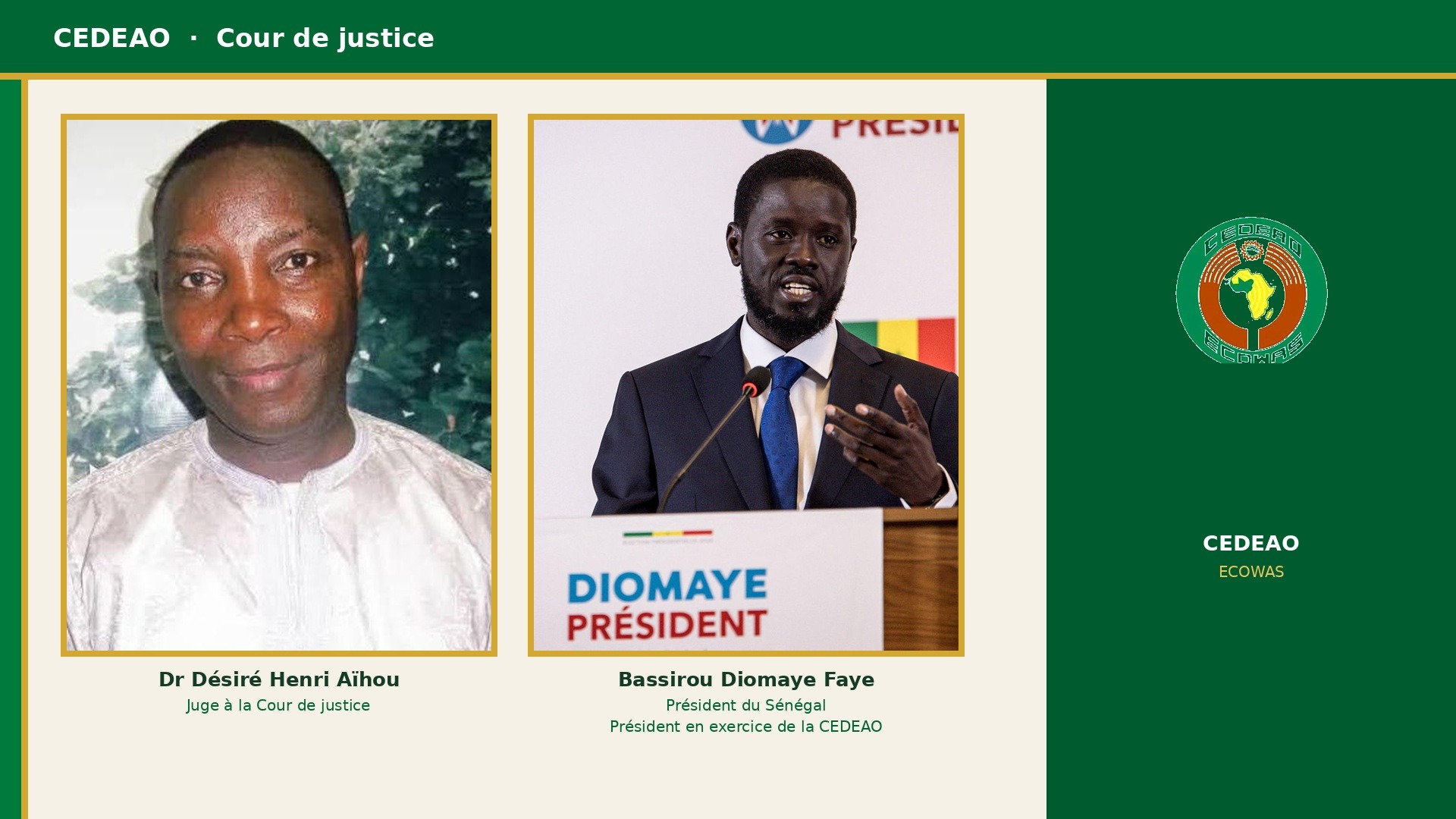
The ceremony on October 6, 2026, at the ECOWAS Commission headquarters in Abuja was more than a routine judicial appointment—it marked the beginning of what promises to be a turbulent four-year term for Dr. Désiré Henri Aihou, Benin’s newly sworn-in judge at the ECOWAS Court of Justice. His oath occurred alongside four other jurists from Gambia, Liberia, Nigeria, and Togo, all tasked with reshaping how West Africa handles legal disputes, human rights cases, and institutional accountability. But with the region wrestling over sovereignty, governance crises, and the very legitimacy of regional courts, the question looms: can this renewed bench deliver justice that actually takes root—and sticks?
Why this appointment is sparking public debate
The ECOWAS Court isn’t just another legal forum. Created under the 1993 Revised Treaty, it was designed to ensure that member states—often accused of undermining democracy and rights—face consequences when they violate the bloc’s principles. Yet, despite landmark rulings, enforcement remains shaky, and skepticism lingers. Critics argue the court suffers from a credibility gap: states ignore its verdicts, and citizens remain skeptical that regional justice can truly challenge national power.
Benin’s nomination of Désiré Henri Aihou isn’t just about filling a seat—it’s a strategic gamble. Aihou, a respected magistrate steeped in Benin’s post-1990 constitutional culture, brings more than legal expertise. He carries the legacy of Benin’s 1990 National Conference, which restored democracy after decades of military rule and established a robust separation of powers. Now, he sits on a bench that must prove it can turn lofty legal principles into real-world accountability across 15 member states.
Public reactions have been swift and divided:
- Supporters hail this as a critical step toward regional legal cohesion, especially as West Africa faces coups, disputed elections, and shrinking civic freedoms. They argue that a credible court could become a last resort for citizens whose national courts fail them.
- Skeptics warn that without teeth to enforce rulings, the ECOWAS court risks becoming a toothless tiger—powerful in theory, ineffective in practice. They point to past cases where states, including powerful ones, simply ignored judgments without consequences.
- Opponents frame the court as an overreach by regional elites, questioning whether unelected judges in Abuja should override sovereign decisions, even in defense of democracy.
From Cotonou’s democracy model to ECOWAS courtroom realism
The ECOWAS judicial system mirrors Benin’s own constitutional framework—three branches, checks and balances, and an independent judiciary. Benin’s 1990 Conference national established the constitutional court in 1993, embedding a culture where no institution is above the law. Now, that institutional DNA is being exported to the regional level. But can a model forged in a small West African nation—with a history of strong judicial independence—survive the pressures of a fractured region?
Benin’s own democratic resilience has been tested. Despite its reputation as a stable democracy, recent years have seen tensions over electoral reforms and judicial reforms. Yet, its choice to nominate a judge like Aihou reflects a belief that strong regional courts could deter backsliding: a strategically placed “watchdog” that states can’t easily sideline.
h2>The ECOWAS court’s dual challenge: legitimacy and enforcementFor the ECOWAS Court to succeed, it must do more than render fair verdicts—it must ensure they are implemented. And here lies the paradox: the court has ruled on critical cases—from electoral disputes to human rights abuses—but compliance remains voluntary. A 2024 judicial council report acknowledged this weakness and called for binding enforcement mechanisms. Without them, the court risks becoming a symbolic body rather than a practical one.
The arrival of five new judges, including Aihou, brings fresh energy and high expectations. But expectations aren’t verdicts. The real test will come when a powerful member state defies a ruling. Will the court issue a formal condemnation? Will ECOWAS suspend aid or impose sanctions? Or will the principle of “African solutions to African problems” mean the court backs down, preserving regional unity over justice?
In this context, Aihou’s role is not ceremonial. He is expected to help shape not just individual rulings, but the court’s evolving doctrine on sovereignty, democracy, and rights. His appointment is less about representing Benin’s interests than reinforcing the court’s authority to interpret and apply ECOWAS law—even when it challenges a member state’s actions.
What comes next? A regional court at a crossroads
The next four years will reveal whether the ECOWAS Court can transition from a paper institution to a real deterrent against democratic decay. Will it become the guardian of West African rights citizens can believe in? Or will states continue to treat it as a forum for dialogue rather than a court of last resort?
Benin’s gamble—placing a judge from a democracy with a strong legal tradition—sends a signal. It says the region still believes in rule-based governance. It says institutional memory matters. And it says that even when politics fail, law might still have a chance.
Whether that gamble pays off depends on more than Aihou’s competence. It depends on the court’s ability to enforce its decisions, the political will of member states, and the willingness of civil society to turn to Abuja when national courts fail. One thing is certain: the debate has just begun.
As the ECOWAS Court prepares to open its new judicial chapter, the world is watching—not just to see if it rules fairly, but if it rules effectively.