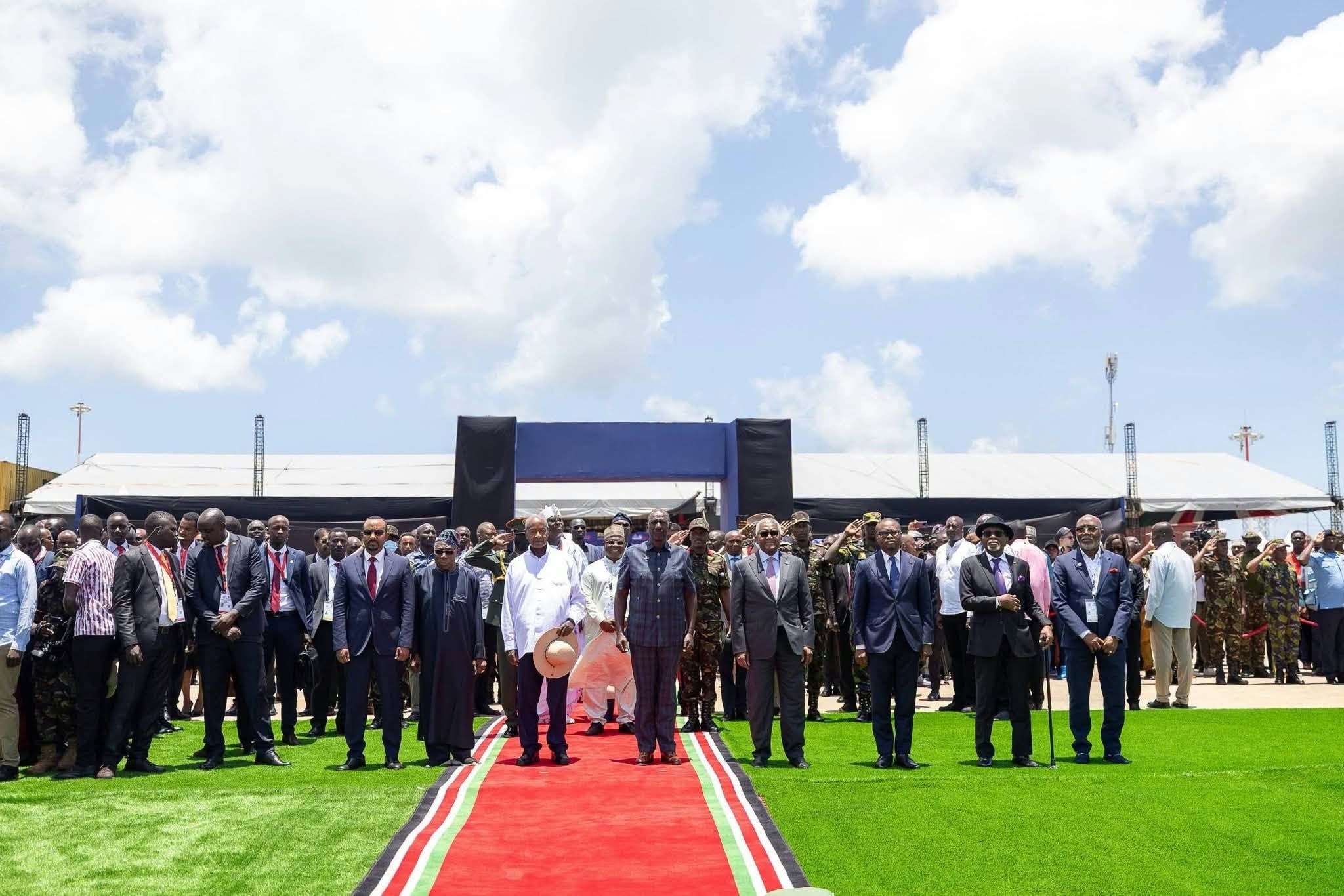
Lamu, Kenya — When Romuald Wadagni, the president of Benin, arrived on Kenya’s northern coast for the groundbreaking of East Africa’s planned refinery, the symbolism ran deeper than a ribbon-cutting. The project, driven by the conglomerate of Nigerian billionaire Aliko Dangote, is being pitched as one of the continent’s most consequential industrial undertakings, and Wadagni’s decision to stand alongside his peers says as much about Africa’s shifting energy politics as it does about the refinery itself.
The company on stage — and what it reveals about continental alignments
For Wednesday’s ceremony, the Beninese head of state was joined by Ugandan president Yoweri Museveni, Togolese president Jean-Lucien Savi de Tové, Ethiopian prime minister Abiy Ahmed Ali and Kenyan president William Ruto. The mix of West and East African leaders around a single infrastructure project is unusual, and it points to a deliberate effort to frame the refinery as more than a Kenyan asset. Benin’s inclusion, in particular, places the country inside a conversation about how African states can pool ambition around industrial scale.
The scale behind the headline figure
Sited at Lamu, the planned facility carries a price tag of $16 billion, equivalent to roughly 8,960 billion CFA francs. Once operational, it is expected to process 700,000 barrels of crude oil per day — a throughput that would rank it among the continent’s largest industrial complexes and, on the figures released for the project, make it East Africa’s biggest refining capacity by some distance.
Those numbers matter because they arrive at a moment when a growing number of African governments are trying to build domestic processing capacity rather than export raw materials and import finished fuels. The refinery is therefore a test case for a wider economic argument: that value should be captured closer to the point of extraction.
Why the guest list matters more than the ceremony
The simultaneous presence of leaders from both sides of the continent gives the initiative a continental character that goes beyond Kenya’s borders. It reflects an intent to treat the Lamu project as a shared reference point for industrial cooperation, rather than a single country’s flagship.
For Benin, attending offers a vantage point on how large-scale African industrial investments are structured — and on the emerging patterns of economic collaboration between states. It is also a signal that Benin wants to be counted among countries positioning themselves for the next wave of energy infrastructure.
The broader context: industry as a strategic priority
Lamu fits into a continent where energy infrastructure is increasingly central to development strategies, economic sovereignty and regional integration. With 700,000 barrels per day targeted at full capacity, the refinery would require substantial capital and would likely spawn an industrial ecosystem spanning energy, transport and logistics.
The September 30, 2026, ceremony thus functions as a milestone for those present. For Wadagni, it is an opportunity to participate directly in a moment devoted to one of the most ambitious industrial projects currently announced in Africa. At Lamu, attention is fixed on what comes next: an Africa striving to expand its industrial base and refine more of its own resources at home.