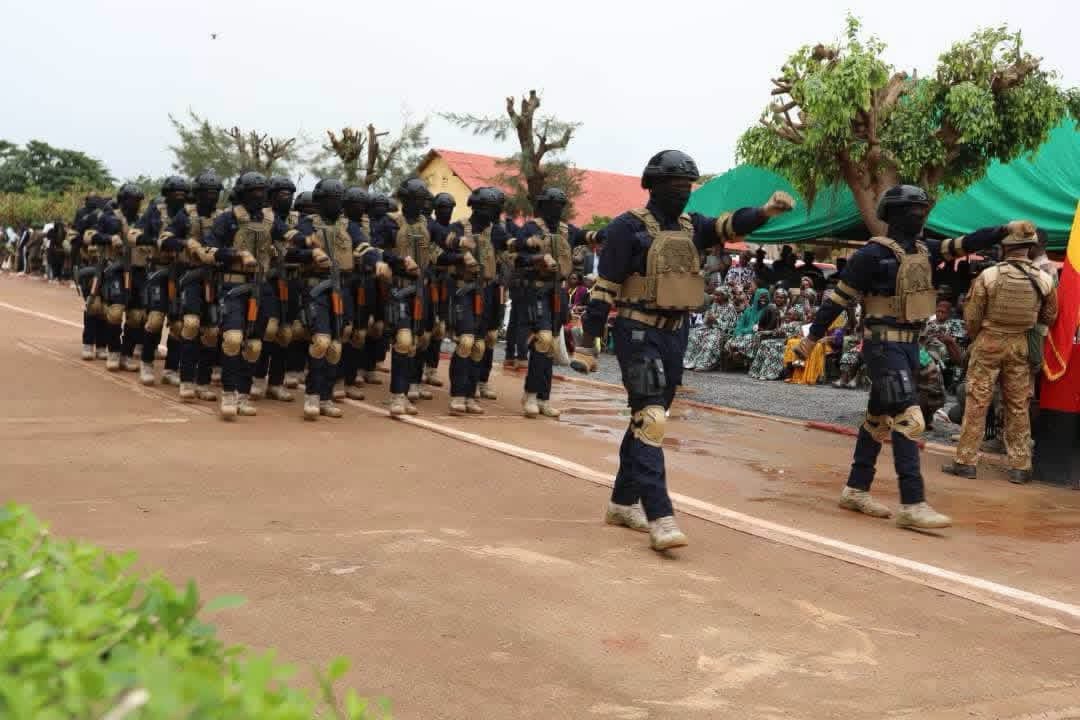
The 22 September 2026 independence parade in Bamako was not just another national celebration. Held under the watchful eye of General Assimi Goïta, the event showcased Mali’s sovereignty through a military review, troop parade, and aerial demonstration. Yet beneath the spectacle lies a deeper question: how does a nation’s national pride coexist with the shared identity of the Sahel States Confederation (AES)?.
The parade’s symbolism: a celebration of identity within a shared vision
At first glance, the Mali independence parade followed a familiar format ceremonies, national tributes, and military displays. This was the 66th anniversary of Mali’s sovereignty, and the event adhered to tradition. But the regional context transformed it into something more: a litmus test for the AES’s evolving structure.
The AES, comprising Mali, Burkina Faso, and Niger, was founded on the principle of deepened cooperation across political, diplomatic, economic, and security spheres. The leaders of these nations have repeatedly emphasized a unified vision of sovereignty, positioning the AES as a bold experiment in regional integration. Yet the persistence of national ceremonies such as Mali’s independence day raises a critical question: can a confederation thrive while its member states retain distinct identities?
A dual allegiance: national pride and regional solidarity
The night before the parade, Mali’s neighbors in the AES took a step further toward unity. The foreign ministers of Burkina Faso, Mali, and Niger convened in New York to coordinate a joint position ahead of the 81st United Nations General Assembly. Days earlier, officials from all three nations gathered in Ouagadougou to discuss energy and mining resources within the AES framework. These actions underscore a commitment to collective action, even as each nation celebrates its own history.
This dual allegiance celebrating national independence while advancing regional cohesion is not inherently contradictory. It reflects the very essence of a confederation: a union of sovereign states that retain their individual identities while pursuing shared objectives. The Mali independence parade, therefore, was not a rejection of the AES but a reaffirmation of how national and regional identities can coexist.
Beyond the parade: what truly defines the AES’s future
The strength of the AES will not be determined by ceremonial displays or symbolic gestures alone. Instead, its viability hinges on tangible outcomes: coordinated foreign policies, joint economic projects, enhanced security collaboration, and the operationalization of confederation institutions.
For now, the AES remains a work in progress. The three member states have demonstrated their ability to align on key diplomatic and economic fronts, but the road ahead is long. The challenge will be translating shared rhetoric into concrete policies that benefit all citizens. If the AES succeeds, it could serve as a model for regional integration in Africa. If it stumbles, the consequences could reverberate across the Sahel.
The real test: can identity and unity coexist?
The Mali independence parade was a reminder that national pride and regional solidarity are not mutually exclusive. The AES’s future will be shaped by its ability to honor the sovereignty of its members while fostering a unified identity. This delicate balance will define whether the confederation thrives or falters in the years to come.
For now, the parade is a single data point in a larger story. The true measure of the AES’s success will emerge not from the images of military displays or national anthems, but from the decisions made in the days and months ahead. Will the three nations deepen their cooperation? Or will the weight of individual identities prove too heavy for the confederation to bear?
The answers lie not in the past, but in the actions yet to come.
By Ramatou Soumana — Reporter