Bénin’s Senate begins operations with high expectations
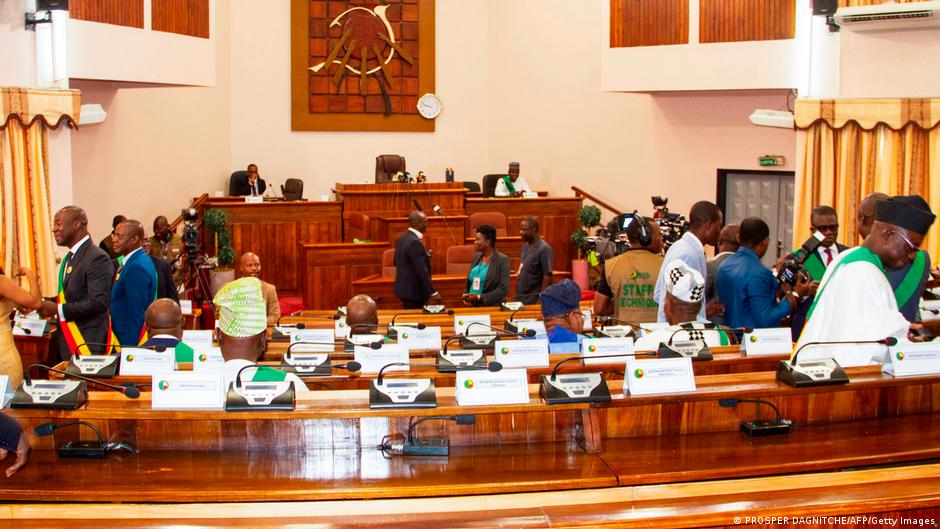
The newly formed Bénin Senate, the country’s second parliamentary chamber, officially commenced its duties today in Porto-Novo. Comprising 25 members—including former presidents—the Senate is designed to serve as a consultative body with a crucial role in maintaining social harmony.
This institution emerges from the constitutional amendment of November 2025 and will temporarily operate from the National Assembly building until its permanent facilities are completed. The Senate’s primary mission is to act as a regulatory body, ensuring political stability in a nation that has faced recurring tensions.
A chamber of wisdom and experience
The Senate brings together distinguished figures such as former presidents Patrice Talon, Boni Yayi, and Nicéphore Soglo. While their political journeys have sometimes diverged, their collective presence is expected to provide the wisdom needed to navigate the country’s complex political landscape.
During a closed-door meeting in Cotonou last Friday, chaired by Robert Dossou—a former Constitutional Court president—the newly elected senators laid the groundwork for their legislative work. The gathering underscored the urgency of their mission: to prevent political divisions from escalating into broader conflicts.
“This chamber must embody wisdom and maturity,” stated governance expert Joël Atayi-Guèdègbé. “Given the caliber of individuals involved, there is no room for error. This Senate cannot afford to repeat the mistakes of the past or let political disagreements undermine its purpose.”
Balancing democracy and fiscal responsibility
The Senate’s establishment has sparked debates about its financial impact on the national budget. The government has allocated 100 million West African CFA francs solely for the installation ceremony, raising concerns about long-term costs.
“Undoubtedly, this new institution will increase public expenses,” acknowledged Atayi-Guèdègbé. “Though smaller in size than the National Assembly, the Senate will still incur additional costs. We hope its sessions remain limited to the four annual sittings to avoid unnecessary expenditures. Despite the high allowances for its members, we trust that moderation will prevail. Democracy, after all, comes with a price.”
As the Senate begins its work, all eyes are on its leadership. With former president Patrice Talon among its ranks, speculation is rife about whether he will assume the role of Senate President. The 25 senators face a critical challenge: demonstrating that their advisory function is a worthwhile investment in Bénin’s democratic future.
Hope for a more stable political climate
Political analyst Eugène Allossoukpo views the Senate as a potential catalyst for peace. “After years of political strife driven by competing interests, we now have an institution capable of regulating the country’s political ecosystem,” he noted. “While dissenting voices will always exist, this chamber offers a space for dialogue and compromise.”
The Senate’s success will hinge on its ability to transcend partisan divides and foster a culture of constructive engagement. For the people of Bénin, the stakes could not be higher.