The geopolitical chessboard driving Benin’s petroleum resurgence
Behind the announcement of Benin’s first offshore oil cargo lie years of technical audits, contract renegotiations and fiscal restructuring that rarely make headlines. The resumption of production at the SÏmÈ field, scheduled for October 2026 with an initial shipment of 250 000 barrels, is not merely an industrial milestone—it is the visible result of a silent transformation in how the country manages its natural assets and asserts its energy sovereignty.
Why a 60-year-old field suddenly matters again
The SÏmÈ block was first discovered in the late 1960s, when global crude prices hovered around USD 2–3 per barrel and offshore drilling technology was in its infancy. After sporadic production campaigns in the 1980s and 1990s, the field was mothballed due to declining yields, low oil prices and technical bottlenecks. Today, however, three converging factors have reignited its potential:
- Technological leap: Advanced 3D seismic imaging and horizontal drilling have unlocked reserves previously deemed unrecoverable.
- Market momentum: Rising global oil demand and tighter supply from traditional producers have made marginal fields economically viable.
- Policy pivot: Benin’s National Resource Valorisation Plan now treats oil as a strategic lever for macroeconomic resilience rather than a speculative gamble.
The unseen costs and compromises behind the 250 000-barrel launch
An export debut is never just about the volume—it is about proving credibility. Before the first tanker leaves port, Benin had to address three invisible hurdles:
- Reservoir certification: Independent laboratories in Houston and London have spent 18 months analysing SÏmÈ crude, determining its API gravity, sulphur content and pour point to set a competitive benchmark against Brent.
- Revenue-sharing rework: The Production Sharing Contract signed in 2023 revised royalty rates upward while extending tax holidays for operators, balancing investor appetite with state take.
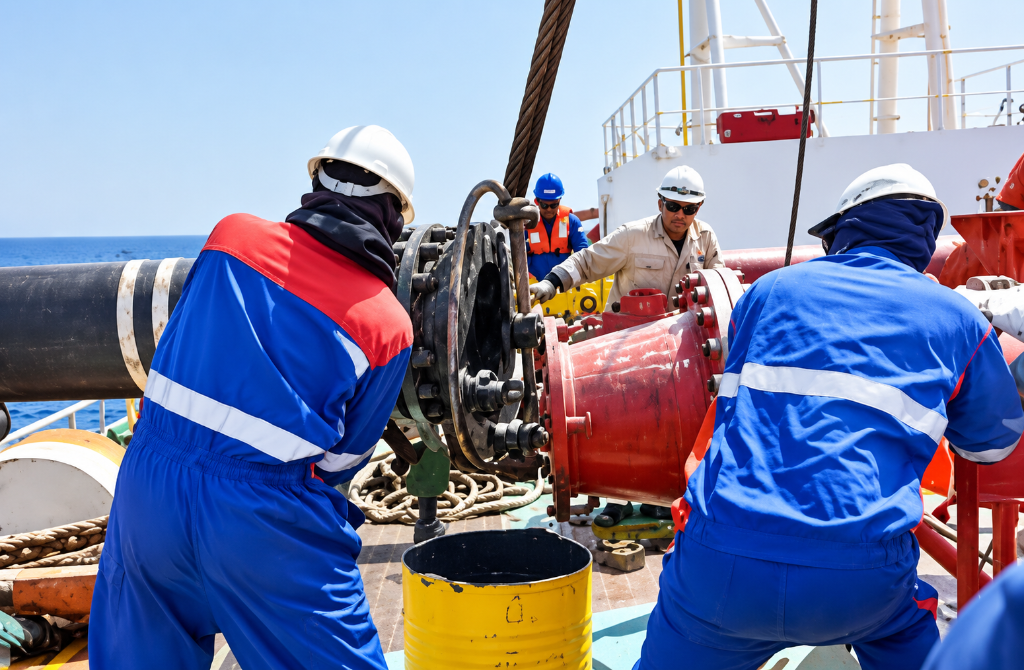
- Port readiness: Upgrading the Sèmè-Kpodji terminal required dredging a 14-metre-deep access channel and retrofitting storage tanks capable of handling sour crude—tasks completed ahead of schedule through public-private collaboration.
A narrow window of profitability
The global oil market is currently trapped in a paradox: prices are high enough to justify marginal production, yet volatile enough to deter long-term commitments. For Benin, the SÏmÈ launch must therefore balance speed with fiscal discipline. The 250 000-barrel cargo represents less than 0.02 % of annual global output, but its timing is carefully calibrated to coincide with the dry season when West African shipping lanes are free of monsoon disruptions.
Beyond the cargo: how SÏmÈ is reshaping local industries
The spill-over effect of the oil resumption is already visible across Benin’s service sector. Companies that once relied on transit trade are pivoting toward oil logistics:
- Maritime services: Local tugboat operators and supply vessels have upgraded their fleets to meet the stringent safety standards required for offshore operations.
- Construction boom: Coastal roads linking Cotonou to Sèmè are being widened to accommodate heavy equipment convoys, creating 1 200 temporary jobs.
- Skill pipelines: The national polytechnic has launched a Hydrocarbon Engineering Certification in partnership with an international consortium, targeting 300 graduates by 2027.
Convergence with the Niger-Benin pipeline: a dual-energy gateway
While oil and gas remain separate ventures, their proximity is no coincidence. The existing Niger-Benin pipeline, which transports 90 000 barrels per day of Agadem crude to the Sèmè-Kpodji terminal, provides two critical advantages:
- Shared infrastructure: The same port berths, storage tanks and export metering systems support both projects, reducing capital expenditure.
- Regional leverage: By managing two distinct hydrocarbon streams, Benin positions itself as the only country in the Gulf of Guinea with both production and transit capacity, enhancing its negotiating power with multinationals.
The governance tightrope: avoiding the resource curse
Benin’s leadership faces a well-documented paradox: how to harness hydrocarbon wealth without falling prey to the resource curse. The 2025 petroleum code mandates that all revenues flow into a Sustainable Development Fund governed by a multi-stakeholder board including civil society representatives. Key allocations include:
- 45 % to education and vocational training
- 30 % to rural infrastructure and agricultural mechanisation
- 15 % to healthcare and sanitation
- 10 % to a sovereign wealth reserve earmarked for future generations
The fund will be audited quarterly by an independent agency and published in real time on a public dashboard, a transparency measure inspired by Norway’s model but adapted to Benin’s administrative capacity.
A test case for West Africa’s energy transition
The SÏmÈ restart is being watched closely by neighbouring capitals. If Benin succeeds in translating 250 000 barrels into structural economic gains—without corruption scandals or environmental mishaps—it could serve as a blueprint for other coastal nations seeking to revive dormant fields under similar constraints.
The October 2026 cargo is therefore more than a commercial transaction; it is the first tangible result of a decade-long gamble on Benin’s ability to turn geological luck into lasting prosperity.