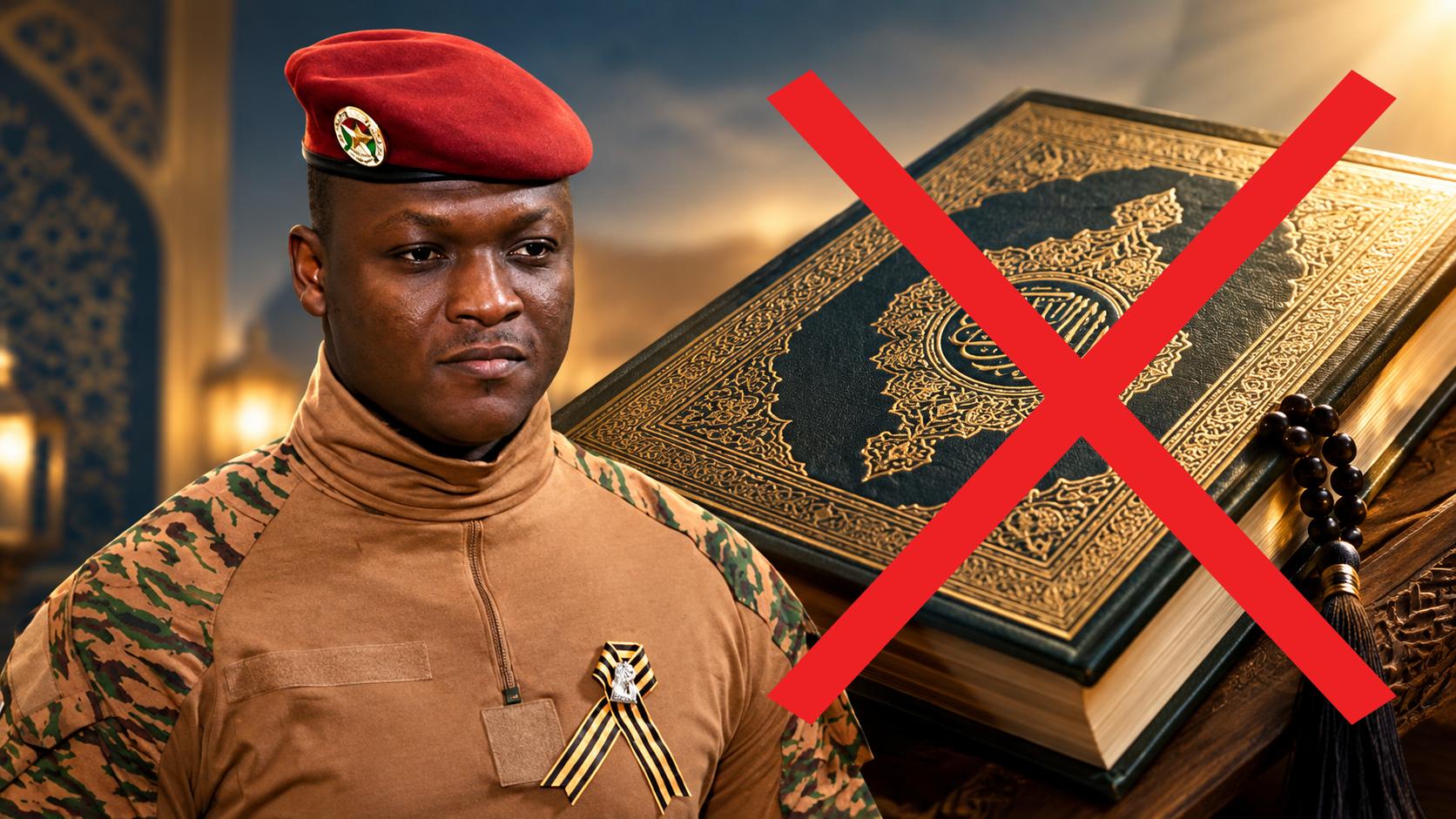
In Burkina Faso, the line between battling armed extremism and curbing religious freedoms has never been more blurred. Under the guise of eradicating the terrorist threat plaguing the nation, the military-led transitional government, helmed by Captain Ibrahim Traoré, has launched an unprecedented campaign of control and repression against the country’s Muslim majority. What the official narratives describe as ‘national security’ efforts masks a deliberate effort to dominate and silence Islamic institutions and leaders in Ouagadougou.
How anti-terror rhetoric became a weapon against Burkina Faso’s imams
The government’s security-centric discourse has provided a convenient cover for targeting independent religious voices. Moderate imams, influential preachers, and Muslim association leaders have faced arbitrary arrests, secret detentions, or forced enlistment into the Volunteers for the Defense of the Homeland (VDP). Their offense? Questioning the junta’s handling of the security crisis, criticizing its methods, or advocating for the protection of civil liberties.
The crackdown extends beyond individuals. Mosques and Quranic schools in high-risk zones endure draconian inspections, unwarranted closures, and blanket accusations of collaboration with armed groups. By branding any unaligned religious discourse as ‘subversive’ or ‘complicit with the enemy,’ the regime fosters an atmosphere of fear within a community long revered for its role in mediation and social cohesion.
The political motives behind targeting Burkina Faso’s religious leaders
This heavy-handed approach serves a clear political purpose: to neutralize any organized opposition by dismantling the country’s most influential social networks. By prioritizing the suppression of local Islamic figures and structures, the transitional government seeks to impose ideological conformity and stifle public debate.
Yet, the strategy risks backfiring spectacularly. Far from weakening the jihadist groups wreaking havoc across the region, the brutal repression of religious practice may deepen grievances and fuel resentment within the Muslim community. By isolating moderate leaders, eroding customary and spiritual networks, and stripping worshippers of trusted authority figures, the government risks fueling the very sense of injustice that extremist groups exploit.
In weaponizing religion as an ‘internal enemy’ under the pretext of security and sovereignty, Ibrahim Traoré’s administration risks shattering the fragile social fabric of a nation already stretched to its limits.
Why Burkina Faso’s anti-terror strategy is fueling division rather than stability
The junta’s tactics reveal a troubling paradox: a security approach that prioritizes repression over dialogue may inadvertently strengthen the forces it claims to combat. By conflating dissent with terrorism and religious authority with subversion, the government risks pushing moderates toward the margins—or even into the arms of extremist narratives.
This strategy not only undermines trust in state institutions but also sows mistrust among communities already grappling with the trauma of violence. As mosques face closure and imams disappear into detention, the void left behind is not filled by state assurance but by deepening suspicion. The result is a fractured society where fear, rather than cooperation, becomes the default response.
What’s next for Burkina Faso’s Muslim community under military rule
The road ahead remains uncertain. With opposition figures silenced and religious leaders under siege, the junta’s grip on power appears unchallenged—for now. However, the long-term consequences of this policy could prove devastating. A Muslim community stripped of its moderates may no longer serve as a buffer against radicalization, leaving a vacuum that extremist groups are all too eager to exploit.
The transitional government’s gamble is high: by conflating security with suppression, it risks not only perpetuating instability but also accelerating the very chaos it seeks to prevent. Whether Ouagadougou will recognize this miscalculation in time remains to be seen—but the warning signs are already visible across the country.