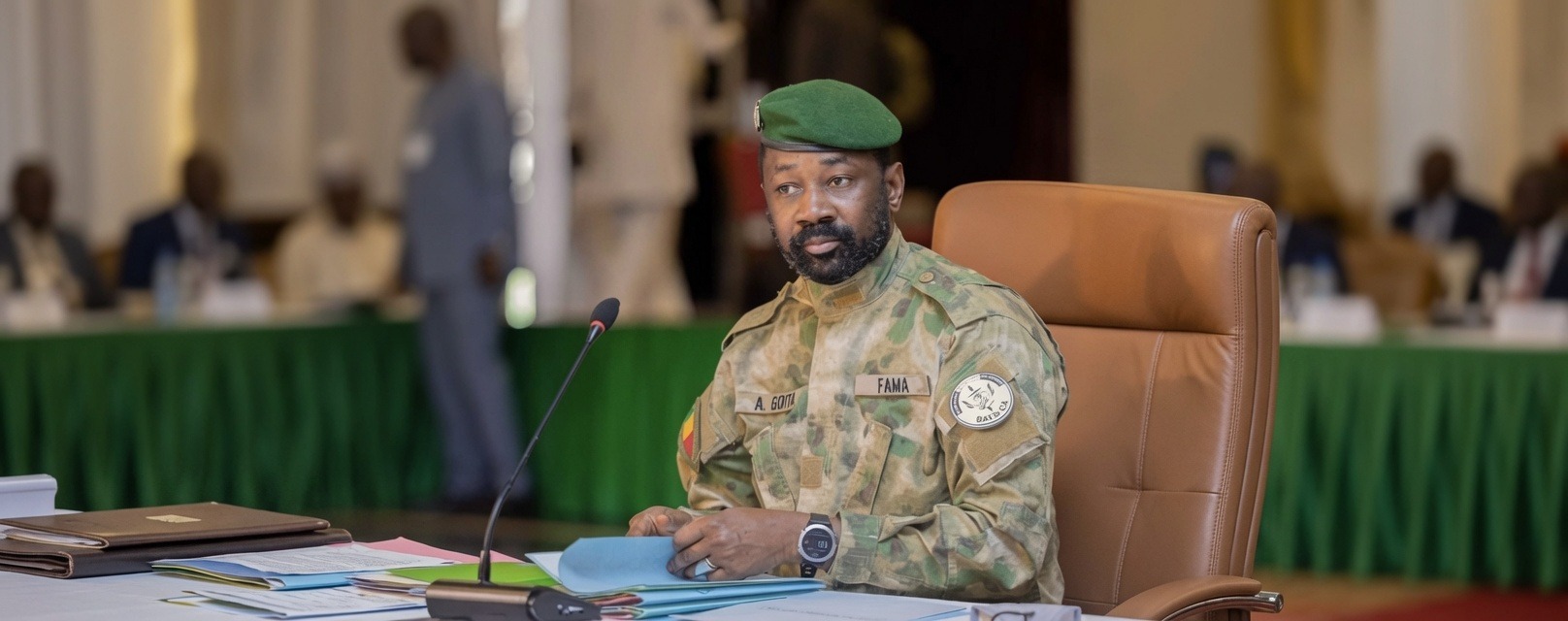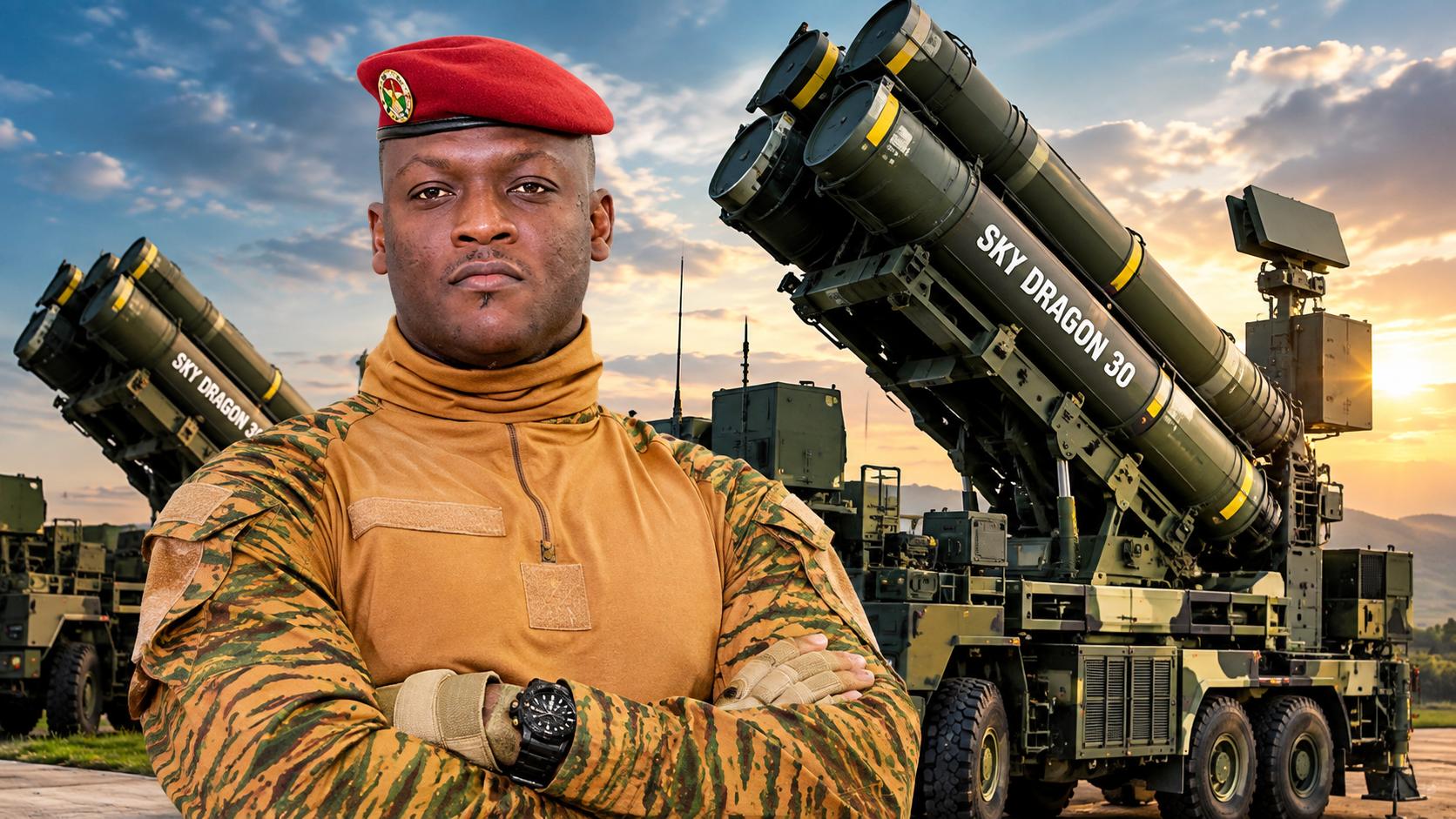
An elaborate public relations campaign unfolded across Burkina Faso’s state media: high-definition cameras panning over gleaming armored vehicles, speeches of a military ‘power surge,’ and polished official statements hailing the arrival of the Sky Dragon 30 air defense system. Yet beneath the glossy production and nationalist rhetoric lies a glaring contradiction. In a nation where villages are emptied under relentless attacks by armed groups on motorcycles, deploying hundreds of millions of dollars to intercept phantom aircraft is not just strategically absurd—it is a dangerous gamble with public funds.
The high-tech illusion: what the Sky Dragon 30 is really designed for
The Sky Dragon 30, a medium-range surface-to-air missile system (SAM) developed by China’s state-owned NORINCO, was never meant to counter insurgents on two wheels. Its design is laser-focused on a single mission: neutralizing aerial threats. Developed for conventional warfare, it is engineered to detect and destroy fast-moving combat aircraft, attack helicopters, large military drones, or cruise missiles within a 30-kilometer radius and at altitudes up to 18,000 meters.
The system relies on the IBIS 80 3D radar, a sophisticated tracking tool capable of detecting aircraft over 130 kilometers away. But when the sky is clear of enemy planes, drones, or bombers, the radar becomes a high-tech eyesore rather than a shield of defense. The question facing Burkina Faso’s military leadership is simple: against whom is this missile system supposed to fight?
Al-Qaeda and Islamic State-affiliated groups operating in the Sahel do not control airspace. They do not fly fighter jets or launch ballistic missiles. Their combat platform is the motorcycle, their battlefield is the dusty, unpaved roads of the countryside, and their tactics are ambushes, roadside bombs, and night raids. A missile designed to intercept a jet traveling at Mach 2 has exactly zero chance of even detecting a pickup truck or group of gunmen weaving through the Sahel’s thorny vegetation.
Why the Sky Dragon 30 became a symbol of strategic disconnect
The mismatch between the system’s capabilities and the actual threat is not just technical—it’s existential. It reveals a profound disconnect between military procurement and battlefield reality. The purchase of the Sky Dragon 30 was not driven by operational need. It was driven by perception.
Under pressure from ongoing insurgency, territorial losses, and eroding public trust, Burkina Faso’s transitional government needed a narrative. A modern missile launcher rolling through the capital on a military parade does more than intimidate—it reassures. It sends a message: ‘We are strong. We are modern. We are protecting you.’ But the message is a mirage. The system cannot engage a single terrorist on a motorcycle. It cannot detect a suicide bomber concealed in a civilian truck. It cannot stop an ambush on a rural highway.
- Operational irrelevance: The system is useless against ground-based insurgents.
- Resource drain: The $15 million (or more) spent on the Sky Dragon 30 could have funded hundreds of counter-IED kits, thousands of drones for surveillance, or fuel for patrols securing trade routes.
- Distorted priorities: While soldiers on the front lines scramble for boots, radios, and ammunition, high-tech props parade through Ouagadougou.
The propaganda of defense and the human cost
This military acquisition is not just a strategic error—it is a social contract broken. Every franc poured into a system that cannot protect citizens is a franc stolen from schools, clinics, or food security programs. The Sky Dragon 30 represents a dangerous pattern: investing in symbols of power while neglecting the tools that save lives.
In towns like Djibo, Solenzo, and Boussouma, families flee not because of air raids, but because of gunfire and explosions on the ground. The real enemy is not in the clouds. It is among them. And yet, the military’s high-visibility hardware tells a story of defending the skies—while the ground bleeds.
A call for accountability over illusion
Burkina Faso’s leaders now face a choice: double down on symbolic defense or confront the uncomfortable truth that national security begins not with missiles, but with boots on the ground and trust in the communities most at risk.
The Sky Dragon 30 is more than an unusable weapon. It is a symptom of a deeper crisis—one in which politics masquerades as strategy, and public funds are spent to build an image rather than protect lives. Until military modernization aligns with ground truth, Burkina Faso will continue to wage war on two fronts: against insurgents in the bush, and against the illusion of security in the capital.