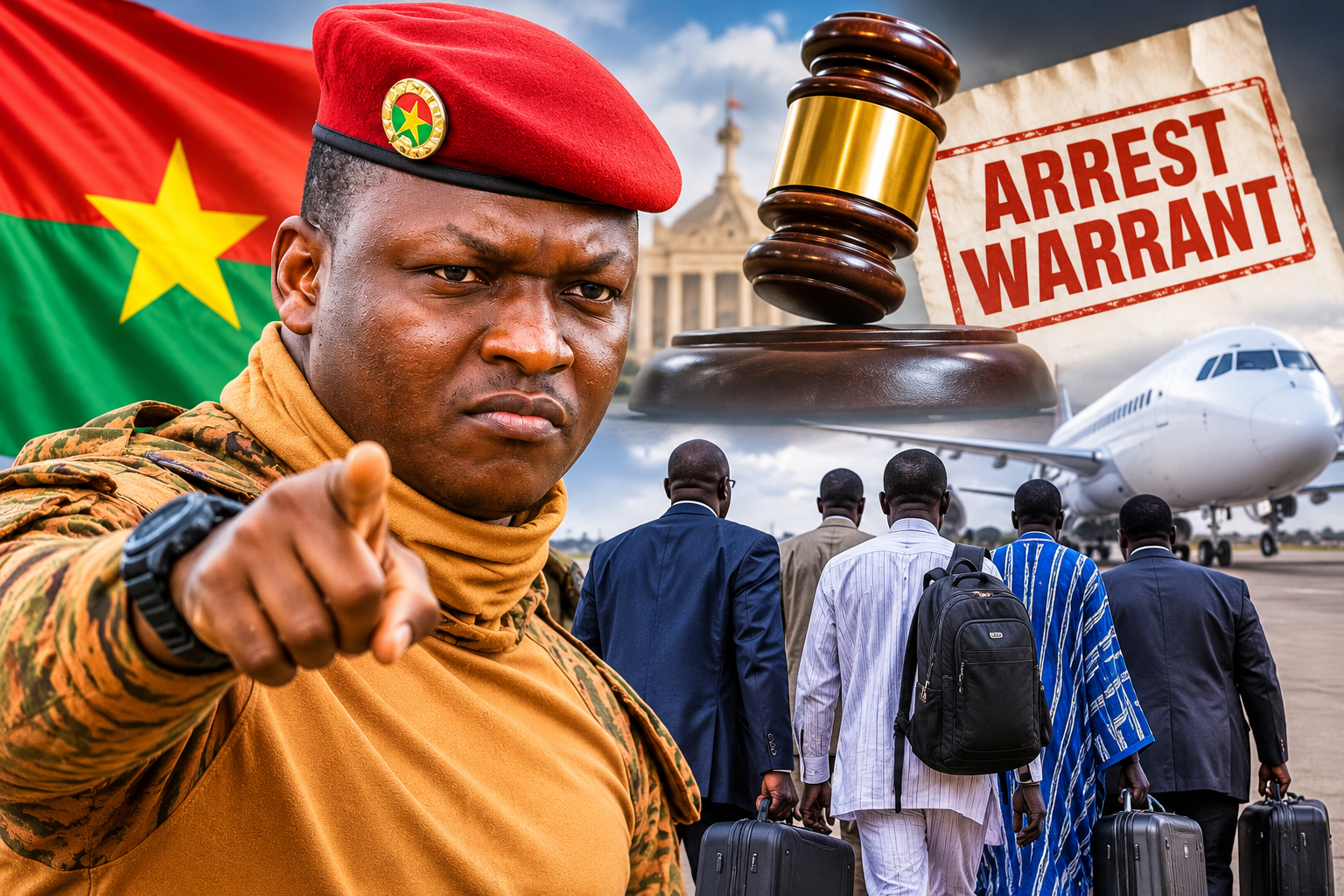
The Burkina Faso transitional government, led by Captain Ibrahim Traoré, has escalated its legal pursuit of former politicians, military officers, and journalists now residing abroad. This unprecedented wave of extradition requests, arrest warrants, and ongoing judicial proceedings marks a decisive shift in how the regime addresses internal dissent even beyond national borders.
From exile to extradition: the widening net of legal action
Several high-profile figures, once prominent voices in Burkinabè politics or public life, have sought refuge in foreign countries amid growing political instability and security threats. Yet, rather than finding protection, many now face mounting legal pressure from authorities in Ouagadougou. Far from being confined to domestic opponents, this campaign extends into territories once considered safe havens for political asylum.
The deployment of international judicial cooperation mechanisms including extradition treaties and cross-border arrest requests has turned what began as internal political turbulence into a transnational confrontation. For the targeted individuals, the message is clear: exile no longer guarantees immunity from the Burkinabè justice system.
Is justice the goal, or a political instrument?
At the heart of this controversy lies a fundamental question: are these prosecutions driven by a commitment to legal accountability, or do they reflect a deliberate strategy to neutralize dissent? The distinction is critical. A state governed by the rule of law must ensure that legal proceedings are based on verifiable evidence, fair procedures, and impartial institutions not on political motivations or personal vendettas.
This pattern raises serious concerns. When judicial action appears systematic and politically motivated, it risks undermining public trust in institutions. The justice system, meant to serve as a pillar of democracy, cannot become an extension of power struggles between successive governments. Each transition in leadership brings legitimate expectations of reform, but those reforms must be rooted in justice not retribution.
The human and political cost of transnational pursuit
The implications extend beyond legal theory. The pursuit of exiled citizens challenges the very principles of political pluralism and freedom of expression that define a democratic society. It sends a chilling signal: that criticism, no matter how distant, will not be tolerated. This not only stifles dissent but also fuels uncertainty about the regime’s long-term intentions.
Moreover, the timing and intensity of these actions suggest a broader narrative. In a context of escalating security challenges, growing humanitarian crises, and economic hardship, the authorities’ focus on former officials raises legitimate concerns. Are these prosecutions a priority? Or do they reflect a preoccupation with consolidating power rather than addressing the urgent needs of the Burkinabè people?
International obligations and diplomatic pressures
The use of extradition to bring former officials to justice is not inherently unlawful. However, international law requires that such requests comply with strict conditions: respect for fundamental rights, protection against political persecution, and assurance of a fair trial. When these safeguards are absent, extradition risks becoming a tool of repression rather than justice.
The Burkinabè authorities now face scrutiny over whether their legal actions meet these international standards. The international community is watching closely to determine whether this judicial campaign is part of a genuine effort to uphold the law or whether it represents an abuse of power disguised as legal procedure.
A turning point for Burkina Faso’s democratic future
The current judicial offensive against exiles represents more than a legal strategy; it is a defining moment for Burkina Faso’s political trajectory. Will the country move toward greater openness and institutional accountability? Or will it descend into a cycle of political retaliation where each change in leadership is followed by wave after wave of judicial pursuit?
For Captain Ibrahim Traoré, the choice is clear. A leader’s strength is measured not by the number of opponents pursued, but by the strength of institutions capable of delivering justice fairly and impartially. The true test of leadership lies in the ability to govern with transparency, to address national challenges with courage, and to ensure that justice serves the people not the interests of those in power.
In a nation facing profound crises, the path forward must prioritize the well-being of its citizens and the integrity of its democratic institutions. Anything less risks deepening divisions and undermining the fragile foundations of stability in Burkina Faso.
By Yacouba Boukari — Journalist