The Ivorian justice system has entered a decisive phase with the integration of Federal Bureau of Investigation (FBI) agents into the Economic and Financial Penal Pole (Pôle pénal économique et financier – PPEF) in Abidjan. This landmark collaboration marks a critical turning point in the fight against transnational cybercrime, particularly sextortion networks operating from Ivorian soil.
Minister Kambilé clarifies the strategic shift behind the FBI’s presence
Following growing public concerns and media speculation about alleged corruption within the PPEF,
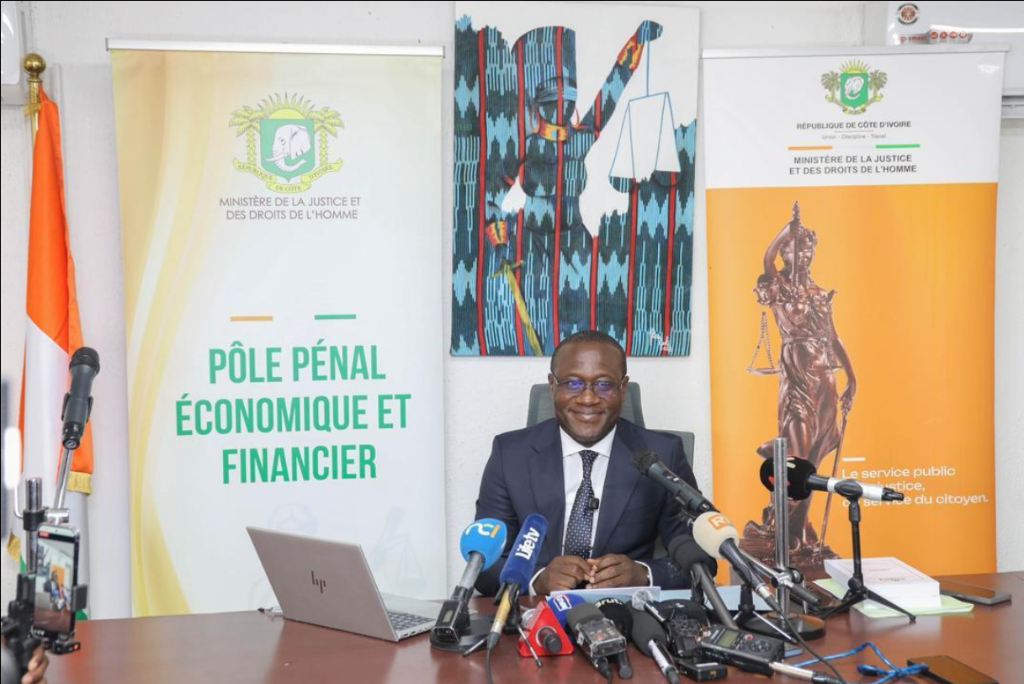
Justice Minister Jean Sansan Kambilé has unequivocally stated that the arrival of American investigators is not an inquiry into local magistrates but a targeted response to international criminal activity. He emphasized that the FBI’s role is strictly consultative and supportive: assisting Ivorian authorities in dismantling cybercrime rings that have exploited digital platforms to target victims abroad.
« The FBI is here to help us dismantle criminal networks that are using fake identities to extort victims, primarily in the United States, » Kambilé explained in a recent statement. « So far, our joint task force has identified and apprehended 12 suspects involved in sextortion and money laundering activities. »
Sextortion: the invisible threat fueling international cooperation
The surge in sextortion cases—where criminals coerce victims into sharing intimate images before blackmailing them—has reached alarming levels. These operations often begin with the creation of fake social media profiles. Perpetrators build trust over time, sometimes forging emotional bonds, before demanding ransom payments under the threat of public shaming or sharing material with the victim’s family.
According to official accounts, several American victims—including minors—have fallen prey to Ivorian-based networks. The psychological and financial toll has been severe, with some cases linked to tragic outcomes.
In response, the U.S. government intensified diplomatic and investigative coordination with Abidjan, leading to the formation of a dedicated Joint Task Force comprising Ivorian prosecutors, financial crime investigators, and FBI cyber specialists.
The Task Force in action: arrests, convictions, and financial investigations
The collaborative unit operates within the PPEF, providing technical expertise in digital forensics, behavioral analysis, and international evidence sharing. Since its inception, the team has:
- Conducted joint undercover operations targeting cybercrime cells
- Facilitated the extradition and prosecution of key suspects
- Assisted in freezing and seizing illicit assets linked to sextortion rings
- Traced financial flows across multiple jurisdictions to disrupt laundering channels
« This partnership has already yielded tangible results, » noted a senior PPEF official. « Twelve individuals have been arrested, tried, and convicted, and several ongoing investigations remain active. »
The sovereignty debate: protecting national authority amid global threats
Despite the operational success, questions linger regarding the limits of foreign investigative presence in a national judicial institution. Under what legal framework do FBI agents operate within the PPEF? What powers do they possess, and how are they supervised?
Minister Kambilé has reassured the public that all activities are conducted under strict Ivorian legal oversight. « The FBI supports our efforts in training, intelligence, and technology, but investigative and prosecutorial decisions remain solely in the hands of Ivorian magistrates, » he affirmed.
This distinction is crucial. While international cooperation is essential to combat sophisticated cybercrime syndicates, sovereignty and accountability remain non-negotiable. The government has stressed that the collaboration does not equate to external control over Ivorian justice.
Beyond sextortion: reinforcing financial integrity and global trust
The PPEF’s partnership with the FBI extends beyond cybercrime. By targeting money laundering networks linked to digital extortion, the joint initiative aligns with broader efforts to improve financial transparency. One notable achievement has been the removal of Côte d’Ivoire from the Financial Action Task Force (FATF) grey list—a milestone reflecting improved compliance in anti-money laundering (AML) standards.
This strategic alignment has not gone unnoticed on the global stage. By positioning itself as a responsible partner in the fight against financial crimes, Côte d’Ivoire is reinforcing its credibility in international regulatory forums.
Resolving the controversy: facts vs. misinformation
Recent media reports had suggested a hidden corruption scandal within the PPEF, allegedly involving secret FBI-led investigations and offshore bank accounts. These claims were swiftly rebutted by the Ministry of Justice, which stated emphatically: « There is no ongoing gendarmerie investigation involving PPEF officials based on foreign intelligence. »
The government has maintained that the collaboration is purely operational and justice-focused, aimed at curbing cyber-enabled crimes that transcend borders.
Looking ahead: a model for African–American judicial partnership
The FBI-PPEF collaboration represents a breakthrough in transcontinental judicial cooperation. It demonstrates how African nations can leverage strategic alliances with global law enforcement agencies without compromising sovereignty—provided clear legal boundaries and mutual respect are maintained.
As cyber threats evolve, so too must the mechanisms to counter them. Côte d’Ivoire’s proactive stance sends a clear message: the fight against digital crime demands unity, innovation, and unwavering commitment to justice.