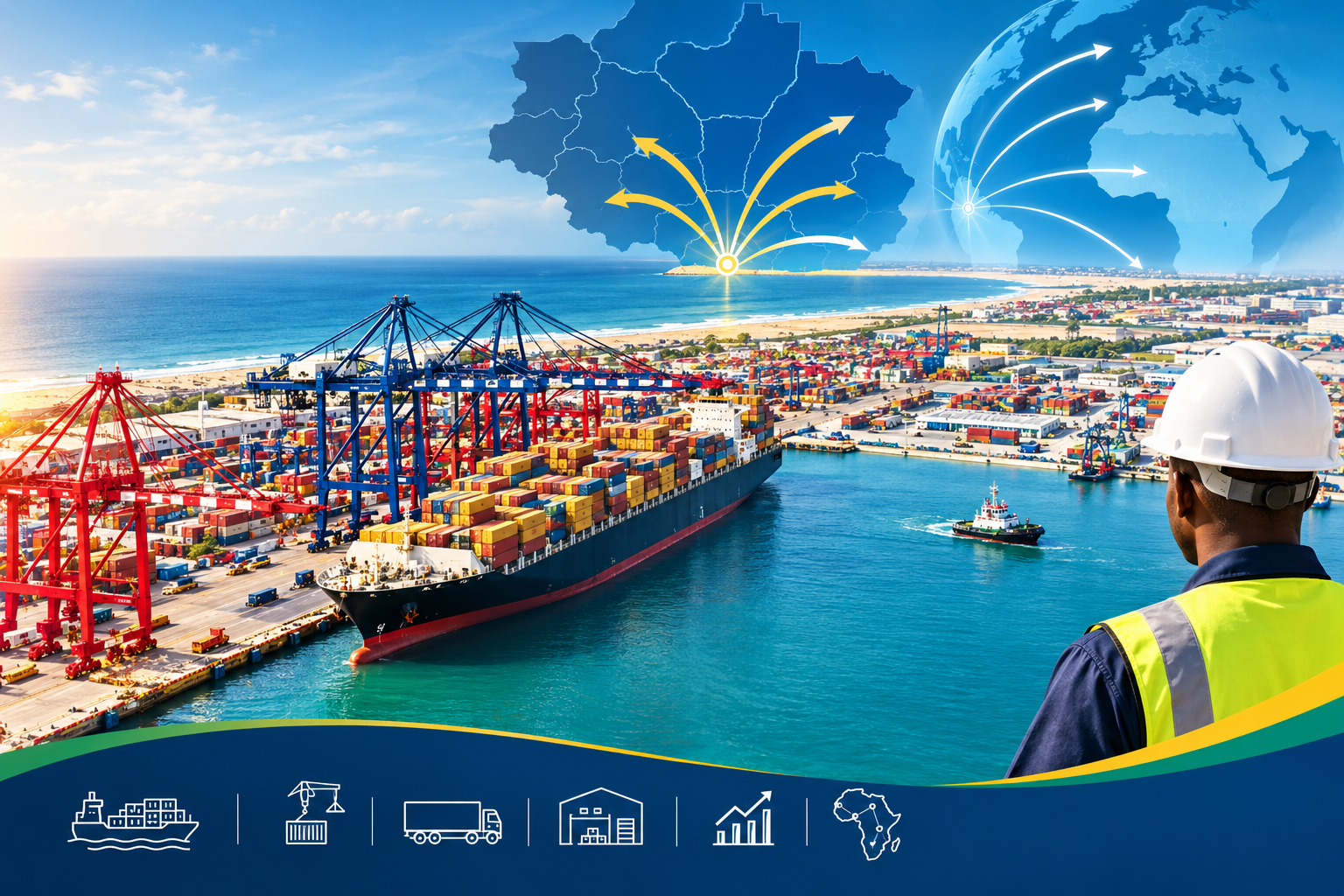
The Port of Cotonou is undergoing a strategic transformation, emerging as a key logistics hub in West Africa despite regional disruptions. New figures reveal a 52% increase in total cargo volume in 2025, alongside a 312.6% surge in transshipment activity, signaling a fundamental shift in the port’s economic role.
From hinterland dependency to regional redistribution hub
Historically reliant on trade flows from Benin’s immediate hinterland including Niger, Burkina Faso, and Mali the Port of Cotonou is now diversifying its traffic sources. While these landlocked neighbors remain critical markets, the port is actively expanding transshipment, redistribution, and export activities to reduce dependence on a single corridor.
The transshipment boom is particularly striking. In 2025, this segment grew by 312.6%, with volumes reaching 516,558 tonnes in the first half of 2026 up 152.1% from the same period in 2025. This shift reflects a deliberate strategy to position Cotonou not just as an entry point for Benin’s trade but as a redistribution platform for goods destined for other West African markets.
Resilience amid regional trade disruptions
The port’s growth trajectory stands out against a backdrop of regional instability. Border closures with Niger and other logistical challenges have disrupted traditional trade corridors, yet Cotonou’s cargo throughput has continued to expand. This resilience underscores the impact of recent modernization efforts, including infrastructure upgrades, digitalization, and expanded capacity.
Key projects, such as the development of Terminal 5, the enlargement of the port basin, and the modernization of quays, have enhanced the port’s ability to handle larger vessels and streamline operations. A $100 million financing package from the African Development Bank has supported these upgrades, with a focus on improving access roads, centralized parking, and logistical efficiency.
Export growth fuels economic diversification
Another critical development is the surge in Benin’s exports, which rose by 33.3% in the first half of 2026, reaching 2.87 million tonnes. This growth is driven by increased industrial production and the transit of Nigerian crude oil. The expansion aligns with Benin’s push to transition from a re-export economy to one focused on local production and value-added exports.
The development of the Glo-Djigbé Industrial Zone (GDIZ) and investments in manufacturing are further strengthening the port’s role. By facilitating the movement of raw materials and finished goods, the Port of Cotonou is becoming a vital enabler for Benin’s industrialization agenda.
Competitive gains and future challenges
Cotonou’s performance is beginning to attract international recognition. In 2024, the World Bank’s Container Port Performance Index ranked the port 303rd out of 403 globally, a significant improvement from its 402nd position in 2023 a leap of nearly 100 places in a single year.
However, challenges remain. Further improvements are needed in corridor fluidity, cost reduction, security, and digital integration. Reclaiming lost hinterland markets, particularly in Niger, will also be crucial for sustaining growth. Yet the port’s trajectory suggests it is no longer merely defending its historical position but actively pursuing new opportunities.
Redefining West Africa’s trade landscape
The Port of Cotonou’s evolution reflects a broader shift in regional trade dynamics. By diversifying its traffic sources, enhancing its infrastructure, and boosting export capabilities, the port is positioning itself as a pivotal node in West Africa’s logistics network. For Benin, this transformation represents more than an infrastructure upgrade it is a strategic investment in economic competitiveness and regional integration.