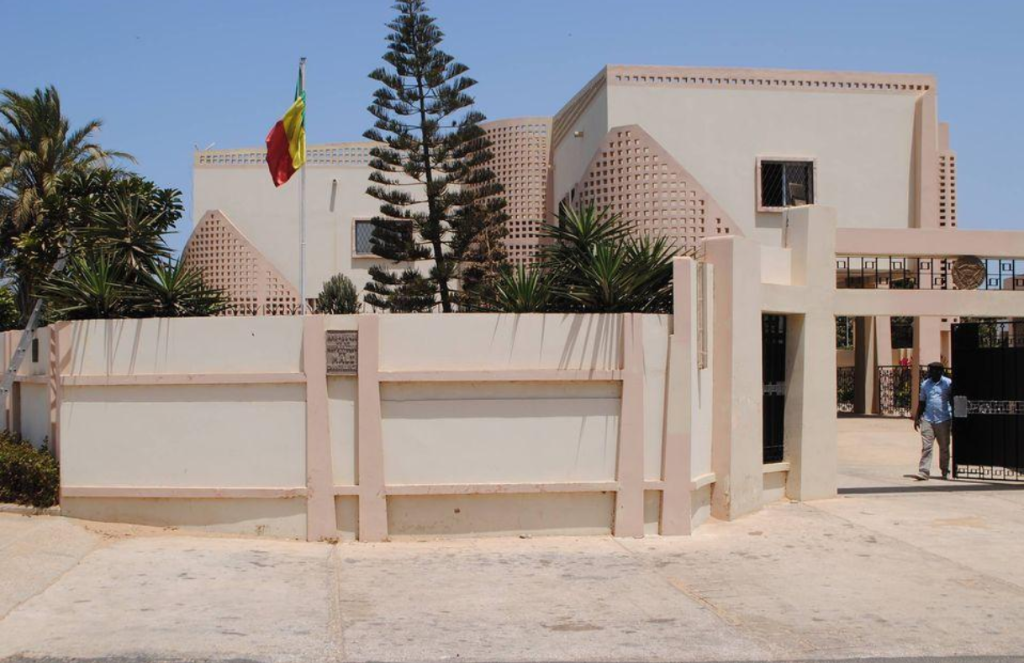
In a landmark legal decision that has sent ripples across Dakar and Bamako alike, Senegalese courts have issued a decisive eviction order against the Malian embassy over a 1,157 m² parcel in the upscale Fann Résidence neighborhood. This ruling marks a clear judicial turning point in a long-standing property dispute that could reshape diplomatic land use practices on Senegalese soil.
Court rules against diplomatic immunity in land ownership dispute
At the heart of this high-stakes affair is a legal battle between the Malian mission in Dakar and Immoland SARL, a prominent Senegalese property developer. The court’s judgment, grounded in Senegalese land law and the country’s strict property titling system, concluded that the embassy has been occupying the contested plot without valid legal title or authorization.
The landmark ruling specifically cited the absence of any recognized legal foundation for the diplomatic presence on the parcel, effectively stripping the embassy of its previous claim to the land. This interpretation directly challenges the notion of unexamined diplomatic occupancy, setting a precedent that could influence future judicial decisions regarding foreign missions and property disputes.
The judgment’s sweeping scope and unanswered questions
The eviction order doesn’t merely demand the removal of diplomatic personnel—it encompasses the expulsion of all embassy-related assets and individuals occupying the property under diplomatic authority. This expansive scope suggests the court views this as a comprehensive resolution to what it perceives as an unlawful occupation.
However, significant questions remain unanswered. The precise circumstances of the embassy’s initial occupation, potential diplomatic counterarguments, and the embassy’s intended response to the ruling all fall outside public knowledge. What is clear is that the decision has created an unprecedented legal pathway for judicial intervention in diplomatic property disputes.
Diplomatic immunity vs. sovereign land rights
The case has thrust international diplomatic conventions into unexpected territory. While embassies normally enjoy protections under the Vienna Convention on Diplomatic Relations, these privileges don’t extend to blanket ownership rights over occupied premises. The court’s ruling appears to establish that when diplomatic missions occupy land without proper title, they become subject to the same property laws governing private citizens and corporations.
A dispute with far-reaching implications for senegalese real estate
This case arrives at a critical juncture for Senegal’s property sector, where urban development pressures and contested land claims frequently lead to complex litigation. The justice system’s willingness to assert jurisdiction over diplomatic properties—particularly in valuable districts like Fann Résidence—signals a new era in how Senegal handles high-profile land disputes.
The parcel’s prime location in Dakar’s most exclusive residential zone amplifies the case’s significance. Property attorneys and developers alike are scrutinizing the decision for its potential to influence future land claim resolutions, especially regarding undeveloped or underdeveloped plots claimed by both private entities and diplomatic missions.
Next steps and diplomatic considerations
With the legal pathway now clear, attention turns to the practical execution of the eviction order. The embassy has yet to publicly indicate whether it will challenge the decision through higher courts, while Senegalese authorities have made no immediate announcement regarding enforcement timing.
What remains certain is that both Malian and Senegalese officials will closely monitor the aftermath. The case’s outcome could establish crucial precedents for how such disputes are resolved in the future, potentially requiring amendments to either diplomatic practices or Senegalese property law.
Until official reactions emerge, the judicial decision stands as a watershed moment—one that compels a reevaluation of how diplomatic immunity intersects with sovereign land rights in Senegal’s most competitive property markets.