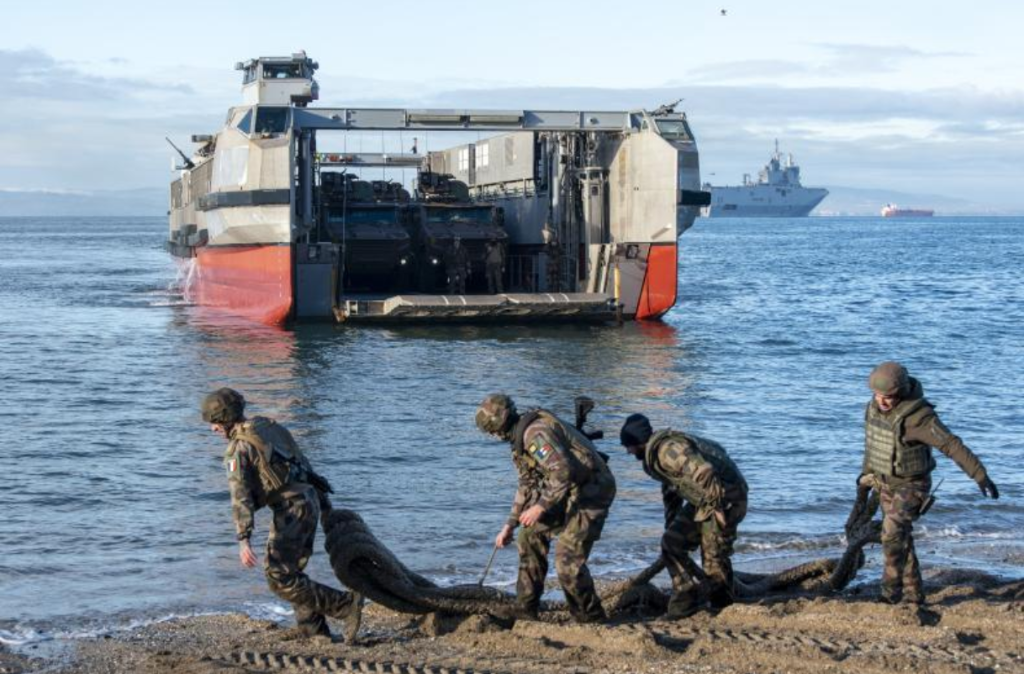
As the first shots of November 2026 echo across the Atlantic coastline, a historic military transformation is underway. Paris and two of its enduring African partners are executing what could become the most consequential defense partnership since independence. The GEX 2026 joint exercise marks a decisive turning point—not just in military drills, but in the very architecture of regional security cooperation.
From exercises to alliances: The birth of a new security model
More than 2,000 troops, airborne units, naval fleets, and joint command systems have converged from Côte d’Ivoire, Gabon, and France for a multinational inter-force drill unlike any seen before. This isn’t merely a training event; it’s the launch of a new model for military partnership—one built on shared command, interoperability, and strategic foresight. The result? A bold shift in how West Africa and Europe think about collective defense in the face of rising transnational threats.
Two phases, one mission: A synchronized defense breakthrough
The GEX 2026 operation unfolds in two precise stages, each designed to push operational boundaries: FANGHA 2026 (Côte d’Ivoire, November 7–14) and WAIYA 2026 (Gabon, November 24–29). While FANGHA focuses on urban and coastal defense within the Ivorian theater, WAIYA tests amphibious operations, maritime interdiction, and joint air-ground coordination in Gabonese waters. Together, they simulate real-world crisis response across two critical theatres of operation.
- 1,181 Ivorian troops, over 850 French personnel, and nearly 100 Gabonese commandos participated
- Observers from Benin, Guinea, Liberia, and Senegal attended to assess interoperability protocols
- French assets included the Mistral amphibious assault ship and Mirage 2000 fighter jets
Why the Gulf of Guinea? A strategic pivot takes shape
The Atlantic coast—once a backstage of geopolitics—is now in the spotlight. The Gulf of Guinea is more than a maritime corridor; it’s a vital artery of global trade, energy supply, and digital connectivity. Its ports pulse with containers, its offshore platforms pump oil, and its undersea cables carry data for entire nations. Yet beneath that prosperity simmer unresolved threats: piracy, illicit trafficking, armed incursions from the Sahel, and sabotage against critical infrastructure.
Côte d’Ivoire and Gabon sit at the heart of this equation. Their northern regions border fragile zones where instability could spill south. By anchoring GEX 2026 in both countries, the three nations are not just training together—they are redrawing the security map of West and Central Africa before the threats do.
Beyond borders: Building a synchronized defense ecosystem
The real innovation of GEX 2026 lies in its transnational integration. Land, sea, and air operations were synchronized from planning to execution, with real-time data sharing between headquarters in Abidjan, Libreville, and Paris. No longer confined to national drills, this exercise becomes a template for regional joint intervention protocols—a critical step toward long-term security resilience.
Participants practiced:
- Maritime surveillance and interdiction
- Amphibious assault deployment
- Close air support coordination
- Cross-border crisis simulation
Paris’s strategic recalibration: From permanent bases to flexible partnerships
This exercise arrives at a pivotal moment in French military strategy in Africa. With withdrawals from Mali, Burkina Faso, and Niger, and the return of Port-Bouët camp to Côte d’Ivoire in 2025, Paris is shifting from a model of permanent garrisons to one of portable, responsive partnerships. GEX 2026 is the flagship demonstration: high-capacity deployments on short notice, tailored to partner needs and regional demands.
But this is not about preserving influence alone. For Côte d’Ivoire and Gabon, the stakes are equally high. Both nations are upgrading their defense ecosystems—training elite units, enhancing maritime patrol capacity, and integrating drone surveillance networks. They are not just observers; they are architects of a new security order.
A new balance: African autonomy meets international cooperation
The greatest test of GEX 2026 will not be in the drills, but in what follows. Can these nations turn joint exercises into lasting operational mechanisms? Can they build robust intelligence-sharing systems, regional maritime surveillance protocols, and a unified command doctrine? The answer will define whether this initiative leads to genuine strategic autonomy—or a new form of dependency.
Already, the inclusion of observer nations suggests the model is scalable. Benin, Guinea, Liberia, and Senegal sent military delegations not as spectators, but as potential future participants. Each faces similar threats: arms smuggling, coastal piracy, and infiltration by non-state armed groups. GEX 2026 offers a roadmap.
The future of African security architecture: A breakthrough in the making
GEX 2026 is more than a military event. It is a geopolitical inflection point—one that signals a fundamental recalibration of defense cooperation between Europe and Africa. In the Gulf of Guinea, a new chapter is opening: one where sovereignty is strengthened not by isolation, but by collaboration; where security is not imposed, but co-created.
The question now is whether this momentum can be sustained. Can the lessons learned in November 2026 become the foundation of a regional rapid-reaction force? Can African armies gain the autonomy they seek, while still leveraging international support?
One thing is clear: the drill is over. The work has just begun.