Catastrophic strike at a busy train station
An unprovoked attack on October 29, 2026, transformed a routine morning at Dnipro’s central railway station into a scene of devastation. A high-speed Russian drone targeted Platform 5, where a packed train to Zaporizhzhia had just arrived. Officials now confirm at least thirteen civilian deaths, with the toll expected to rise as rescue teams sift through the wreckage. The strike marks a decisive escalation in Moscow’s aerial campaign against Ukraine’s critical infrastructure.
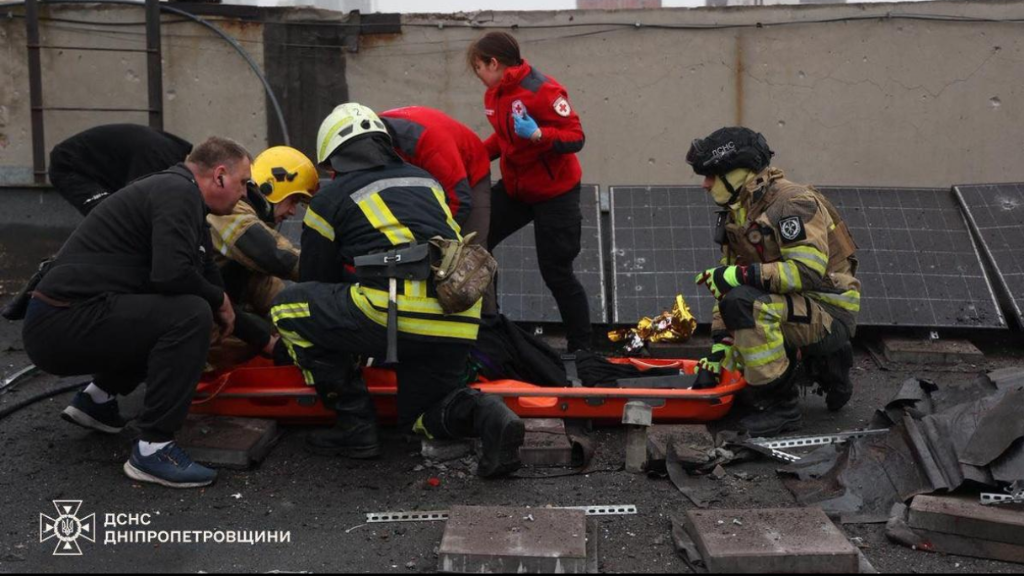
Witnesses describe a sudden explosion that sent debris flying across the platform. Security camera footage shows smoke billowing from the impact zone as desperate civilians scatter. Emergency services arrived within minutes, but the nature of the attack had already left deep scars—some victims were found trapped under collapsed structures while others sustained severe injuries requiring immediate evacuation.
From morning commute to emergency response
The strike occurred at 8:47 a.m. local time, during peak commuter hours. Ukrzaliznytsia, Ukraine’s state railway operator, confirmed that Train 866—scheduled to depart for Zaporizhzhia—was directly hit. Among the fatalities were parents with children, students heading to universities, and workers trying to reach their jobs in safer regions. The attack disrupted train services across the Dnipro-Kryvyi Rih corridor, stranding thousands of passengers.
Local authorities declared a state of emergency, deploying dozens of ambulances, fire trucks, and police units. Rescue workers used drones of their own to survey the damage from above, identifying hotspots where survivors might still be trapped. Meanwhile, hospitals in Dnipro prepared for an influx of critical cases, with blood supplies and surgical teams put on high alert.
A city on edge: How terror reshapes daily life
Dnipro, Ukraine’s fourth-largest city, has become a symbol of resilience in the face of relentless bombardment. Yet this attack exposed a chilling reality: even routine activities like catching a train are now perilous. Residents describe a growing dread of public spaces, with many canceling travel plans and relying on informal networks to avoid crowded stations.
Social media immediately filled with posts from survivors and relatives searching for missing persons. One user posted: “My brother was supposed to take that train. The universe decided differently.” The psychological toll is immense, with children refusing to leave their homes and adults hesitating before boarding any form of transport.
Drones as weapons: The evolving battlefield
The use of high-speed drones in this attack highlights a disturbing trend in the war. Unlike slower, propeller-driven models, these drones can reach speeds exceeding 200 mph, making them difficult to intercept even for advanced air defense systems. Their precision targeting of civilian infrastructure—railways, power grids, and water plants—demonstrates a deliberate strategy to cripple Ukraine’s ability to function.
Military analysts note that Russia has increasingly relied on drone warfare to bypass Ukrainian air defenses. The drones used in this strike were likely modified for enhanced range and payload, allowing them to penetrate deeper into defended territory. Ukrainian authorities have struggled to counter these threats, often forced to issue last-minute warnings that leave civilians with little time to react.
Why train stations? The strategic and symbolic targets
In wartime, train stations are more than transit hubs—they are lifelines. They enable the evacuation of vulnerable populations, the movement of aid supplies, and the reconnection of divided families. By striking these nodes, Russia seeks to disrupt both the practical and psychological fabric of Ukrainian society.
Ukrzaliznytsia had issued an air raid alert just minutes before the drone struck. However, the crowded platform and the immediacy of the train’s departure meant evacuation was nearly impossible. This incident underscores a harsh truth: when disaster strikes, even the best-laid plans can fail. Authorities are now reviewing emergency protocols to minimize future casualties, but the challenge remains daunting.
International outrage and the path forward
Ukrainian President Volodymyr Zelensky condemned the attack as a war crime, demanding stronger international responses to Russian aggression. “Each strike on civilians is a new page in their book of terror,” he stated in an evening address. The European Union and NATO allies reiterated their support for Ukraine, pledging additional air defense systems to counter drone threats.
Yet for the people of Dnipro, outrage alone does not rebuild shattered lives. Families are collecting donations to cover funeral costs, while psychologists report a surge in trauma cases among survivors. The city’s mayor has called for a temporary halt to railway operations in high-risk areas, though such measures could further paralyze daily life.
A nation under siege: The human cost
Behind the statistics—thirteen souls lost, dozens injured, hundreds displaced—lie stories of love, loss, and unfulfilled dreams. One victim was a 17-year-old student on her way to a medical school interview in Zaporizhzhia. Another was a 68-year-old pensioner carrying groceries for her grandson. Their deaths are not just numbers; they represent the fragility of peace in a country at war.
The international community faces a critical question: How can civilians be protected when the very infrastructure that sustains them becomes a battleground? For the people of Dnipro, the answer remains painfully unclear as they mourn and rebuild in the shadow of the next potential strike.