
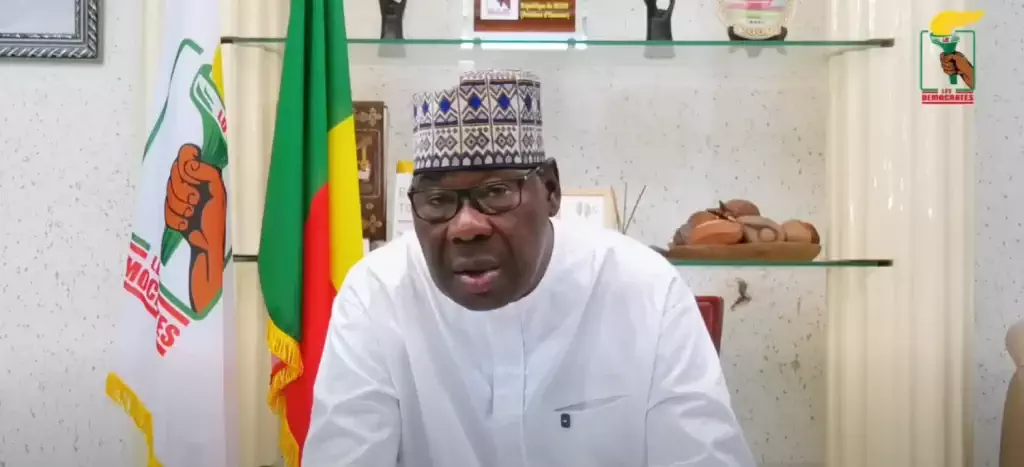
Former President Boni Yayi steps into Senate amid political impasse in Benin
Cotonou — A dramatic shift in Benin’s political landscape unfolds as former President Thomas Boni Yayi announces his decision to take up his constitutional right to a Senate seat, reversing his earlier stance against the upper chamber’s formation. The move comes as a response to what he describes as a severely restricted political environment.
In a nationwide address, Boni Yayi framed his decision as a necessary step to restore balance in a system he argues has become increasingly closed off to dissenting voices. His reversal signals a new phase in the country’s institutional dynamics, where the Senate could serve as a rare platform for dialogue.
Senate entry justified by political ‘lockdown’
Boni Yayi’s justification hinges on his assessment of Benin’s current political climate. He warns of a monochromatic Parliament—one dominated by a single political force—and dwindling avenues for civic engagement. By occupying the Senate seat reserved for former heads of state, he asserts his role is not personal ambition but a constitutional obligation to amplify citizen concerns.
« I come not by choice, but by constitutional mandate », he emphasized, adding that the Senate « must become an internal forum for political exchange, giving voice to the people’s aspirations ».
Structure of Benin’s newly reformed Senate
The upper chamber, established under recent reforms, comprises 25 to 30 members. Its composition includes:
- Ex-officio members: Former presidents, former National Assembly speakers, and former Constitutional Court presidents;
- Appointed figures: Selected based on criteria outlined in the Constitution.
By accepting his seat under Article 113-3, Boni Yayi pledges to steer the Senate toward safeguarding democracy, human rights, and social cohesion in Benin. His tenure, he states, will prioritize the public interest above partisan interests.



More Stories
Is Chad truly heading towards political appeasement?
Bradley Barcola will adapt faster than Florian Wirtz at Liverpool, says Jermaine Pennant
Togo eyes nuclear power to secure future energy sovereignty