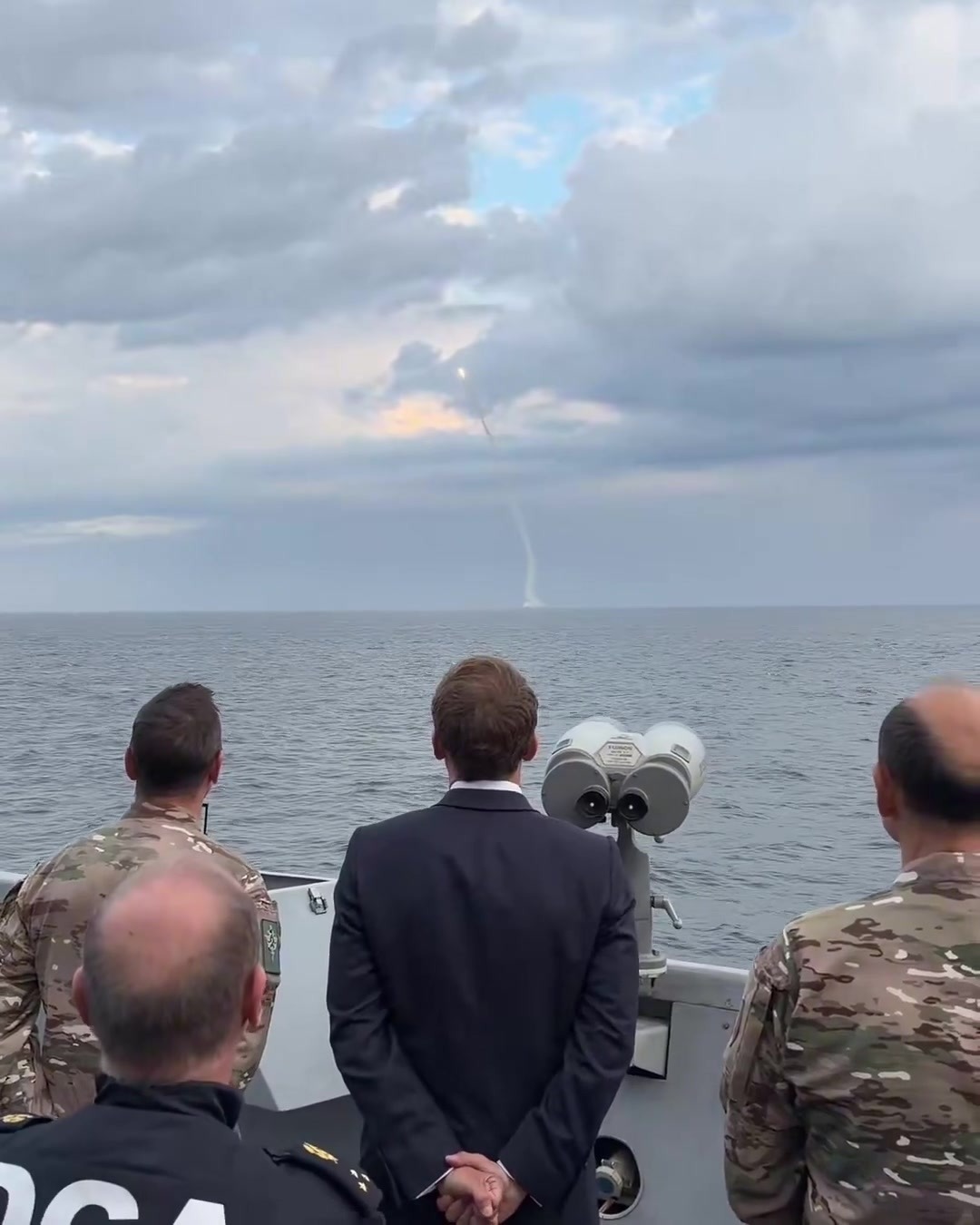
Testing the Waters: France’s Strategic Message in a Volatile Europe
The recent test launch of the M51.3 ballistic missile from the French nuclear submarine Le Vigilant is more than a technical milestone—it’s a geopolitical statement. As Europe grapples with escalating airspace violations, drone incursions, and Russia’s relentless pressure on NATO’s eastern flank, Paris is doubling down on its nuclear deterrence strategy. The demonstration, witnessed by President Emmanuel Macron aboard the frigate Auvergne, wasn’t just about validating military capabilities. It was a deliberate show of force, designed to reassert France’s role as a pillar of European security in an era of uncertainty.
Europe’s Security Landscape: From Cross-Border Incidents to Open Warfare
The context for this test couldn’t be more urgent. Since Russia’s full-scale invasion of Ukraine in 2022, Europe’s military landscape has undergone a radical shift. NATO has documented a sharp rise in provocative actions—from unauthorized drone incursions over Poland and Romania to cyberattacks and suspected sabotage operations. In September, an Italian fighter jet operating under NATO command intercepted and shot down a suspected Russian drone in Lithuanian airspace, a move that underscored the alliance’s growing vigilance.
Meanwhile, the Baltic Sea has emerged as another flashpoint. Swedish and Finnish fighter jets have repeatedly intercepted Russian military aircraft transiting international airspace near the Gulf of Finland. These incidents, though not yet signaling direct conflict, highlight how quickly localized tensions can spiral into broader destabilization. As NATO Secretary-General Mark Rutte noted in late September, while an immediate attack on allied territory remains unlikely, any aggressive move against a member state would be preceded by clear military preparations.
The M51.3: A Missile Rearmed for Modern Threats
Launched last October off the coast of Brittany, the M51.3 test was a dry run—no nuclear payload, but a crucial step in validating France’s ability to deploy its upgraded submarine-launched ballistic missile. The missile, now in operational service since 2025, represents a leap forward in both range and penetration capabilities, designed to outmaneuver evolving anti-missile defenses. For Macron, the message was clear: France’s nuclear deterrence isn’t just about legacy systems—it’s about future-proofing against hybrid warfare, electronic attacks, and the proliferation of low-cost drones that have redefined modern conflict.
Behind the technical upgrades lies a deeper strategic reassessment. The M51.3’s enhanced precision and range are part of a decade-long military modernization push, with defense budgets doubling since 2017. New nuclear submarines are under construction, and Paris is advancing hypersonic missile programs to bolster its air-launched deterrent. The goal? To ensure that France retains an autonomous, credible nuclear umbrella—one that doesn’t rely solely on conventional forces or allied guarantees.
NATO’s Eastern Shield: Preparing for the Unthinkable
Europe’s response to this shifting threat matrix extends far beyond nuclear deterrence. NATO’s “Eastern Sentry” operation, launched in 2025, reflects a broader strategy to integrate air, missile, and cyber defenses across its eastern flank. The alliance’s upgraded architecture—combining fighter jets, anti-air systems, and surveillance platforms—aims to counter a spectrum of threats, from ballistic missiles to drone swarms. Yet even as NATO braces for potential contingencies, its leaders insist direct confrontation with Russia remains a worst-case scenario. Instead, the focus is on deterring escalation through visible military readiness and rapid response capabilities.
This cautious approach reflects the paradox of modern deterrence: the more Europe prepares, the less likely outright war becomes. But preparation also carries risks—missteps in crisis management or misinterpreted signals could trigger unintended escalation. In this high-stakes environment, France’s nuclear modernization serves as a stabilizing force, offering a tangible reminder of the costs of aggression.
Beyond Nuclear: The New Rules of European Warfare
The transformation of Europe’s security challenges isn’t confined to state-on-state conflict. Recent incidents in the Black Sea—including the suspected drone attack on a Togolese-flagged cargo ship near Bulgaria—highlight how asymmetric threats are reshaping the battlefield. Low-cost drones, sabotage operations, and attacks on critical infrastructure have become tools of coercion, blurring the lines between war and peacetime. For France, the M51.3 test is a reminder that deterrence must evolve beyond traditional nuclear posturing. It’s about adapting to a world where power isn’t just measured in megatons or missile silos, but in the ability to control unmanned systems and cyber domains.
France’s Gamble: Autonomy in an Unstable Alliance
Macron’s emphasis on nuclear deterrence also underscores a broader philosophical debate: Should Europe rely solely on NATO’s collective security model, or must individual nations maintain independent capabilities? Paris’ push for modernization—including new submarines, hypersonic missiles, and upgraded warheads—signals a belief in strategic autonomy. The message is unmistakable: In a Europe where threats are both conventional and unconventional, France intends to keep its options open. Whether through nuclear deterrence, cyber resilience, or rapid deployment forces, the goal is the same: to ensure that Europe’s adversaries never underestimate the cost of aggression.
As the M51.3 test fades into the Atlantic horizon, its political fallout is just beginning. The debate over Europe’s security future is heating up—between those who advocate for deeper integration with NATO, those pushing for non-nuclear deterrence, and those who see nuclear modernization as the only credible path forward. For now, France has made its choice. The question is whether the rest of Europe will follow.
Key Takeaways from France’s M51.3 Deterrence Strategy
- Strategic signaling: The M51.3 test reinforces France’s role in European security amid Russia’s military pressure on NATO’s eastern flank.
- Modernization drive: Paris is doubling its defense budget over a decade, with upgrades to submarines, missiles, and hypersonic capabilities.
- Hybrid threats: Drones, cyberattacks, and sabotage operations are redefining modern conflict, demanding a broader deterrence strategy.
- Autonomous stance: France’s nuclear deterrence is framed as a hedge against over-reliance on allied guarantees or conventional forces.
- Deterrence calculus: While outright war remains unlikely, the risk of miscalculation or escalation underscores the need for robust military readiness.